Two different questions get filed under one heading here. The first is philosophical: is there a God, and what follows if there is not. The second is historical: how did societies that once took belief for granted come to organise themselves as though the question were optional. Books answering the first are routinely mistaken for books answering the second, which is why so many reading lists on the subject feel like an argument circling itself.
The order below keeps them apart. It opens with the New Atheist books most readers already have an opinion about, tests them against philosophers and against critics — including atheist critics — and only then turns to the much older history of unbelief and to secularity as a political and social condition.
Stage one: the case in its own words
The God Delusion is the book that made public atheism a mass-market phenomenon, and its central move is to treat theism as a scientific hypothesis and a poor one. Read it first, because nearly everything after it is either building on it or replying to it. Philosophers of religion on both sides have criticised its handling of the classical theistic arguments; carry that objection with you rather than trying to settle it here.
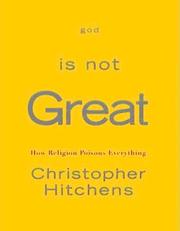
God Is Not Great makes a different kind of claim, and the difference is easy to miss. Hitchens is arguing about religion's record in the world rather than about metaphysics — a moral case, not a philosophical one, and it stands or falls on different evidence.
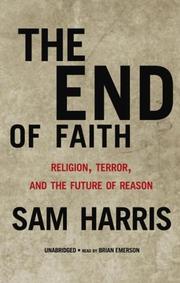
The End of Faith is where the sequence actually began, written in the aftermath of September 2001 and built around the danger of belief held without evidence. Its chapters on Islam and on coercive interrogation drew sustained criticism, including from other atheists. Those objections are more useful read alongside the book than skipped.
Stage two: the argument, minus the temperature
Atheism: A Very Short Introduction is a philosopher's brief, unheated account of what atheism is, what it commits you to about meaning and morality, and what it does not. It is the cleanest statement of the position with the culture war stripped out.
Breaking the spell proposes something different again: studying religion as a natural phenomenon, evolved and transmitted by ordinary cognitive and cultural processes. Dennett is outlining a research programme, not a refutation, and confusing the two is a common error.
Stage three: the sharpest critics are atheists
Seven Types of Atheism is written by an atheist who regards contemporary atheism as a Christian heresy — faith in progress and humanity carried over from the religion it rejects. It forces a distinction between disbelief in God and the entire worldview usually sold with it.
Dominion argues, also from outside belief, that the moral intuitions modern secular Westerners take as self-evident are specifically Christian in origin. Historians who see more continuity with antiquity and with other traditions dispute this, and the thesis should be read as live rather than established. It is the best available test of whatever you concluded in stage one.
Stage four: unbelief is old
Battling the gods recovers atheism in the ancient Greek world, where disbelief was an available and occasionally prosecuted position long before monotheism. Doubt: A History sweeps much wider — Greek and Indian sceptics, Jewish and Islamic freethinkers, the moderns — broad rather than deep, and it maps ground the other books only sample.
Unbelievers cuts against both. Ryrie, a historian of Reformation religion, argues that early modern unbelief grew out of anger and anxiety rather than out of reasoned argument, which contradicts atheism's own account of its origins and sits awkwardly beside Hecht's more intellectual survey. The disagreement is real; read both and leave it open.
Stage five: secularity as a condition
Secularism handles the political question — separation of religion and state, understood very differently in France, India, Turkey and the United States. Read it before Taylor so the political and philosophical threads stay separate.
A Secular Age is eight hundred pages on how the West moved from a world where belief was unavoidable to one where it is contestable. Taylor is a Catholic philosopher and the argument is shaped by that, which he does not hide. Attempt it last, and only last.
If you want the stage-by-stage version with study plans, follow the full path, or browse the atheism and secularism hub for related reading.
Follow the full ordered path here: The Best Books on Atheism and Secularism, in Reading Order.