Annie Ernaux Reading Order: Where to Start
Annie Ernaux's books are short — most are under 120 pages — and they all describe the same life from different angles, so the order you read them in genuinely changes what you see. Start with The Years, the collective autobiography that maps the whole territory, then work through the small books about her parents, her body and her desire, which are the individual coordinates on that map. Nothing here is long, and the whole path is a few weeks of reading.
Start Here
BeginnerGet the whole shape of the project at once, and meet the impersonal 'we' that makes Ernaux unlike other memoirists.
▸ Study plan for this stage
Pace: One to two weeks for The Years alone, 241 pages, which is by some distance the longest book in this path and the only one that will take you more than an evening or two. Read it slowly rather than quickly — it has no plot and no scenes in the ordinary sense, so momentum will not carry you and forty
- The impersonal 'we': The Years describes sixty years of French life with no 'I' anywhere in it, which is the formal decision the Nobel citation leaned on hardest
- Photographs as anchors — Ernaux describes images of herself in the third person, as a stranger, and each one dates a section of the book
- Collective autobiography as a genre she effectively invented: the memory is hers, but the register is that of a generation talking about itself
- Advertising slogans, songs, brand names and headlines used as historical evidence, on the argument that this is what a period actually felt like from inside
- Class movement as the underlying subject — a shopkeeper's daughter becoming a teacher and a writer, and what that costs, which every other book in this path examines in close-up
- Time as the book's real protagonist: things do not happen to a person here, they happen to a period
- The Years as an index. Almost every episode in the shorter books appears here in a sentence, so reading it first gives you the map before the individual coordinates
- What is achieved by removing 'I' from an autobiography, and what is lost?
- How does Ernaux date a section without giving you a year — what are her markers?
- What is the effect of describing her own photographs as if she were describing a stranger?
- Which of the book's compressed episodes made you want the longer version? Those are the books in the rest of this path.
- Is this a memoir, a history, or something the existing categories do not cover?
- Read with a pencil and mark every episode that gets only a sentence or two. You are building the reading list for the next three stages, and Ernaux has effectively written it for you.
- Note where you had to look up a French reference — a politician, a product, a song. Doing this for even a dozen of them changes the book considerably.
- Write two hundred words about your own decade using only slogans, songs and objects, with no 'I'. It takes twenty minutes and it is the fastest possible route into what Ernaux is doing.
- Do not read this book in ten-minute fragments. It has no hooks and it collapses when read that way; three long sittings is better than fifteen short ones.
Next up: The Years has given you the whole territory in outline, so the short books that follow can be read as close-ups on points you have already seen from altitude — starting with the parents, who are the origin of everything else.
Sixty years of French life written with no 'I' anywhere in it — the book the Nobel citation leaned on hardest. Start here: it is the index to every other book, and photographs of herself appear in it as descriptions of a stranger.
The Parents
BeginnerRead the class books — the small volumes about her father, her mother, and the shame of moving between their world and hers.
▸ Study plan for this stage
Pace: Two weeks at most for three very short books — a Man's Place is 112 pages, A Woman's Story 105, Shame 114. Each is an evening. Read them close together and preferably in a single week: they were written years apart but they are one continuous argument, and the effect depends on the accumulation. A n
- Flat writing, which is Ernaux's own term for it: no metaphor, no scene-setting, no novelistic warmth, adopted on principle because literary style would betray the people being described
- Refusing to novelise her own family — the ethical position that generates the style, stated most directly in a Man's Place
- The father's trajectory from farm labourer to café-grocery owner, and the exact vocabulary, manners and fears that came with it
- The mother as the more ambivalent portrait: A Woman's Story was written after her death from Alzheimer's and is as much about a daughter's guilt as about a life
- Shame's method — one violent Sunday in June 1952 reconstructed forensically, with the twelve-year-old witness treated as a subject of research
- Class shame as the emotion the other two books circle: the humiliation of a child who has begun to see her parents through the eyes of the school that is taking her away from them
- Sociology as a tool rather than a decoration. Ernaux read Bourdieu and it shows, and it is why these books feel like evidence rather than confession
- What does Ernaux mean by flat writing, and can you point to a sentence where the refusal of style is doing visible work?
- What is her father afraid of, socially, and how does the book show it without saying it?
- How does the portrait of the mother differ from the portrait of the father, and how much of that is the illness?
- What happens on the Sunday in Shame, and why does Ernaux treat the event as an object of research rather than a memory?
- Together, what do these three books argue about what education does to a working-class child?
- Read a Man's Place and A Woman's Story on consecutive evenings. They are one book about a marriage seen from the child's side and the pairing is the whole point.
- Copy out three sentences you think demonstrate flat writing. Having them on a page makes the technique visible in a way that reading past them does not.
- In Shame, note every fact Ernaux verifies externally — newspapers, prices, timetables. She is building a case file about her own childhood.
- Write one paragraph about a member of your own family without a single metaphor or invented detail. It is much harder than it sounds and it is the exercise these books are made of.
Next up: You have the class material and the method that describes it, which is what the next stage needs — because Ernaux applies exactly the same unsentimental attention to sex, abortion and obsession, where the refusal of shame becomes political rather than familial.

Her father's life told in what she calls flat writing, stripped of literary effect on principle. The book where her method — refusing to novelise her own people — is first fully carried out.
The companion volume, written after her mother's death from Alzheimer's. Read it directly after A Man's Place; together they are one book about a marriage seen from the child's side.
Built around a single violent Sunday in June 1952 and the twelve-year-old who witnessed it. The most forensic of the class books, and it explains the emotion the other two circle.
The Body and Desire
IntermediateMove to the books about sex, abortion and obsession, where Ernaux's refusal of shame becomes a political act.
▸ Study plan for this stage
Pace: Two weeks for three short books — Happening is 80 pages, Passion simple 72, Girl's Story 192. Happening in particular should be read in one sitting and preferably not late at night: it is a detailed account of an illegal abortion in 1963 and of the physical aftermath, and it is deliberately not soft
- Happening as documentary rather than confession — reconstructed from her diaries decades later, with the medical and legal facts of 1963 France restored around the experience
- The political function of specificity: Ernaux's refusal to be vague about what happened to her body is what made the book a reference point in French argument about abortion
- Simple Passion's reduction of an affair to its mechanics — waiting, the telephone, the arrangement of days around another person's schedule, with the man himself almost absent
- Desire described without either romance or apology, which is the same operation performed on wanting that Happening performs on danger
- Girl's Story and the estranged self: the summer of 1958 and a girl Ernaux says she can barely recognise, which is her most explicit account of why she writes about herself in the third person
- Writing late about early events, and what the delay is for — Ernaux consistently waits decades and treats the gap as part of the method
- Shame refused rather than overcome. The books do not process the humiliation, they decline to accept it in the first place
- Why does Happening include the clinical detail it includes, and what would be lost by omitting it?
- What is the legal and medical situation in France in 1963, and how much of it did you know before reading?
- In Simple Passion, what do we actually learn about the man? Why so little?
- What does Girl's Story say about why Ernaux writes about her younger self in the third person?
- Is there a difference between these books and confessional writing, and if so what is it?
- Read Happening in one sitting. It is 80 pages and breaking it up makes it worse rather than easier.
- In Simple Passion, count the pages devoted to waiting versus the pages devoted to the affair itself. The ratio is the book's argument.
- After Girl's Story, go back to the corresponding passage in The Years. The compression there against the expansion here is the clearest demonstration of how Ernaux's whole project fits together.
- Write down what you think the difference is between exposure and self-exposure. Ernaux is precise about it and the distinction is the ethical core of the path.
Next up: You have now read the finished, edited books; the last stage shows you the raw material they were cut from, which is where the method becomes visible as a set of decisions rather than a style.

Her illegal abortion in 1963, reconstructed from diaries decades later. The hardest and most necessary book she wrote, and the one that made her a reference point in French political argument.

An affair with a married man reduced to its bare mechanics of waiting. Read it after Happening to see the same unsparing attention turned on wanting rather than on danger.
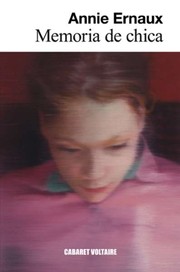
The summer of 1958 and the girl she can barely recognise as herself. Written late, and best read late — it is her most explicit account of why she writes about herself in the third person.
The Margins
IntermediateFinish with the diaries and the fragments, where the method is visible in its raw state.
▸ Study plan for this stage
Pace: One to two weeks, and the lightest reading in the path. Getting Lost is the longest of the three; Exteriors is a book of short notes that can be read in an hour and dipped into thereafter; The young man is 48 pages and can be read standing up. Read Getting Lost immediately after Simple Passion if yo
- Getting Lost as the source text: the actual diary of the affair that Simple Passion later distilled, published decades afterward
- Editing made visible — reading the diary against the finished book is the clearest available lesson in what Ernaux removes, which is almost everything specific to her
- Exteriors and the impersonal eye: notes taken on trains and in supermarkets in a Paris new town, with the observer almost entirely absent
- The new town as a subject. Ernaux writes about the periphery — RER platforms, hypermarkets, waiting rooms — as the real texture of contemporary French life
- The young man as the shortest and most self-aware book here, explicitly about writing the past while still living it
- Time collapsed: a much younger lover returns Ernaux to her own youth, which makes the book a compressed statement of the whole project
- The path as one object. Twelve books, mostly under 120 pages, all describing the same life from different distances — the order you read them in genuinely changes what you see
- What has Ernaux removed between Getting Lost and Simple Passion, and what does the removal tell you about what she thinks writing is for?
- Is the diary better or worse than the book made from it? The answer is contested and worth having.
- In Exteriors, where is the author? What does she gain by absenting herself so completely?
- What does The young man say about writing about the past while it is still happening?
- Having read the whole path, how would you now describe what Ernaux does — memoir, sociology, or something else?
- Read a passage of Getting Lost beside the corresponding passage of Simple Passion. This single comparison is the most instructive twenty minutes in the path.
- Spend an hour in a supermarket or on a station platform writing down only what you observe, with no 'I'. Then read Exteriors again. Ernaux's method is unusually testable.
- Reread the first five pages of The Years now. It should read completely differently with all the close-ups behind it.
- List the books in the order you would recommend them to someone else. Almost everyone rearranges this path after finishing it, and working out your own order is the best evidence you have understood it.
Next up: This is the end of the path — the whole project seen from altitude, in close-up, and in its raw state — and the natural next move is a rereading of The Years, which is a different book once you know every episode it compresses.

The actual diary of the affair that Simple Passion later distilled. Reading the two side by side is the clearest lesson available in what Ernaux's editing removes.

Notes taken on trains and in supermarkets in a Paris new town, with the author almost entirely absent. The purest sample of the impersonal eye that The Years is built from.
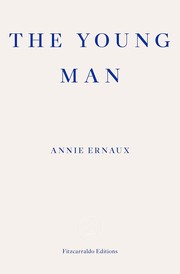
A few dozen pages on a relationship with a much younger student, and the shortest book in the sequence. A fitting close: it is explicitly about writing the past while living it.
Discussion
Keep reading
Paths that share books, cover the same subject, or open a related topic.