Start with The Years. It is Ernaux's most ambitious book, the one the Nobel citation in 2022 was effectively describing, and it is the only place where the method she spent forty years refining is visible all at once: a collective autobiography of postwar France written in the third person and the impersonal, with no plot, no scenes in the ordinary sense, and no I.
The obvious alternative is to start with one of the short books about her parents, and it is a good alternative rather than a wrong one. A Man's Place is barely a hundred pages and does most of what she does in miniature. If you want to know in a single evening whether this writer is for you, begin there and come back. If you want to understand why she matters, begin with The Years and read it slowly — momentum will not carry you through a book with no story, and forty pages a sitting is a sensible ceiling.
Everything after that first choice is short. The remaining nine books on this path total a few hundred pages between them, and they are best read close together, over weeks rather than years. The books talk to each other constantly, and the accumulation is the effect.
The parents
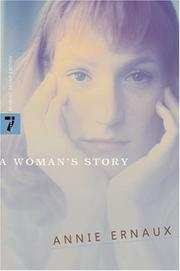
A Man's Place, A Woman's Story and Shame. Her father, her mother, and the afternoon in 1952 when her father tried to kill her mother. They were written years apart but form one continuous argument about class, shame and the distance a scholarship opens between a child and the people who raised her. Read all three inside a week.
A note on our catalogue: the copy of A Man's Place we carry is a dual-language edition sold under its Spanish title as well, which is why the record appears to be two titles at once. It is the same short book about her father.
The body and desire
Happening, Passion simple and Girl's Story. Happening is a detailed account of an illegal abortion in 1963 and its physical aftermath, deliberately unsoftened; read it in one sitting, and preferably not late at night. Passion simple is the record of an affair reduced to its mechanics — our catalogue's copy is the French edition, filed under its French title, and the English translation is published as Simple Passion. Girl's Story returns to 1958 and to a version of herself she spent decades refusing to write about.
The margins
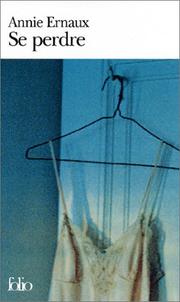
Getting Lost is the diary Ernaux kept during the affair she later compressed into Passion simple, and the pairing is the point — read the two consecutively, in either order, and the gap between the raw record and the finished book is the best available lesson in what she actually does.
Exteriors is a book of short notes on strangers observed in trains and supermarkets, readable in an hour and better dipped into thereafter; our copy is the illustrated edition, which pairs the text with photographs and is therefore filed under its editor's name rather than hers. The young man is under fifty pages and can be read standing up in a bookshop.
Where to stop
There is no long slog to warn you about here, because there is no long book after the first. If four titles is your limit, read The Years, A Man's Place, A Woman's Story and Happening — that is the complete method, the class material and the body material, in well under 600 pages.
The one genuine order question is whether to read her chronologically by subject rather than by publication. You can: Shame covers 1952, Girl's Story 1958, Happening 1963, and reading them in that sequence produces a coherent life. Most readers find it worse, not better, because Ernaux's returns to the same events at different ages are the structure, and flattening them into a timeline removes it. Related author paths are on Discover.
Follow the full ordered path here: Annie Ernaux Reading Order: Where to Start.