Ancient Egypt: pharaohs to daily life
This four-stage curriculum takes a complete beginner from vivid, accessible storytelling all the way to primary sources and specialist scholarship. Each stage builds the vocabulary, chronology, and conceptual framework needed to absorb the next, so that by the end the reader can engage with ancient Egypt as a historian would — not just as a tourist.
First Steps: The Big Picture
BeginnerGain a confident, chronological overview of ancient Egyptian civilization — its timeline, major pharaohs, monuments, and cultural rhythms — so that nothing in later books feels unfamiliar or disorienting.
▸ Study plan for this stage
Pace: 8–10 weeks, ~25–30 pages/day (5 days/week). Wilkinson's book runs ~500 pages of main text; a relaxed daily pace leaves time to pause, re-read dense dynastic passages, and complete weekly review activities without burnout.
- The Three-Kingdom framework (Old, Middle, New) plus the Intermediate Periods — understanding why Egyptologists divide history this way and what political/environmental forces drove each collapse and reunification
- The concept of Ma'at — the Egyptian ideal of cosmic order, truth, and justice — as the ideological engine behind kingship, monumental building, and state religion throughout Wilkinson's narrative
- The role of the pharaoh as living god and political autocrat: how Wilkinson shows the institution of kingship evolving from the Predynastic chieftains of Naqada through the god-kings of the Old Kingdom to the increasingly militarized rulers of the New Kingdom
- The Nile as the civilizational spine — Wilkinson's recurring emphasis on the river's flood cycle, agricultural surplus, and geographic isolation as the material foundations of Egyptian stability and wealth
- Key individual reigns that Wilkinson uses as narrative anchors: Narmer/Aha (unification), Khufu (Old Kingdom apex), Mentuhotep II (Middle Kingdom reunification), Ahmose I (expulsion of the Hyksos), Thutmose III (empire), Akhenaten (religious revolution), Ramesses II (imperial grandeur), and Ramesses
- Monuments as political statements — how Wilkinson reads pyramids, temples, obelisks, and colossal statues not merely as architectural achievements but as deliberate propaganda tools of the state
- The recurring pattern of centralization → overextension → fragmentation → reunification that Wilkinson identifies as the structural rhythm of Egyptian history
- Egypt's relationship with the outside world — Nubia, the Levant, Libya, and the Sea Peoples — and how foreign contact shifted from trade and tribute to existential military threat by the Late Period
- According to Wilkinson, what were the key political and environmental factors that caused each of the three Intermediate Periods, and what do these collapses reveal about the structural vulnerabilities of the Egyptian state?
- How does Wilkinson portray the reign of Akhenaten as both a radical break from and a logical extension of existing Egyptian royal ideology?
- Wilkinson argues that Egyptian history follows a recognizable cyclical rhythm. What is that rhythm, and can you trace it through at least two specific examples from the book?
- How did the pharaoh's control over monumental building projects serve as a tool of political power and ideological legitimacy, according to Wilkinson's analysis?
- By the end of the book, how does Wilkinson explain Egypt's final loss of independence — what combination of internal decline and external pressure brought the pharaonic civilization to a close?
- How does Wilkinson use the concept of Ma'at to connect seemingly unrelated events — a military campaign, a pyramid project, a religious reform — into a single coherent story about Egyptian civilization?
- Build a living timeline: As you read each chapter, add rulers, events, and monuments to a hand-drawn or digital timeline. Use color-coding for the three Kingdoms (e.g., blue = Old, green = Middle, red = New) and mark Intermediate Periods in grey. By the end of the book you will have a personalized visual map of the entire 3,000-year span.
- Pharaoh profile cards: For each major ruler Wilkinson spotlights, write a 3×5 index card with: name & dynasty, dates, one key achievement, one key crisis, and the monument or text most associated with them. Aim for 15–20 cards total; shuffle and quiz yourself weekly.
- Concept journal — Ma'at tracker: Keep a dedicated notebook page for Ma'at. Every time Wilkinson invokes the concept (explicitly or implicitly), jot down the page number and a one-sentence note on how it applies. At the end of the book, write a one-paragraph synthesis of how the concept evolved.
- Map annotation exercise: Print or sketch a blank map of the Nile Valley and surrounding regions. As you encounter place names in Wilkinson's text (Memphis, Thebes, Amarna, Karnak, Nubia, the Levant, etc.), locate and label them. Add small icons for major monuments at their correct sites.
- Cyclical rhythm analysis: After finishing the book, write a one-page structured comparison of any two Intermediate Periods using Wilkinson's own evidence — causes, duration, key actors, and how reunification was achieved. This forces active synthesis rather than passive recall.
- Weekly 'so what?' reflection: At the end of each week's reading, write 3–5 sentences answering: 'What is the single most important thing Wilkinson argued this week, and why does it matter for understanding Egypt as a whole?' Review all entries when you finish the book to see how your understanding deepened.
Next up: Wilkinson's sweeping narrative gives you the chronological skeleton and the key interpretive lens (Ma'at, kingship, cyclical collapse) that any deeper or more specialized study of ancient Egypt — whether focused on archaeology, religion, art, or social history — will assume you already possess.
A richly illustrated, authoritative survey that maps out the full sweep of Egyptian history, geography, and culture in plain language — the perfect mental scaffold for everything that follows.
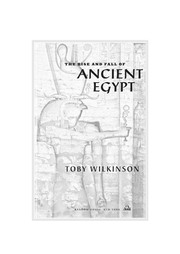
A narrative history told with the pace of a novel, covering every dynasty from Narmer to Cleopatra; reading it second cements the chronology and introduces the political drama behind the monuments.
Gods, the Dead, and the Sacred World
BeginnerUnderstand the Egyptian religious universe — the pantheon, creation myths, funerary beliefs, mummification, and the logic of the afterlife — which underpins virtually every artifact and monument.
▸ Study plan for this stage
Pace: 8–10 weeks total. Week 1–3: Faulkner's "Book of the Dead" (~15–20 pages/day, including time to study the plate illustrations and spell annotations — do not rush; treat it as a primary source). Week 4–5: Harris's "Egyptian Mythology" (~25–30 pages/day, a faster, narrative-driven read ideal for consol
- The Egyptian concept of the soul: the five-part division of the self (ka, ba, akh, ren, sheut) and why each part had to survive death
- The Duat (underworld) as a structured geography: its gates, fields, and dangers as mapped in the spells of Faulkner's Book of the Dead
- Ma'at — cosmic truth, justice, and balance — as the central moral and theological principle against which the deceased's heart is weighed in the Hall of Two Truths
- The major creation myths (Heliopolitan Ennead, Hermopolitan Ogdoad, Memphite theology) and how each reflects a different priestly tradition, as outlined in Harris's Egyptian Mythology
- The core mythological cycle of Osiris, Isis, Horus, and Set: death, resurrection, and legitimate kingship as the template for all Egyptian funerary belief
- The logic and ritual purpose of mummification: preserving the physical body so the ka could return to it, as understood through the funerary texts in Faulkner
- Divine iconography and syncretism: how Wilkinson's Complete Gods and Goddesses shows that Egyptian deities were fluid, composite, and context-dependent rather than fixed personalities
- The role of the pharaoh as divine intermediary — simultaneously human and god, the living Horus who becomes Osiris in death
- After reading Faulkner's Book of the Dead, can you explain the purpose of at least five distinct spell categories (e.g., spells for breathing, for not dying a second death, for transformations) and what they reveal about Egyptian fears of the afterlife?
- Using Harris's Egyptian Mythology as your guide, can you narrate the Osiris myth from beginning to end — including Set's murder of Osiris, Isis's search, the conception of Horus, and the eventual judgment — and explain why this story was so central to Egyptian culture?
- How does Wilkinson's Complete Gods and Goddesses illustrate the principle of syncretism? Give three examples of gods who were merged or identified with one another, and explain the theological or political logic behind each fusion.
- What is Ma'at, and how does the Weighing of the Heart ceremony (as described in Faulkner's Book of the Dead, Spell 125) operationalize it? Who are the key figures present, and what happens if the heart fails the test?
- How do the three major creation myths described in Harris differ from one another in their central deity, cosmological mechanism, and likely geographic/priestly origin?
- Drawing on all three books, how would you explain the relationship between the living pharaoh, the god Horus, and the god Osiris — and why did this three-way identification matter for both politics and religion?
- Spell mapping exercise (Faulkner): As you read the Book of the Dead, create a hand-drawn or digital map of the Duat — label its key regions (the Field of Reeds, the Hall of Two Truths, the gates), and pin the relevant spell numbers to each location. This forces active engagement with the text as a navigational document.
- Pantheon card deck (Wilkinson + Harris): For every major deity encountered across all three books, make a flashcard or digital note with: name, domain(s), iconographic symbols, family relationships, and one myth they appear in. Aim for at least 25 cards. Quiz yourself weekly.
- Confession rewrite (Faulkner, Spell 125): Read the 42 Negative Confessions in Spell 125 carefully. Then rewrite them as a modern moral code — what values do they reveal about Egyptian society? Write a one-page reflection on what this tells you about the relationship between ethics and religion in ancient Egypt.
- Myth retelling (Harris): After finishing Egyptian Mythology, write a 500-word retelling of the Osiris myth entirely in your own words, without looking at the book. Then compare it to Harris's version and note what you missed or distorted — those gaps are your study targets.
- Deity comparison essay (all three books): Choose two gods who share a domain (e.g., Thoth and Seshat both govern writing and knowledge; Ra and Atum both represent the sun). Using Wilkinson as your primary source and Harris for mythological context, write a 400-word comparison explaining how they are similar, how they differ, and why Egypt needed both.
- Timeline and monument anchor (all three books): Create a simple one-page timeline of Egyptian history (Old, Middle, New Kingdoms) and, as you read, annotate it with which religious texts, myths, or gods rose to prominence in each period. This begins building the historical scaffolding you will need in the next stage.
Next up: ">By internalizing the religious logic, divine cast, and funerary symbolism embedded in these three books, the reader will now be able to look at any Egyptian monument, temple, or artifact — the subject of the next stage — and read it as a theological statement rather than mere decoration.

Faulkner's translation of the actual spells used to guide the dead is surprisingly readable and immediately shows how Egyptians thought about death, judgment, and eternity — best approached now that you have the historical context.
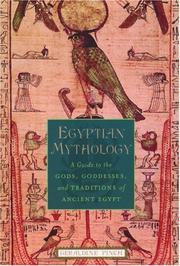
A concise, scholarly yet accessible guide to the gods and myths; it explains the stories behind the Book of the Dead's imagery and makes the pantheon coherent rather than overwhelming.

An encyclopedic but visually rich reference to every major deity, their iconography, and their roles — ideal to read alongside Pinch to deepen and cross-reference your understanding.
Everyday Life, Language, and the Nile
IntermediateMove beyond kings and temples to understand how ordinary Egyptians lived, worked, wrote, and thought — including how hieroglyphs actually work and what daily life in a village or palace looked like.
▸ Study plan for this stage
Pace: 12–16 weeks total, divided across three books: Weeks 1–4 — Casson's "Everyday Life in Ancient Egypt" (~20–25 pages/day, reading thematically by chapter); Weeks 5–11 — Gardiner's "Egyptian Grammar" (~8–12 pages/day, slow and deliberate — drill sign lists and exercises daily, never skipping ahead with
- Social stratification in ancient Egypt: the roles of farmers, scribes, craftsmen, priests, and nobles as reconstructed in Casson — understanding that 'ordinary life' was highly structured by class, season, and obligation
- The agricultural calendar and the Nile flood cycle as the engine of Egyptian civilization — how inundation, planting, and harvest shaped diet, labor, taxation, and religious festivals (Casson)
- Domestic life and material culture: housing, food, clothing, medicine, and entertainment as windows into Egyptian values and priorities (Casson)
- The hieroglyphic writing system as described by Gardiner: the tripartite sign classification (logograms/ideograms, phonograms — uniliteral, biliteral, trilateral — and determinatives) and how they combine to encode meaning
- The grammar of Middle Egyptian as Gardiner presents it: noun and adjective inflection, the Egyptian verb system (including the sdm.f and sdm.n.f forms), and the logic of sentence construction in a language without an alphabet in the Western sense
- Gardiner's Sign List (the 'Gardiner List'): learning to identify, categorize, and read the most common hieroglyphic signs as a practical skill, not just an abstract one
- The major genres of ancient Egyptian literature as anthologized by Simpson: wisdom/instructional texts (e.g., the Instructions of Ptahhotep), narrative tales (e.g., the Story of Sinuhe), hymns and religious poetry, and lamentations — and what each reveals about Egyptian worldview
- The relationship between written language and social power in Egypt: literacy as a scribal elite skill, the role of texts in administration and religion, and how literature both reflected and reinforced Egyptian ideology (synthesizing all three books)
- After reading Casson, can you describe a typical day for at least three different social classes — say, a Delta farmer, a Theban craftsman at Deir el-Medina, and a palace scribe — including their food, shelter, work rhythms, and relationship to the state?
- Using Gardiner's framework, can you explain the difference between a uniliteral, biliteral, and trilateral sign, and demonstrate how a determinative changes or clarifies the meaning of a word? Can you transliterate a simple Middle Egyptian word using the Gardiner Sign List?
- What is the sdm.f verb form in Middle Egyptian, and why does Gardiner treat it as central to understanding Egyptian grammar? How does context determine whether it is active, passive, or subjunctive in function?
- Having read Simpson's anthology, what are the defining literary features of the Story of Sinuhe — its narrative voice, its themes of loyalty and exile, and what it tells us about Egyptian ideals of the good life and proper death?
- How do the wisdom/instructional texts in Simpson (such as the Instructions of Ptahhotep or the Maxims of Any) reflect the social world Casson describes? What values do they reinforce, and for what audience were they written?
- How does the Hymn to the Nile (in Simpson) connect to the agricultural and religious realities described by Casson? What does the literary treatment of the Nile reveal about how Egyptians understood the relationship between nature, the gods, and human survival?
- Casson mapping exercise: After finishing each major chapter of 'Everyday Life in Ancient Egypt,' draw or sketch a labeled diagram — a village layout, a household floor plan, a farming calendar wheel — forcing yourself to translate prose description into spatial or visual form.
- Gardiner sign-list flashcards: Create a physical or digital flashcard deck for all 26 uniliteral signs (the 'Egyptian alphabet') plus the 30–40 most common bilateral and determinative signs from the Gardiner List. Drill them daily for 10 minutes throughout Weeks 5–11, testing both recognition (sign → transliteration) and recall (transliteration → sign).
- Grammar translation log: For every grammar lesson in Gardiner, copy out his example sentences by hand in hieroglyphic transliteration, then write your own English gloss beneath each word before checking his translation — keeping a running notebook of errors to review weekly.
- Literary close-reading journal: For each major text in Simpson's anthology, write a one-page response that addresses three things: (1) what the text tells us about daily or social life that Casson confirms or complicates, (2) one literary or rhetorical device you notice, and (3) one question the text raises that you cannot yet answer.
- Cross-book synthesis chart: At the end of the stage, build a three-column reference table — one column for a social theme (e.g., 'the role of the scribe,' 'attitudes toward death,' 'the importance of the Nile') — and populate the other two columns with specific evidence from Casson and from Simpson, noting where Gardiner's grammatical insights illuminate the language of the literary sources.
- Transliteration practice with Simpson: Choose one short passage from a literary text in Simpson's anthology (a hymn or a short wisdom saying works well) and attempt a rough back-analysis — using Gardiner's sign values and grammar rules, try to reconstruct what the Middle Egyptian grammatical structure underlying the English translation might look like, identifying likely verb forms, nouns, and det
Next up: By grounding the reader in how Egyptians actually lived, wrote, and expressed themselves — from the flood-driven rhythms of village life (Casson) to the mechanics of hieroglyphic script (Gardiner) to the literary imagination of the culture (Simpson) — this stage builds the social, linguistic, and humanistic foundation needed to engage critically with Egypt's monumental religion, funerary theology,
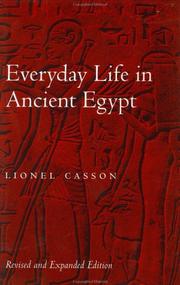
A vivid, evidence-based portrait of farmers, craftsmen, scribes, and merchants that humanizes the civilization; reading it here grounds the grand narrative in real human experience.

The classic introduction to Middle Egyptian hieroglyphs used in universities worldwide; even working through the first few chapters gives genuine insight into how the writing system encodes meaning and why it matters for reading monuments.
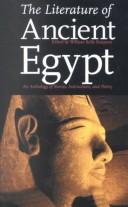
An anthology of actual Egyptian texts — love poetry, wisdom literature, adventure tales, and hymns — that lets Egyptians speak in their own voices, rewarding now that you can appreciate the linguistic and cultural context.
Deep Dives: Pyramids, Power, and Modern Scholarship
ExpertEngage with specialist arguments about Egypt's greatest monuments and its place in world history, and understand how Egyptology as a discipline works — including debates, methods, and ongoing discoveries.
▸ Study plan for this stage
Pace: 8–10 weeks total: Weeks 1–5 for "The Complete Pyramids" (~25–30 pages/day, including time to study diagrams, site maps, and architectural cross-sections carefully); Weeks 6–10 for "Temples of Ancient Egypt" (~20–25 pages/day, with slower reading for the specialist essays and theological chapters). R
- Pyramid evolution and typology: from mastabas and step pyramids (Djoser at Saqqara) through the true pyramid form at Giza and beyond, as traced by Lehner's comprehensive site-by-site survey
- Construction logistics and engineering hypotheses: workforce organization, ramp theories, quarrying, and transport methods debated in Lehner's analysis of the Giza complex
- The pyramid as royal theology: how the pyramid's form, orientation, causeway, mortuary temple, and valley temple constitute an integrated ritual landscape rather than an isolated monument
- Dynastic chronology and monument-building: how pyramid construction maps onto Old and Middle Kingdom political power, royal legitimacy, and state capacity
- Temple typology and function in Shafer: the distinction between mortuary temples, cult temples, and festival temples, and how each served different theological and political purposes
- Divine presence and ritual performance: how Shafer's contributors explain the theology of the god's 'dwelling' in the temple, the role of the priesthood, and the logic of daily cult ritual
- Egyptology as a discipline: how both books model specialist argumentation — use of archaeological evidence, epigraphy, comparative analysis, and the acknowledgment of scholarly debate and uncertainty
- The integration of monument and landscape: how pyramids and temples were embedded in broader sacred geographies, processional routes, and Nile-oriented cosmologies
- According to Lehner, what are the key architectural and theological differences between the Step Pyramid complex of Djoser and the later true pyramids at Giza, and what do those differences reveal about changing royal ideology?
- What does Lehner's treatment of workforce evidence (the workers' village, administrative records) tell us about how Egyptologists move from physical remains to historical argument?
- How do Shafer's contributors distinguish between the functions of mortuary temples attached to pyramids and the great cult temples of the New Kingdom, and what continuities exist between them?
- According to the essays in 'Temples of Ancient Egypt,' how did temple architecture physically encode Egyptian cosmology — in orientation, spatial progression, decoration, and ritual use?
- How do both books handle scholarly disagreement and uncertainty — what does this reveal about the methods and limits of Egyptology as a discipline?
- Taken together, how do Lehner and Shafer's works reframe the pyramids and temples not as isolated wonders but as components of a coherent, evolving religious and political system?
- Diagram exercise (Lehner): Choose three pyramids from different dynasties covered in 'The Complete Pyramids' and draw annotated sketches of their complexes (pyramid, mortuary temple, causeway, valley temple). Label the function of each element and note how the layout changes across dynasties — then write a short paragraph arguing what those changes suggest about royal theology.
- Construction debate memo (Lehner): After reading Lehner's discussion of construction methods, write a one-page structured memo summarizing the two or three most credible competing hypotheses for how the Giza pyramids were built, the evidence for each, and what questions remain unresolved. Practice reasoning like a specialist.
- Comparative temple analysis (Shafer): Select two temple types discussed in 'Temples of Ancient Egypt' (e.g., a mortuary temple and a cult temple) and create a side-by-side comparison table covering: location, patron deity or king, architectural layout, primary ritual function, and period. Use this to articulate what is structurally and theologically distinct about each.
- Close-reading annotation (Shafer): Pick one full essay from 'Temples of Ancient Egypt' and annotate it as a scholar would — identify the central argument, the evidence marshaled, any counter-arguments acknowledged, and one question or gap you would push back on. This builds the habit of reading specialist literature critically.
- Synthesis timeline: Build a single annotated timeline spanning the Old Kingdom through the Late Period that plots major pyramid complexes (from Lehner) and major temple foundations or transformations (from Shafer) on the same axis. Identify at least three moments where a political or theological shift seems to explain a change in monumental building.
- Reflective essay: Write a 600–800 word essay answering the question: 'How did the pyramid and the temple serve the same underlying religious and political needs in ancient Egypt, and how did those needs change over time?' Draw explicitly on specific evidence from both Lehner and Shafer.
Next up: By mastering the architectural, theological, and methodological frameworks in Lehner and Shafer, the reader is now equipped to engage with broader historiographical and cross-cultural questions — such as Egypt's place in the ancient Mediterranean world and the social history of its people — which more advanced or thematic stages of the curriculum will demand.
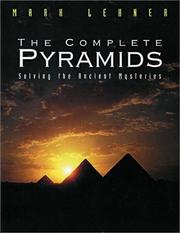
The definitive archaeological study of every pyramid ever built in Egypt, written by the leading field excavator of Giza; it synthesizes decades of excavation into a single authoritative volume.
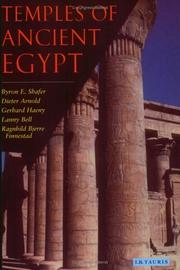
A collection of specialist essays on temple architecture, ritual, and theology that bridges the gap between popular understanding and academic Egyptology, consolidating everything learned so far.
Discussion
Keep reading
Paths that share books, cover the same subject, or open a related topic.