Martial arts: choosing a path & starting right
This curriculum takes a complete beginner from zero martial arts knowledge to an informed, philosophically grounded practitioner ready to train seriously. It begins by building a broad historical and comparative map of the major styles, then dives into the philosophy and mindset that unifies them, before narrowing to practical guidance on choosing a style and training effectively from day one.
The Big Picture: History & Styles
BeginnerUnderstand where martial arts come from, how the major styles differ, and develop a shared vocabulary for discussing them intelligently.
▸ Study plan for this stage
Pace: 4–5 weeks, ~20–25 pages/day (the book is dense with historical detail and period illustrations; slower reading allows proper absorption of unfamiliar terminology and context)
- The European martial arts tradition (HEMA) as a legitimate, codified system of combat — not improvised brawling — with documented masters, schools, and treatises (Fechtbücher)
- The role of the 'masters of defence' and fencing guilds (e.g., the Marxbrüder and Federfechter) in organizing, legitimizing, and transmitting martial knowledge across Renaissance Europe
- The major weapon systems covered in Renaissance European martial arts: longsword, dagger, polearms, wrestling (Ringen), and early firearms — and how each occupied a distinct tactical and social niche
- How geography and culture shaped stylistic divergence: Italian, German, Spanish (Destreza), and English schools each developed distinct vocabularies, philosophies, and techniques
- The concept of a 'guard' or 'ward' (a ready stance/position) as a foundational structural unit shared across nearly all martial systems — Eastern and Western — providing a universal vocabulary anchor
- Primary sources as the backbone of martial arts history: Anglo's method of critically reading period manuals (e.g., Fiore dei Liberi's Flos Duellatorum, George Silver's Paradoxes of Defence) teaches readers how to evaluate historical evidence rather than accept romanticized myths
- The social and legal context of Renaissance combat: judicial duels, self-defence law, class distinctions between noble and common fighting arts, and how these pressures shaped what was taught and recorded
- Myth vs. evidence: Anglo systematically dismantles popular misconceptions (e.g., that armoured knights fought clumsily) — establishing critical thinking as a core martial arts literacy skill
- What distinguishes a codified martial art from general fighting, and what evidence does Anglo use to prove Renaissance European combat systems were truly codified?
- Name at least three major European fencing schools or national traditions discussed by Anglo and explain one key philosophical or technical difference between any two of them.
- What is a Fechtbuch (fight book), who produced them, and why are they both invaluable and problematic as historical sources?
- How did social class, legal institutions (such as the judicial duel), and guild structures influence which martial arts were taught, to whom, and in what form during the Renaissance?
- What common structural concepts (e.g., guards, lines of attack, measure/distance) appear across multiple weapon systems in the book, and why does recognizing these patterns matter for understanding martial arts more broadly?
- How does Anglo's critical, evidence-based approach challenge at least two widely held popular myths about historical European combat?
- **Terminology Glossary:** As you read, build a running glossary of at least 30 period-specific terms (e.g., 'Mensur,' 'Destreza,' 'Ringen,' 'ward,' 'passata sotto'). Write a plain-English definition and note the chapter where each appears — this becomes your personal martial arts vocabulary reference.
- **Style Comparison Matrix:** Create a simple table with columns for each major national school Anglo covers (Italian, German, Spanish, English). Fill in rows for: primary weapons emphasized, key named masters, core philosophical approach, and one distinguishing technical feature. Use only evidence from the text.
- **Source Critique Exercise:** Choose one period manual Anglo discusses (e.g., Silver's *Paradoxes of Defence* or Fiore's *Flos Duellatorum*). Write a one-page analysis: What does this source tell us? What are its biases or gaps? How does Anglo use it — and what does he warn us about?
- **Myth-Busting Log:** Identify 4–5 specific myths or misconceptions about historical European combat that Anglo addresses. For each, write: (1) the myth, (2) the evidence Anglo marshals against it, and (3) what the corrected understanding is. This trains the evidence-first mindset.
- **Guard/Stance Sketching:** For at least three weapon systems covered (e.g., longsword, dagger, polearm), sketch or describe in writing the primary guard positions Anglo references. Note what each guard is designed to threaten or protect — connecting body mechanics to strategic logic.
- **Reflective Timeline:** Draw a simple visual timeline of the key masters, texts, and events Anglo covers, spanning roughly 1300–1650. Annotate it with the national tradition each represents. This 'big picture' map will serve as a navigational anchor for all future reading in the curriculum.
Next up: By establishing that all martial arts — East or West — are historically grounded, socially shaped, and structurally codified systems with their own vocabularies and philosophies, this stage gives the reader the critical framework and shared language needed to approach the study of specific styles, techniques, and living traditions with rigor and nuance in subsequent stages.
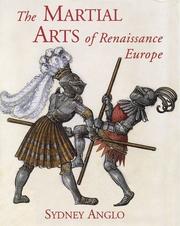
Provides an often-overlooked Western historical anchor, showing that martial arts are a global human phenomenon — not just Asian — and building critical historical thinking from the start.
Philosophy & the Warrior Mind
BeginnerGrasp the philosophical and ethical foundations — Zen, Taoism, Bushido, and the concept of 'do' (the way) — that give martial arts their depth beyond mere fighting technique.
▸ Study plan for this stage
Pace: 8–10 weeks total: Week 1–2 — "The Art of War" (~13 chapters, read 1–2 short chapters per sitting, re-read each chapter once before moving on); Week 3–5 — "Zen in the Art of Archery" (~90 pages, ~15–20 pages/day, slow and reflective); Week 6–10 — "The Book of Five Rings" (~5 scrolls, one scroll per w
- 'Do' (The Way) — martial arts as a lifelong path of self-cultivation, not merely a fighting system, as embodied in Musashi's Five Rings and Herrigel's archery journey
- Wu Wei (Non-Action) — Taoist effortless action and yielding to natural flow, central to Sun Tzu's strategic thinking and Herrigel's 'the shot shoots itself'
- Bushido & the Warrior Ethic — the samurai code of honor, discipline, and acceptance of death as a moral framework underlying Musashi's strategies
- Mushin (No-Mind) — the Zen state of empty, reactive awareness free from conscious thought, which Herrigel pursues through years of archery practice
- Strategic Deception vs. Moral Integrity — Sun Tzu's embrace of deception as a tool of war held in tension with Bushido's demand for honesty and directness
- The Five Elements (Earth, Water, Fire, Wind, Void) — Musashi's metaphorical framework for understanding combat, strategy, and the self
- Ego Dissolution — Herrigel's master Awa Kenzo's insistence that the self must get out of the way; the paradox that trying harder produces worse results
- Adaptability & Formlessness — Sun Tzu's 'be like water' principle echoed across all three texts as the highest strategic and spiritual virtue
- According to Sun Tzu, why is winning without fighting the supreme excellence, and how does this reflect a Taoist worldview rather than a purely military one?
- What does Herrigel's years-long struggle to release the bowstring 'spiritually' reveal about the relationship between the conscious ego and true mastery?
- How does Musashi's concept of the 'Void' in the fifth scroll function as both a practical fighting principle and a Zen philosophical statement?
- In what ways do Sun Tzu's 'The Art of War' and Musashi's 'The Book of Five Rings' agree and disagree on the role of deception and directness in conflict?
- What is 'do' (the way), and how do all three books — despite their different cultures and centuries — point toward the same underlying idea of martial practice as spiritual path?
- How does Herrigel's experience illustrate the Zen paradox that conscious effort can be the greatest obstacle to achieving a goal?
- Sun Tzu Reflection Journal: After each chapter of 'The Art of War', write 2–3 sentences translating the strategic principle into a non-combat context (a negotiation, a creative project, a personal challenge) to internalize its philosophical breadth.
- Breath & Release Practice: Inspired by Herrigel's archery lessons, spend 10 minutes daily on a simple repetitive physical task (drawing a bow, throwing a ball, or even pouring tea) with the sole intention of releasing conscious control — journal what 'getting out of your own way' feels like.
- Five Rings Scroll Mapping: Draw a simple diagram for each of Musashi's five scrolls (Earth, Water, Fire, Wind, Void), mapping its core metaphor to a personal life domain — note how the same principle applies to both combat and everyday decision-making.
- Philosophical Comparison Essay (500 words): Write a short personal essay comparing how Sun Tzu and Musashi would each advise handling a real conflict or competition in your life, using direct quotes from both texts.
- Mushin Meditation: Sit for 10–15 minutes in silence after each reading session, attempting to hold the key idea of that session without analyzing it — simply let it 'sit.' Record any spontaneous insights that arise, as Herrigel's student experiences suggest understanding often arrives outside of active thinking.
- Concept Web: Create a single visual concept web connecting the key terms — Do, Wu Wei, Mushin, Bushido, Void, Formlessness — with lines showing how each book contributes to or complicates each idea, building a unified philosophical map of the stage.
Next up: Having absorbed the 'why' and 'spirit' of martial arts through Sun Tzu, Herrigel, and Musashi, the reader is now philosophically grounded and ready to explore how these principles are expressed in the concrete history, traditions, and physical forms of specific martial arts disciplines.
The foundational strategic and philosophical text behind East Asian martial thinking; short and accessible, it introduces core concepts of awareness, economy of force, and non-resistance that echo through every style.
A Western student's firsthand account of learning a Japanese martial discipline, making Zen philosophy and the idea of 'the way' vivid and concrete for a beginner before tackling heavier texts.

The classic text of a legendary swordsman; read after Herrigel, the reader now has the philosophical lens to appreciate Musashi's practical and spiritual insights on strategy and mastery.
Comparing & Choosing Your Style
IntermediateMake an informed, personal decision about which martial art to pursue by understanding the real differences in purpose, culture, and training methodology across the major styles.
▸ Study plan for this stage
Pace: 6–8 weeks, ~20–25 pages/day — "Martial Arts of the World" is a dense, encyclopedic reference (2 volumes), so pace yourself thematically: spend Weeks 1–2 on Asian traditions (East & Southeast Asia), Weeks 3–4 on South/Central Asian and African/Indigenous styles, Weeks 5–6 on Western and hybrid/sport
- Purpose taxonomy — distinguishing arts primarily designed for combat/self-defense, sport/competition, spiritual/philosophical development, or cultural preservation, as catalogued across Green's entries
- Training methodology differences — how striking arts (e.g., Karate, Muay Thai), grappling arts (e.g., Judo, Wrestling), and weapons-based arts (e.g., Kendo, Eskrima) structure their curricula and sparring practices
- Cultural and historical context — understanding how each style's origin society, historical conflicts, and colonialism shaped its techniques, rituals, and transmission methods
- Codification vs. living tradition — Green's distinction between arts that have been formally standardized (with governing bodies and belt systems) and those still transmitted informally through lineage or community
- Physical and athletic demands — recognizing how body type, age, flexibility, and injury risk profile differ meaningfully across styles
- Philosophical and ethical frameworks — the role of concepts like Bushido (Japanese arts), Tao (Chinese arts), Ahimsa (Indian arts), and warrior codes in shaping practitioner identity
- Cross-cultural diffusion and hybridization — how arts migrate, blend, and change meaning when adopted outside their origin culture, a recurring theme in Green's global survey
- Personal fit criteria — synthesizing purpose, culture, methodology, and practicality into a personal decision-making framework
- After reading Green's entries on at least five distinct styles, can you articulate the primary purpose of each — and does that purpose align with your own training goals?
- How does Green illustrate the difference between a martial art that has been sport-codified (e.g., Olympic Judo or Taekwondo) and one that retains a more traditional or combative orientation — and what are the trade-offs for a modern practitioner?
- What cultural obligations or philosophical commitments does Green suggest come embedded with studying a particular style, and how might those affect your daily life outside the dojo/gym?
- Which styles does Green identify as particularly accessible to beginners in terms of infrastructure (schools, equipment, sparring partners), and which require specialized or rare training environments?
- How does Green's cross-cultural comparative approach reveal that 'effectiveness' in a martial art is always defined relative to a specific context (street, ring, battlefield, ceremony) — and what context matters most to you?
- Based on your reading, which two or three styles emerged as serious candidates for your own practice, and what specific evidence from Green's entries supports that shortlist?
- Style comparison matrix — create a spreadsheet with rows for every style you read about in Green and columns for: primary purpose, training method, cultural origin, philosophical framework, sport/competition availability, typical class structure, and injury risk. Use this as your living decision tool.
- Deep-dive trios — select three styles from opposite ends of the spectrum (e.g., one striking art, one grappling art, one weapons art) and write a 1-page profile of each based solely on Green's entries, then write a 4th page comparing all three head-to-head.
- Trial class log — attend at least one introductory class or seminar for two different styles available in your area; after each session, annotate your Green notes with what matched or contradicted the book's description.
- Practitioner interview — find a practitioner of one style you're seriously considering and interview them using five questions derived directly from themes in Green (e.g., 'How does your school handle the tension between sport competition and traditional technique?').
- Personal fit scorecard — list your top five personal goals for martial arts training (e.g., fitness, self-defense, competition, cultural connection, meditation), weight them by importance, then score each shortlisted style against those criteria using evidence from Green's entries.
- Reflective journal entry — after finishing the book, write a 500-word personal statement titled 'The Style I Am Choosing and Why,' citing at least three specific passages or entries from Green to justify your reasoning.
Next up: Completing this stage gives you a well-reasoned style commitment and a conceptual vocabulary for understanding martial arts comparatively, which is the essential foundation for diving into the history, philosophy, and advanced technique of your chosen art in the next stage.
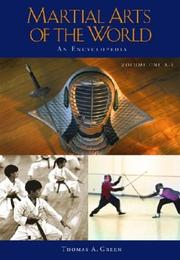
A comprehensive, authoritative reference covering styles from every continent; use it as a guided tour to compare striking arts, grappling arts, weapon arts, and hybrid systems before committing to one.
Starting Training Well
IntermediateEnter a dojo or gym with realistic expectations, good habits, and the physical and mental tools to progress safely and effectively from the very first session.
▸ Study plan for this stage
Pace: 6–8 weeks total: Weeks 1–3 on "The Fighter's Body" (~20–25 pages/day, including re-reading key chapters on nutrition and conditioning); Weeks 4–6 on "Meditations on Violence" (~15–20 pages/day, slower pace to allow reflection on the denser conceptual material); Week 7–8 reserved for review, journali
- Body composition and weight management for martial artists — Christensen's framework for eating, cutting, and building mass in ways specific to training demands
- Injury prevention and recovery: understanding overtraining, listening to the body, and building sustainable conditioning habits from day one
- The role of nutrition timing and food quality in fueling training sessions and accelerating skill acquisition
- Mental conditioning and the fighter's mindset: Christensen's approach to goal-setting, self-discipline, and managing training plateaus early in one's journey
- Miller's distinction between 'social violence' and 'asocial violence' — understanding that most martial arts training addresses only one type, and why that gap matters for realistic expectations
- The 'Monkey Dance' and other social violence patterns: recognizing how real-world conflict actually escalates and how dojo sparring rarely replicates it
- Adrenal stress response: Miller's detailed account of how the body reacts under genuine threat (freeze, tunnel vision, fine-motor skill degradation) versus controlled sparring conditions
- Aligning training goals with reality: using both books together to build a personal training philosophy grounded in physical health (Christensen) and honest threat assessment (Miller)
- According to Christensen in 'The Fighter's Body,' what are the three most common nutritional mistakes new martial arts students make, and how do they directly impair training performance?
- How does Christensen differentiate between conditioning work that supports martial arts skill development and generic fitness training that may actually hinder it?
- Miller argues that most traditional and sport martial arts training leaves practitioners unprepared for a specific category of violence — what is that category, and what physiological and psychological reasons does he give?
- What is the 'Monkey Dance' as described by Miller, and how should understanding it change the way a beginner thinks about self-defense scenarios versus dojo sparring?
- How does Miller's description of the adrenal stress response challenge the assumption that techniques practiced calmly in a dojo will transfer automatically to a real confrontation?
- Synthesizing both books: what does a 'realistic expectation' for your first year of martial arts training look like, physically (Christensen) and situationally (Miller)?
- Body audit journal (Christensen): For two weeks, log every meal, sleep duration, and training session alongside an energy/performance rating (1–10). At the end, identify patterns Christensen warns about — skipped meals, poor pre-training fuel, inadequate recovery — and write a corrective nutrition plan using his guidelines.
- Design your first 30-day conditioning baseline (Christensen): Using the conditioning principles in 'The Fighter's Body,' build a simple 4-day/week plan that balances strength, flexibility, and cardiovascular work appropriate for a beginner entering a dojo. Include rest days and one active recovery day.
- Violence scenario mapping (Miller): After finishing 'Meditations on Violence,' list 5 real-world conflict scenarios (e.g., bar argument, road rage, mugging). For each, classify it using Miller's social vs. asocial framework and write a short paragraph on whether your intended martial art would address it — and why or why not.
- Adrenal inoculation reflection (Miller): Find a controlled stressor (a cold shower, a timed physical challenge, a competitive sparring round if available). Immediately after, write down every physical and mental symptom you noticed. Compare your list to Miller's description of the stress response and identify which of your trained techniques you think would have degraded.
- Dojo interview checklist (both books): Before joining or after your first month at a school, interview your instructor or evaluate the curriculum against criteria drawn from both books — Does the school address nutrition and recovery? Does it acknowledge the limits of sport/dojo training for real violence? Write a one-page honest assessment.
- Integrated personal training philosophy statement (both books): Write a 500-word document titled 'What I Am Training For and Why.' Draw explicitly on Christensen's physical preparation framework and Miller's reality-based violence model to articulate honest, grounded goals for your first year of martial arts training.
Next up: By building a physically prepared body (Christensen) and a clear-eyed understanding of what martial arts training does and does not replicate (Miller), the reader is now ready to dive into technical skill acquisition and style-specific study — approaching their chosen art with the habits, health, and honest expectations needed to absorb and evaluate instruction critically.
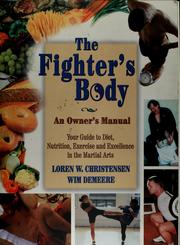
Covers the physical fundamentals — conditioning, nutrition, flexibility, and injury prevention — that apply across all styles, ensuring the new student trains smart from day one.
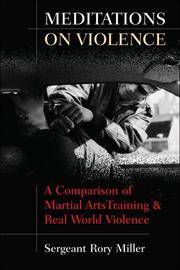
A sobering, honest bridge between dojo training and real-world context; it sharpens the student's understanding of why they are training and what martial arts can and cannot do, grounding motivation and expectations for the long journey ahead.
Discussion
Keep reading
Paths that share books, cover the same subject, or open a related topic.