The Best Analytical Chemistry Books, in Order
This curriculum builds analytical chemistry mastery across four progressive stages, starting from a solid quantitative and conceptual foundation before advancing into the specialized domains of spectroscopy, chromatography, and modern instrumental methods. Because the learner starts at an intermediate level, the path skips introductory general chemistry and instead dives directly into rigorous analytical principles, layering complexity stage by stage until the reader can engage with primary literature and advanced instrumentation design.
Quantitative Foundations
IntermediateMaster the core language of analytical chemistry: equilibrium, statistics, titrations, electrochemistry, and rigorous error analysis — the bedrock every later topic assumes.
▸ Study plan for this stage
Pace: 8–10 weeks, ~40–50 pages/day (Harris 4–5 weeks, Christian 4–5 weeks), with 1–2 lab sessions or problem sets per week
- Equilibrium principles: acid–base, solubility, complexation, and redox equilibria as the foundation for all quantitative separations and measurements
- Statistical treatment of data: mean, standard deviation, confidence intervals, and hypothesis testing to assess measurement quality and detect systematic errors
- Titration theory and practice: stoichiometry, equivalence points, buffer capacity, and indicator selection for acid–base, complexometric, and redox titrations
- Electrochemistry fundamentals: electrode potentials, Nernst equation, potentiometry, and voltammetry as tools for quantitative analysis
- Error analysis and propagation: distinguishing random vs. systematic error, calculating uncertainties, and designing experiments to minimize and quantify error
- Gravimetric and volumetric analysis: mass and volume-based quantification methods grounded in equilibrium and stoichiometry
- Calibration and standardization: preparing standard solutions, validating methods, and establishing traceability to ensure analytical reliability
- How do you calculate the pH at any point during an acid–base titration, and what determines the location and shape of the titration curve?
- Given a set of replicate measurements, how do you calculate the mean, standard deviation, and 95% confidence interval, and what do these statistics tell you about measurement precision and accuracy?
- What is the difference between systematic and random error, and how do you design an experiment to detect and minimize each type?
- How does the Nernst equation relate electrode potential to analyte concentration, and how is this principle applied in potentiometric titrations and ion-selective electrode measurements?
- For a complexometric titration with EDTA, how do you select an appropriate indicator and predict the equivalence point pH?
- How do you propagate uncertainties through a multi-step calculation (e.g., a gravimetric analysis involving weighing, dissolution, precipitation, and final weighing)?
- What is the role of a buffer in titrations, and how do you calculate buffer capacity and the pH change upon addition of strong acid or base?
- Work through Harris's end-of-chapter problems on acid–base equilibrium (Chapters 6–7): calculate pH for weak acids, buffers, and polyprotic systems; then construct titration curves using a spreadsheet or graphing tool
- Perform a statistical analysis of a real or simulated dataset: calculate mean, median, standard deviation, relative standard deviation, and 95% confidence interval; identify and discuss outliers using the Q-test or Grubbs test
- Conduct a standardization titration (e.g., HCl vs. Na₂CO₃ or NaOH vs. KHP): record replicate data, calculate the analyte concentration with uncertainty, and assess whether results are statistically consistent
- Solve Nernst equation problems from Christian's electrochemistry chapters: calculate cell potentials, predict electrode responses to concentration changes, and interpret potentiometric titration curves
- Design and execute a gravimetric analysis (e.g., chloride determination by AgCl precipitation): perform all weighings, calculate the analyte mass and percentage, propagate uncertainties, and compare results to a known standard
- Prepare a series of standard solutions at known concentrations and measure their properties (pH, conductivity, or absorbance if spectrophotometry is available); assess calibration linearity and calculate detection/quantitation limits
- Work through a multi-step error propagation problem: given uncertainties in individual measurements (mass, volume, molarity), calculate the overall uncertainty in a final result and identify which measurement contributes most to total error
Next up: Mastery of equilibrium, statistics, and error analysis equips you to understand how specific analytical techniques (spectroscopy, chromatography, electroanalytical methods) exploit these principles to separate, identify, and quantify analytes in real samples.
The single most widely used analytical chemistry text; its clear treatment of statistics, equilibria, titrations, and introductory instrumentation gives intermediate learners a unified quantitative vocabulary before specializing.
Complements Harris with a stronger emphasis on practical lab methodology and real-world sample preparation, reinforcing quantitative reasoning with applied context.
Spectroscopic Methods
IntermediateUnderstand the physical principles and analytical applications of UV-Vis, IR, NMR, atomic, and mass spectrometry well enough to select, apply, and troubleshoot each technique.
▸ Study plan for this stage
Pace: 8–10 weeks, ~40–50 pages/day. Start with Silverstein (weeks 1–4, ~200 pages covering UV-Vis, IR, NMR fundamentals), then transition to Skoog (weeks 5–10, ~300 pages on instrumental principles, method selection, and troubleshooting). Allocate 1–2 days per major technique for review and problem-solvin
- Molecular orbital theory and electronic transitions: how UV-Vis absorption relates to chromophores and conjugation (Silverstein Ch. 1–2)
- Infrared spectroscopy fundamentals: vibrational modes, functional group identification, and interpretation of IR spectra (Silverstein Ch. 3; Skoog Ch. 16)
- Nuclear magnetic resonance (NMR): chemical shift, spin-spin coupling, integration, and structure determination from 1H and 13C NMR (Silverstein Ch. 4–5; Skoog Ch. 19)
- Atomic spectroscopy: flame emission, atomic absorption, and inductively coupled plasma (ICP) for elemental analysis (Skoog Ch. 21–22)
- Mass spectrometry: ionization, fragmentation patterns, and molecular weight determination (Silverstein Ch. 6; Skoog Ch. 20)
- Instrumental design and optimization: detector types, signal-to-noise ratios, calibration, and quantitative analysis (Skoog Ch. 1–3, 6–7)
- Method selection and validation: choosing the right technique for a given analytical problem and assessing accuracy, precision, and sensitivity
- Troubleshooting and interpretation: recognizing artifacts, resolving ambiguities, and integrating multiple spectroscopic data
- Explain how molecular structure (conjugation, functional groups, atomic composition) determines what you would observe in UV-Vis, IR, NMR, and mass spectra.
- Given an unknown organic compound and its molecular formula, outline a step-by-step spectroscopic strategy using Silverstein's approach to identify functional groups and propose a structure.
- Describe the physical principles behind NMR chemical shift and coupling; why do different protons and carbons resonate at different frequencies?
- For a given analytical problem (e.g., quantifying trace metals in water, identifying an impurity in a pharmaceutical), select the most appropriate spectroscopic technique and justify your choice using sensitivity, selectivity, and cost criteria from Skoog.
- Interpret a set of IR, NMR, and MS data for an organic compound; explain how each spectrum constrains the possible structures and how you would resolve ambiguities.
- Explain common sources of error in spectroscopic measurements (instrumental drift, sample preparation, matrix effects) and propose troubleshooting steps based on Skoog's discussion of method validation.
- Work through 10–15 structure-determination problems from Silverstein using IR, 1H NMR, 13C NMR, and MS data; document your reasoning for each functional group assignment.
- Collect or simulate UV-Vis spectra for 5 organic compounds with varying degrees of conjugation; measure λmax and explain trends using molecular orbital concepts.
- Analyze 5 IR spectra from Silverstein's appendix; identify all major functional groups, explain peak assignments, and note any ambiguities or overlaps.
- Solve 8–10 NMR interpretation problems from Silverstein or Skoog; practice predicting chemical shifts, coupling patterns (n+1 rule), and integration ratios before checking answers.
- Design a simple quantitative analysis experiment using atomic absorption or flame emission spectroscopy (or review a case study from Skoog); calculate detection limits, calibration curves, and confidence intervals.
- Compare two spectroscopic methods for the same analytical goal (e.g., HPLC-UV vs. GC-MS for compound identification); create a decision matrix weighing sensitivity, selectivity, cost, and sample preparation.
Next up: Mastery of spectroscopic method selection and troubleshooting prepares you to integrate multiple techniques in hyphenated methods (e.g., GC-MS, LC-MS) and to design comprehensive analytical protocols for real-world samples in the next stage.
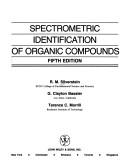
A canonical text that teaches IR, NMR, and mass spectrometry together through problem-solving; reading it first builds spectral interpretation skills that underpin all later instrumental work.
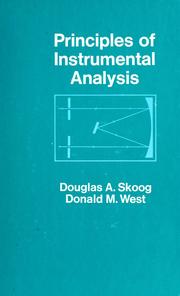
The definitive broad-coverage instrumental analysis text; after Silverstein sharpens spectral intuition, Skoog's rigorous treatment of detectors, optics, and signal processing deepens understanding across the full spectroscopic landscape.
Separation Science & Chromatography
IntermediateDevelop a thorough mechanistic and practical understanding of chromatographic and electrophoretic separations — GC, HPLC, ion chromatography, and capillary electrophoresis — including method development and optimization.
▸ Study plan for this stage
Pace: 8–10 weeks, ~40–50 pages/day (with 2–3 days/week for practical work and problem-solving)
- Chromatographic separation principles: stationary phases, mobile phases, and the partitioning/adsorption mechanisms that drive selectivity
- HPLC instrumentation, column chemistry, and the role of solvent strength, pH, and temperature in method optimization
- Retention models and quantitative relationships (k', α, Rs, N) for predicting and improving separation efficiency
- Method development workflows: scouting, optimization, and troubleshooting in HPLC and other liquid chromatography modes
- Gas chromatography fundamentals: volatility, thermal stability, detector types, and GC-specific optimization strategies
- Ion chromatography and capillary electrophoresis: ionic strength, pH gradients, and electrophoretic mobility for charged analytes
- Practical considerations: peak shape, band broadening, column degradation, and real-world method validation
- Integration of multiple separation modes (GC, HPLC, IC, CE) for different analyte classes and selectivity challenges
- What are the fundamental differences between adsorption, partition, and ion-exchange chromatography, and how do stationary and mobile phase properties control selectivity in each?
- How do you systematically develop an HPLC method for a new analyte, and what are the key parameters (pH, solvent, temperature, column chemistry) you would vary and why?
- Explain the relationships between capacity factor (k'), selectivity (α), and resolution (Rs), and how you would use them to diagnose and fix a poor separation.
- What are the main sources of band broadening and peak tailing in HPLC, and what practical steps can you take to minimize them?
- How does gas chromatography differ from liquid chromatography in terms of sample preparation, detector selection, and optimization strategy?
- When would you choose ion chromatography or capillary electrophoresis over HPLC for a separation problem, and what are the mechanistic advantages of each?
- Work through Snyder's retention models and selectivity triangle: predict k' and α for a test mixture using the given equations, then verify predictions against tabulated data or literature values.
- Design a complete HPLC method for a multi-component mixture (e.g., phenolic compounds or peptides): choose column chemistry, pH, solvent gradient, and temperature; document your reasoning at each step.
- Perform a pH or solvent-strength scouting experiment (on paper or in simulation): systematically vary one parameter and plot retention vs. parameter to identify the optimal region.
- Troubleshoot a 'bad' chromatogram (provided case study): diagnose peak tailing, co-elution, or poor efficiency using Snyder's diagnostic framework and propose corrective actions.
- Compare GC and HPLC methods for the same analyte class: analyze trade-offs in speed, resolution, detector sensitivity, and sample stability; justify your choice for a real-world scenario.
- Build a simple decision tree or flowchart for choosing between GC, HPLC, IC, and CE based on analyte properties (volatility, polarity, charge, thermal stability); test it against 5–10 literature examples.
Next up: This stage establishes the mechanistic and practical foundation for advanced separation science, enabling you to tackle specialized topics such as method validation, regulatory compliance, hyphenated techniques (LC-MS, GC-MS), and high-resolution separations in the next stage.
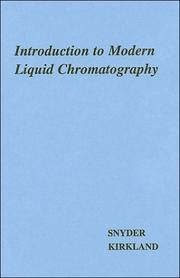
The authoritative reference on HPLC theory and method development; its systematic approach to selectivity and column chemistry is best read after mastering general instrumental principles.

Provides a concise comparative overview of GC, HPLC, TLC, and ion chromatography in one volume, consolidating separation concepts and bridging toward hyphenated techniques.
Advanced & Modern Analytical Methods
ExpertEngage with cutting-edge topics — hyphenated techniques (LC-MS, GC-MS), electroanalytical methods, surface analysis, and chemometrics — and develop the critical framework to read primary analytical literature independently.
▸ Study plan for this stage
Pace: 8–10 weeks, ~40–50 pages/day (mix of dense theory and worked examples). Allocate ~5–6 weeks to Bard's "Electrochemical Methods" (chapters 1–8 core content), then ~3–4 weeks to Otto's "Chemometrics" (chapters 1–7 with lab applications).
- Electrochemical fundamentals: electrode potentials, electron transfer kinetics, and the relationship between current and concentration (Nernst equation, Butler-Volmer equation)
- Voltammetric techniques (cyclic, linear sweep, pulse voltammetry) and their use in characterizing redox systems and detecting analytes
- Electroanalytical methods for quantitation: chronoamperometry, coulometry, and stripping analysis in real samples
- Hyphenated electroanalytical approaches: coupling electrochemistry with chromatography and spectroscopy for enhanced selectivity
- Multivariate data analysis fundamentals: principal component analysis (PCA), partial least squares (PLS), and calibration strategies
- Experimental design and optimization: factorial designs, response surface methodology, and chemometric tools for method development
- Data preprocessing, validation, and quality metrics (R², RMSE, cross-validation) for analytical models
- Critical reading of primary analytical literature: interpreting electroanalytical and chemometric results in peer-reviewed studies
- How do the Nernst and Butler-Volmer equations govern electrode kinetics, and why are they essential for designing electroanalytical methods?
- What are the advantages and limitations of cyclic voltammetry compared to other voltammetric techniques, and when would you choose one over another?
- How would you design a stripping analysis experiment to detect trace metals in a real environmental sample, and what electrochemical principles underpin it?
- Explain the role of multivariate analysis (PCA, PLS) in handling complex analytical data, and how does it improve upon univariate calibration?
- How do you validate a chemometric model, and what metrics (R², RMSE, cross-validation) indicate a robust predictive model?
- How would you integrate electroanalytical methods with chromatography or spectroscopy to solve a challenging analytical problem, and what does the primary literature suggest about such hyphenated approaches?
- Work through Bard's derivations of the Nernst equation and Butler-Volmer equation by hand; then simulate cyclic voltammograms for a reversible and irreversible electron transfer using provided software or Python (e.g., using electrochemistry simulation packages).
- Conduct or analyze a cyclic voltammetry experiment (from literature or lab): identify peak potentials, calculate electron transfer rates, and determine analyte concentration from peak current.
- Design a stripping voltammetry protocol for detecting a trace metal (e.g., lead in drinking water): specify deposition potential, time, and stripping conditions; justify choices using electrochemical principles from Bard.
- Perform PCA on a multivariate analytical dataset (e.g., spectroscopic or chromatographic data with multiple analytes): identify principal components, interpret loadings and scores, and explain what variance each component captures.
- Build a PLS calibration model using Otto's methodology: preprocess data (centering, scaling), split into training/validation sets, optimize latent variables, and report R², RMSE, and cross-validation error.
- Critically read 2–3 primary papers on electroanalytical or chemometric methods from analytical chemistry journals (e.g., Analytical Chemistry, Electrochimica Acta): summarize the electrochemical/chemometric approach, identify strengths and limitations, and propose an improvement or alternative method.
Next up: This stage equips you with both the electroanalytical toolkit and the data science framework to independently evaluate and design cutting-edge analytical methods, positioning you to tackle specialized topics (e.g., biosensors, environmental monitoring, or pharmaceutical analysis) and to contribute to method development in research or industry.
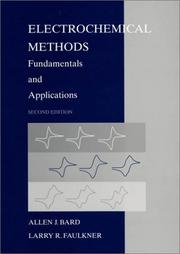
The gold-standard text on electroanalytical chemistry; its rigorous treatment of voltammetry, impedance, and electrode kinetics is accessible after the equilibrium and instrumentation groundwork laid in earlier stages.
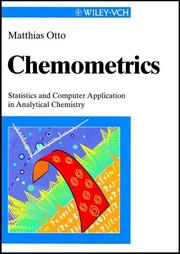
Introduces multivariate statistics, calibration, and data-driven method validation — essential modern skills for interpreting complex analytical datasets and designing robust methods.
Discussion
Keep reading
Paths that share books, cover the same subject, or open a related topic.