Start with The Shadow Lines. It runs about 250 pages, it is the first book in which Ghosh's method works completely, and it poses the question every later book is a variation on: what does a border actually do to the people living on either side of it?
The obvious alternative is Sea of Poppies, and it is not a foolish choice — it is his most celebrated novel and the opening of the trilogy most readers have heard of. The problem is that it is the first third of a project running well past 1,500 pages, written in a dense, deliberately unglossed sailor's pidgin. Readers who start there often mistake the linguistic fireworks and the plot machinery for the whole writer. The Shadow Lines can be read in a weekend and it teaches you how to read him.
The entry point
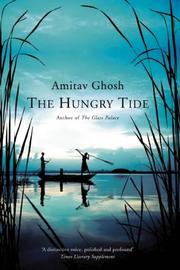
The Shadow Lines moves between Calcutta, Dhaka and London across three generations, and withholds its central event — a riot — for most of its length, circling it until the reader understands why the narrator cannot approach it directly. Follow it with The Hungry Tide, set among the tide country of the Sundarbans, where a cetologist, a translator and a fisherman are pulled into an older history of displacement. Those two books are the argument for Ghosh in miniature.
The Ibis trilogy
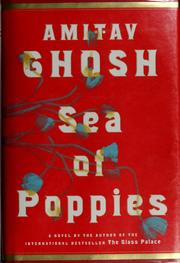
Read these three in publication order, which is also chronological: Sea of Poppies, then River of smoke (published as River of Smoke), then Flood of fire (published as Flood of Fire). They follow the cast of one ship outward from Bihar's opium fields into the run-up to the First Opium War.
An honest warning about the middle book. River of smoke leaves most of the first novel's characters behind, relocates to the foreign enclave at Canton, and spends long stretches on merchant politics and botany. Many readers stall there. It is worth pushing through, because Flood of fire pays off both earlier books, but do not expect the momentum of the opening volume to continue.
The other novels
The Glass Palace is the most conventionally satisfying — a hundred-year family story across Burma, Malaya and India, built around teak, rubber and the Indian soldiers who served the empire that colonised them. The Calcutta chromosome is the outlier: a short, strange thriller about malaria research and a hidden counter-science, unlike anything else he wrote. Read it for curiosity, not for representative Ghosh. Gun Island returns to characters from The Hungry Tide and yokes a Bengali folk legend to migration and climate collapse; it divides readers, largely over how much coincidence it asks you to accept.
The non-fiction
In an antique land braids Ghosh's fieldwork in an Egyptian village with his reconstruction of a twelfth-century Jewish merchant and the Indian slave named in his letters. It is the best single demonstration of how his historical research actually operates.
The climate books come last, and The Great Derangement should come before The Nutmeg's Curse. The first argues that the modern novel is structurally unable to represent climate catastrophe; the second extends that argument backwards into the colonial history of resource extraction, opening with the Dutch massacre in the Banda Islands. Read in that order the second reads as a completed thought rather than a detour.
Ghosh's first novel, The Circle of Reason, and his more recent books Smoke and Ashes and The Living Mountain are not in our catalogue; nothing above depends on them.
Where to stop
If you only ever read three: The Shadow Lines, Sea of Poppies and The Great Derangement. That gives you the novelist, the historian and the polemicist. Browse more author reading orders if you want a companion to read alongside him.
Follow the full ordered path here: Amitav Ghosh Reading Order: Where to Start.