Alice Munro Reading Order: Where to Start
Alice Munro's work rewards reading in roughly chronological order: her early collections establish the small-town Ontario world and her signature long-short-story form, the middle period deepens structural complexity and emotional range, and the late masterworks push time and memory to their limits. This three-stage path moves from her most accessible and celebrated entry points through her major mid-career achievements to the final, formally daring collections she wrote before retiring.
Foundations: The World of Alice Munro
BeginnerGet comfortable with Munro's voice, her Southern Ontario settings, and her core subject matter — girlhood, family, and the hidden lives of women — through her most beloved and approachable collection.
▸ Study plan for this stage
Pace: 8–10 weeks total: spend 4–5 weeks on "Lives of Girls and Women" (~20–25 pages/day, reading one chapter/episode per sitting to honour its episodic structure), then 4–5 weeks on "Who Do You Think You Are?" (~15–20 pages/day, pausing after each story to reflect before moving on).
- Southern Ontario as a literary landscape: how Munro uses the small town of Jubilee (Lives of Girls and Women) and Hanratty (Who Do You Think You Are?) not merely as backdrop but as a social and psychological force that shapes, limits, and haunts her protagonists
- The episodic / linked-story structure: understanding why Munro builds novels-in-stories rather than conventional narratives, and how each episode is simultaneously self-contained and cumulative
- Girlhood and female self-formation: tracing Del Jordan's and Rose's journeys from childhood curiosity through adolescent desire to the threshold of adult identity, and what each must sacrifice or hide to survive
- The hidden lives of women: Munro's persistent attention to the inner worlds — ambitions, shames, erotic lives, private griefs — that women conceal from family and community
- Time, memory, and retrospection: how both books use an adult narrator looking back, collapsing past and present, and why that double-vision is central to Munro's meaning
- Class and social mobility: the specific shame and hunger of wanting more than your origins allow, felt acutely by both Del and Rose as they move between worlds
- Irony and narrative distance: Munro's characteristic tone — compassionate yet unsentimental, precise yet open-ended — and how it prevents easy moral judgement
- The ordinary as revelation: Munro's technique of finding the uncanny, the violent, or the transcendent folded inside everyday domestic or small-town life
- In 'Lives of Girls and Women', how does Del Jordan's relationship with her mother shape her ambitions as a writer and thinker — and where do mother and daughter most sharply diverge?
- Both Jubilee and Hanratty are depicted with affection and with suffocating claustrophobia at the same time. How does Munro achieve this double effect, and what does it suggest about the protagonists' relationships to their origins?
- Rose in 'Who Do You Think You Are?' repeatedly reinvents herself — as student, actress, wife, celebrity. Why does she keep returning to Hanratty and to Flo, and what does that compulsion reveal about identity in Munro's world?
- Choose one episode from each book in which a male character holds power over the female protagonist. How does Munro use narrative distance and irony to complicate a simple reading of that power dynamic?
- Both Del and Rose are observers and storytellers-in-the-making. What does each book suggest about the costs and rewards of turning lived experience into art or narrative?
- How does Munro handle the passage of time within a single story-episode? Pick one chapter from each book and trace the specific techniques she uses to move between past and present.
- Mapping exercise: Draw a hand-sketched map of Jubilee (from 'Lives of Girls and Women') and Hanratty (from 'Who Do You Think You Are?'), marking locations mentioned in the text — the Flats Road, the main street, the school, key houses. Annotate each location with the emotional or social meaning it carries for the protagonist. Notice how geography encodes class and aspiration.
- Voice imitation: Write 300–400 words in Munro's retrospective first-person voice (modelled on Del's narration) about a mundane childhood memory of your own. Focus on her hallmark moves: the precise sensory detail, the adult narrator gently correcting or ironising the child's understanding, and the refusal to resolve ambiguity.
- Episode comparison: Select the chapter 'Baptizing' from 'Lives of Girls and Women' and the story 'Wild Swans' from 'Who Do You Think You Are?' — both involve a young woman's body and a disturbing encounter with male desire. Write a one-page close comparison: How does point of view, tone, and narrative distance differ? What does each ending withhold, and why?
- Character timeline: For Rose across all of 'Who Do You Think You Are?', build a timeline of her life stages and self-reinventions. For each stage, note: what she gains, what she loses, and what piece of Hanratty she carries forward. Use this to write a short paragraph arguing whether Rose's arc is one of escape, return, or something more complicated.
- Sentence-level analysis: Choose any two consecutive pages from each book and annotate them for sentence rhythm, free indirect discourse, and the moment Munro shifts between time planes. Bring your annotations to a reading group or write them up as a 200-word craft note.
- Reading journal — the 'hidden life' log: Each time you finish a chapter or story, jot down one character (not necessarily the protagonist) whose inner life Munro gestures at but never fully explains. Accumulate these across both books, then review: What patterns emerge? What does Munro consistently leave in shadow, and what might that restraint mean?
Next up: Mastering Munro's foundational voice, her Southern Ontario world, and her linked-story architecture in these two books equips the reader to appreciate how she later deepens and darkens those same techniques — expanding her time-frames, multiplying her narrative perspectives, and pushing structural experimentation further — in the more complex collections that follow.

Munro's only novel-in-stories follows Del Jordan from childhood to young womanhood and is the perfect entry point: it reads almost like a novel, making her world immediately immersive and her voice easy to follow.
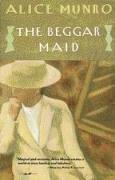
Known in the US as 'The Beggar Maid,' this linked collection won the Booker Prize and introduces the full sweep of a woman's life across decades — a step up in ambition that builds directly on the coming-of-age foundation of the previous book.
The Major Collections: Mastering the Form
IntermediateUnderstand how Munro reinvented the short story — using radical time-shifts, double plots, and devastating reversals — through the three collections most critics consider her peak achievement.
▸ Study plan for this stage
Pace: 10–12 weeks total (~3–4 weeks per collection): read The Moons of Jupiter first (weeks 1–3, ~2–3 stories per sitting), then The Progress of Love (weeks 4–7, slower pace — these stories are denser and longer), then Friend of My Youth (weeks 8–11, ~2 stories per sitting), with a final synthesis week (w
- Radical time-shifts: Munro's non-linear chronology — how she fractures a story's timeline across decades within a single narrative, as seen in 'The Moons of Jupiter' title story and 'Lichen' in The Progress of Love
- Double plots and layered storylines: the technique of embedding a second, often historical or generational story inside the main narrative frame, most fully developed in 'Friend of My Youth' and 'Meneseteung'
- Devastating reversals and late-story revelations: how Munro withholds or reframes information so that the final pages retroactively rewrite everything the reader thought they understood, e.g. 'The Progress of Love' title story
- The unreliable or limited narrator: Munro's narrators frequently misread other characters or their own pasts — tracking how much the narrator knows vs. what the reader can infer is central to all three collections
- Female experience across generations: the mother–daughter dynamic as a recurring structural engine, from the hospital vigil in 'The Moons of Jupiter' to the competing memories of the mother in 'The Progress of Love'
- The Huron County world as moral landscape: how Munro uses small-town Ontario — its Presbyterianism, its class anxieties, its rural-to-urban migrations — as a thematic and symbolic environment across all three books
- Compression and ellipsis: Munro's technique of skipping over 'the scene that should be there' and instead rendering its aftermath or a character's later memory of it
- The story-within-a-story and embedded narrative: particularly in 'Friend of My Youth' and 'Meneseteung,' where Munro builds fiction about the act of imagining or reconstructing another person's life
- In 'The Progress of Love,' the narrator's account of her mother burning the inheritance money conflicts with her aunt's version — what does this contradiction reveal about how Munro treats memory and truth, and how does it reshape your reading of the entire story?
- Choose one story from The Moons of Jupiter (e.g., 'Dulse,' 'Labor Day Dinner,' or the title story) and map its timeline on paper: where does Munro cut away from the present, and what is the emotional effect of each time-shift?
- How does 'Friend of My Youth' use the narrator's act of dreaming and imagining Flora's life to comment on the limits of biographical knowledge and the ethics of storytelling?
- Across all three collections, how does Munro portray the moment when a child (or adult child) truly sees a parent as a separate, flawed person — and what formal techniques does she use to stage that recognition?
- What role does silence, omission, or the 'unspoken' play in 'Lichen' from The Progress of Love — and how does Munro make the reader feel the weight of what characters refuse to say?
- By the end of Friend of My Youth, how has Munro's narrative architecture evolved from The Moons of Jupiter — can you point to specific structural differences in how stories are opened, complicated, and closed?
- Timeline mapping: For at least two stories (one from each of the first two collections), draw a literal chronological timeline of events and then a second line showing the order in which Munro reveals them. Write a paragraph on what the gap between the two lines achieves emotionally.
- Reversal autopsy: In 'The Progress of Love' (title story), identify the exact sentence or paragraph where the story's central 'ground' shifts under the reader. Annotate the pages leading up to it — what clues did Munro plant, and what did she conceal?
- Narrator reliability audit: Pick one first-person narrator from The Moons of Jupiter (e.g., in 'The Moons of Jupiter' or 'Bardon Bus') and list every moment where the narrator's self-assessment seems incomplete or self-serving. Write a brief 'counter-reading' of the story from another character's implied perspective.
- Comparative mother–daughter analysis: Write a 400–600 word comparative note tracing how the mother figure is constructed in 'The Moons of Jupiter' (title story), 'The Progress of Love' (title story), and 'Friend of My Youth.' Focus on what each narrator chooses NOT to say about her mother.
- Imitation exercise: Write a 500-word story opening that begins in the present, cuts back 30 years, and returns to the present — consciously imitating Munro's technique of using the past scene to reframe the present one. Use a domestic or small-town setting.
- Close-reading log: Keep a running notebook entry for each story in Friend of My Youth, recording one moment of compression or ellipsis per story — the place where Munro skips a scene. Note what scene is missing and speculate on why Munro chose not to write it.
Next up: Mastering these three peak collections — and their increasingly ambitious structural experiments — equips the reader to engage with Munro's later, even more formally radical work, where the boundaries between story and novel, memory and invention, are pushed to their absolute limits.
A transitional collection where Munro begins experimenting with non-linear time and adult female consciousness; reading it here shows the bridge between her early and mature styles.
Winner of the Governor General's Award, this collection introduces her most complex narrative structures — stories that loop back on themselves and reinterpret their own events — essential preparation for the late work.
Widely regarded as one of her finest collections, it deepens the themes of memory, betrayal, and the unreliability of the stories we tell about our own lives, cementing the skills built in the previous two books.
Late Masterworks: Time, Memory, and the Final Stories
ExpertEngage with Munro at her most formally daring — stories that span entire lifetimes in a few pages, subvert their own endings, and confront aging, illness, and death with unflinching clarity.
▸ Study plan for this stage
Pace: 10–12 weeks total: ~3–4 weeks per book. Runaway (336 pp): ~25 pages/day; The View from Castle Rock (368 pp): ~25 pages/day; Dear Life (319 pp): ~22 pages/day. Reserve the final week for cross-book synthesis, re-reading key stories, and completing exercises.
- Non-linear temporality: Munro's signature technique of compressing or leaping across decades within a single story, as seen in 'Runaway's' title story and 'Dear Life's' final autobiographical quartet
- The subverted or withheld ending: how Munro systematically undermines narrative closure — characters escape, return, or disappear without resolution (e.g., Carla and the vanishing goat in 'Runaway'; 'Dolly' in Dear Life)
- Autobiographical fiction and the permeable self: The View from Castle Rock's explicit blurring of family history, memoir, and invention, and the 'Finale' section of Dear Life where Munro openly names her own life as source material
- Retrospective narration and the unreliable memory: how older narrators reconstruct the past with acknowledged gaps, distortions, and revisions — central to both The View from Castle Rock and Dear Life's final four stories
- Illness, aging, and the body's betrayal: the unflinching treatment of dementia, cancer, and physical decline in stories like 'Nettles,' 'Gravel,' and 'Amundsen' (Dear Life), and the elder characters of The View from Castle Rock
- The rural Ontario world as mythic landscape: how Munro transforms Huron County into a morally and psychologically charged space across all three books
- Female entrapment and escape — and the cost of both: the recurring pattern in Runaway where women flee suffocating relationships only to find freedom equally imprisoning or ambiguous
- Genre hybridity: Munro's movement across the story cycle, the linked novella, the memoir-essay, and the lyric sketch — especially visible in The View from Castle Rock's two-part structure
- In 'Runaway,' how does Munro use the three Juliet stories as a triptych to dramatize the way a single life can be both chosen and lost? What formal choices — time jumps, ellipsis, the withheld explanation — create that effect?
- The View from Castle Rock is divided into 'No Advantages' (historical family narratives) and 'Home' (autobiographical stories). How does this two-part architecture interrogate the boundary between documented history and personal myth? What does Munro gain — and risk — by mixing the two modes?
- In Dear Life's 'Finale,' Munro writes: 'These are not quite stories. They are the first and last — and the closest — things I have to say about my own life.' How do these four pieces ('The Eye,' 'Night,' 'Voices,' 'Dear Life') differ structurally and tonally from the preceding stories in the collection, and what does that difference argue about the relationship between fiction and autobiography?
- Across all three books, how does Munro represent the experience of women who make a decisive break — geographic, romantic, or familial — and then must live with the aftermath? Use at least one story from each book to trace how her treatment of this theme evolves.
- How does Munro handle the representation of death and dying across these three books? Compare the treatment of a death scene or its aftermath in Runaway, The View from Castle Rock, and Dear Life — what shifts in tone, distance, or narrative strategy do you notice?
- Munro has described her stories as working 'like a house' rather than a road — you can move through rooms in different orders. Choose one story from each book and analyze its spatial/architectural structure: where are the 'rooms,' and how does the reader's movement between them produce meaning?
- Close-reading the time-jump: Select the title story 'Runaway' and map every temporal shift on a single timeline. Mark where Munro signals the jump (or deliberately obscures it). Then write a one-page analysis of what emotional or thematic work each ellipsis performs — what is left in the gap, and why.
- Rewrite an ending: Choose a story from Dear Life whose ending feels deliberately withheld or ambiguous (e.g., 'Amundsen' or 'Gravel'). Write an alternative final paragraph that provides conventional closure, then write a reflection comparing the two endings — what does Munro's refusal of resolution force the reader to do that your version does not?
- Memoir vs. fiction audit: Read the 'Finale' section of Dear Life alongside the 'Home' section of The View from Castle Rock. Create a two-column annotated list: on one side, passages that read as documentary/memoir; on the other, passages that deploy clearly fictional techniques (scene construction, interior monologue, invented dialogue). Write a short essay on what the overlap between columns reve
- Voice and distance exercise: Pick one first-person story from Runaway and one from The View from Castle Rock. Rewrite the opening two paragraphs of each in close third-person. Then reverse: take a third-person passage from Dear Life and rewrite it in first person. Reflect on how point-of-view controls the reader's relationship to memory and reliability.
- Thematic tracking across the trilogy: Keep a running journal as you read all three books, logging every instance of a woman leaving or attempting to leave a relationship or place. Note the story, the character's method of escape, and the outcome. At the end, write a 500-word synthesis: does Munro's vision of female freedom become more or less hopeful across these three late books?
- Structural diagram and presentation: Choose The View from Castle Rock's 'No Advantages' section and diagram the genealogical and narrative threads as a visual map (family tree crossed with story sequence). Then write a one-page argument for why Munro chose to begin this late-career book with 18th-century Scottish ancestors rather than with her own remembered life.
Next up: Mastering Munro's late formal strategies — compressed time, autobiographical candor, and the refusal of closure — equips the reader to engage critically with her complete legacy and reception, naturally leading into comparative study of her influence on contemporary short fiction writers and the broader critical conversation about her Nobel Prize-era significance.
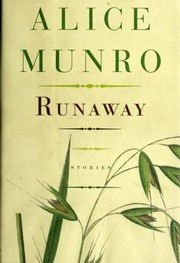
Many critics consider this her single greatest collection; its three linked 'Juliet' stories and the devastating title story show her late style at full power and are an ideal gateway to the final books.
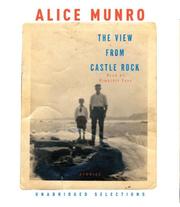
A hybrid of fiction and family history tracing her Scottish ancestors to Ontario, this book reveals the autobiographical bedrock beneath all her fiction and rewards readers who already know her invented world well.

Her final collection, ending with four explicitly autobiographical pieces she calls 'not quite stories,' this is the perfect capstone — a farewell that reframes everything read before it.
Discussion
Keep reading
Paths that share books, cover the same subject, or open a related topic.