Solzhenitsyn Reading Order: Where to Start
This curriculum follows the learner's own instinct — start with Solzhenitsyn's most accessible masterpiece, build historical and biographical context, then tackle the monumental Gulag Archipelago before diving into the major novels. Each stage deepens both the literary and moral-historical understanding needed to fully absorb the next, turning a reading project into a genuine reckoning with one of the 20th century's most important writers.
The Entry Point
IntermediateExperience Solzhenitsyn's voice, moral vision, and the Soviet camp world in its most concentrated and accessible form before tackling anything longer.
▸ Study plan for this stage
Pace: 1–2 weeks, ~20–25 pages/day (the novel is ~180 pages); read in no more than 3 sittings to preserve the single-day narrative momentum, ideally one long sitting if possible
- The 'zek' worldview: how Ivan Denisovich Shukhov constructs dignity, meaning, and small victories within a system designed to strip all three away
- Solzhenitsyn's use of skaz narration — a close third-person voice fused with Shukhov's peasant idiom, camp slang, and irony — as a moral and literary instrument
- The Gulag as a microcosm of Soviet society: hierarchy, informers, brigade solidarity, and the corruption of authority mirrored in the wider USSR
- Moral taxonomy of the camp: how characters (Shukhov, Alyoshka the Baptist, Fetyukov, Der, Caesar) represent different responses to dehumanization — resistance, faith, collaboration, and collapse
- The politics of labor: how the Soviet state weaponized work as punishment and how Shukhov paradoxically reclaims agency through skilled, honest labor
- Time as a narrative and thematic device: one ordinary 'almost good' day standing in for 3,653 days of a sentence, and what that compression reveals about survival
- The autobiographical and testimonial dimension: Solzhenitsyn as witness, and the ethical weight of fiction that doubles as historical document
- Soviet doublespeak and ideological unreality: the gap between official language and lived experience, rendered visible through Shukhov's unsentimental gaze
- By the end of the novel's single day, what specific small acts allow Shukhov to consider it 'almost a happy day' — and what does Solzhenitsyn imply about the moral cost of that happiness?
- How does the skaz narrative voice work in practice? Find three passages where the language itself (word choice, rhythm, irony) tells you something the plot alone does not.
- Compare at least two characters' survival strategies — for example Shukhov vs. Alyoshka the Baptist vs. Fetyukov. What does Solzhenitsyn seem to endorse, condemn, or leave deliberately ambiguous?
- The bricklaying scene is often called the novel's moral and aesthetic center. Why might Solzhenitsyn have chosen skilled physical labor — rather than prayer, memory, or defiance — as the site of Shukhov's most complete humanity?
- How does the camp's internal hierarchy (squad leaders, stool pigeons, privileged prisoners, guards) replicate or distort Soviet society at large? What is Solzhenitsyn arguing about systems of power?
- This novel was published in the USSR in 1962 under Khrushchev. How does knowing its publication context change how you read its silences, omissions, and carefully calibrated tone?
- **Close-reading log:** Keep a running annotation of every piece of camp slang or Soviet jargon (zek, godfather, security officer, norm, etc.). After finishing, write a one-page glossary in your own words — this forces active engagement with Solzhenitsyn's linguistic world-building.
- **The 'one day' experiment:** Before your second reading pass, write a one-paragraph account of a single ordinary day in your own life, then rewrite it as if every small comfort were a hard-won victory. Compare your result to Shukhov's day — what does the exercise reveal about perspective and narrative framing?
- **Character moral map:** Draw a simple spectrum from 'preserves inner self' to 'surrenders inner self' and place every named character on it with a one-sentence justification. Identify where the novel's sympathy lies and where it withholds judgment.
- **Passage imitation:** Choose the bricklaying scene or the bread-hiding scene and write a 200-word imitation in Solzhenitsyn's skaz style about a mundane task from your own life. Focus on replicating the tight, unsentimental, sensory precision of his prose.
- **Historical context brief:** Spend 60–90 minutes reading about the Khrushchev Thaw and the real history of the Soviet Gulag system (e.g., a reliable encyclopedia article or the introduction to your edition). Write three bullet points on how this context reframes something specific in the novel.
- **Reflection essay:** Write a 400–600 word response to this prompt: 'Solzhenitsyn gives Shukhov no grand rebellion and no escape. Is the novel pessimistic, optimistic, or something more complicated — and what in the text supports your reading?'
Next up: Mastering Shukhov's compressed single-day world and Solzhenitsyn's moral-testimonial voice gives the reader the perceptual and ethical framework needed to follow those same concerns across a much larger canvas — longer works, more complex structures, and the full sweep of Solzhenitsyn's witness to Soviet history.

The natural starting point: a single day in a Siberian labor camp, told with spare, almost biblical precision. It introduces Solzhenitsyn's style, his moral seriousness, and the Gulag world without overwhelming the reader.
Historical and Biographical Context
IntermediateUnderstand the history of the Soviet terror, the Gulag system, and Solzhenitsyn's own biography so that the Gulag Archipelago lands with its full weight.
▸ Study plan for this stage
Pace: 10–12 weeks total: Weeks 1–5 for "The Whisperers" (~30–35 pages/day, ~480 pages), and Weeks 6–12 for "Solzhenitsyn" by Scammell (~35–40 pages/day, ~1,000 pages). Allow one buffer day per week for note consolidation and reflection.
- The mechanics and culture of Stalinist terror: denunciations, arrests, show trials, and how fear atomized Soviet society into a nation of 'whisperers' (from Figes)
- The Gulag as a state institution: its scale, internal logic, economic function, and the lived experience of prisoners as documented through Figes's oral histories
- The psychology of complicity and survival: how ordinary Soviet citizens navigated loyalty, silence, betrayal, and self-censorship — the moral cost of 'whispering'
- The destruction of private life and family under totalitarianism: how the Soviet state colonized intimate relationships, memory, and identity (central theme in Figes)
- Solzhenitsyn's biography as a microcosm of Soviet history: his ideological formation as a true believer, his front-line service in WWII, his arrest in 1945 for criticizing Stalin in a letter, and his years in the Gulag and exile (from Scammell)
- The transformation of Solzhenitsyn's worldview in the camps: the shift from Marxist faith to spiritual and moral awakening, and how suffering became the crucible of his literary vocation
- The political and literary landscape of the Khrushchev Thaw: how the brief opening that allowed 'One Day in the Life of Ivan Denisovich' to be published shaped — and then constrained — Solzhenitsyn's career (from Scammell)
- The clandestine creation of The Gulag Archipelago: Scammell's account of the secret network of witnesses, the hidden manuscripts, and the KGB's relentless surveillance of Solzhenitsyn
- After reading Figes, how did the culture of denunciation and enforced silence reshape Soviet family life and personal identity — and why does Figes call these people 'whisperers'?
- What were the economic and ideological justifications the Soviet state used to sustain the Gulag system, and how does Figes's oral-history method bring its human cost into focus?
- According to Scammell, what were the specific circumstances of Solzhenitsyn's arrest, and how did his years in the sharashka and labor camps alter both his politics and his sense of literary mission?
- How did the Khrushchev Thaw create the narrow window for Solzhenitsyn's early publication, and why did that window close so decisively — leaving him to work in secrecy?
- In what ways does Scammell's biography show Solzhenitsyn embodying the very experiences documented in The Gulag Archipelago — and where does his personal story diverge from the 'average' zek (prisoner)?
- Having read both books together, what is the relationship between the broad social history Figes documents and the individual biography Scammell traces — how do they reinforce or complicate each other?
- Maintain a dual-column reading journal: for every major event or theme in Figes, note a corresponding moment in Scammell's biography where Solzhenitsyn personally intersected with that same historical force (e.g., the 1937 terror, camp life, the Thaw). This builds the connective tissue between the two books.
- Draw a annotated timeline spanning 1917–1974 (the year of Solzhenitsyn's expulsion from the USSR). Plot key events from Soviet history (drawn from Figes) alongside the milestones of Solzhenitsyn's life (drawn from Scammell), marking where his biography and the broader terror overlap most directly.
- Choose three of the anonymous personal testimonies from Figes's oral-history sections and write a one-paragraph 'character sketch' for each person, then find a passage in Scammell where Solzhenitsyn describes a similar type of prisoner or experience. Write a short comparative note on what the juxtaposition reveals.
- After finishing Scammell, write a one-page 'reader's brief' — as if preparing a colleague who is about to open The Gulag Archipelago for the first time — summarizing the historical context (from Figes) and authorial biography (from Scammell) they need to know to read it with full comprehension.
- Select one chapter from Figes that deals with a specific Gulag camp experience and re-read it after finishing Scammell's chapters on Solzhenitsyn's own camp years. Write a reflection (300–400 words) on how knowing the author's biography changes the way you receive the historical testimony.
- Create a 'moral ledger' for three figures from Figes's book who collaborated with or informed on others. Using Scammell's account of Solzhenitsyn's own ethical struggles and choices in the camps, reflect on what standards of judgment — if any — Solzhenitsyn himself would apply to these figures.
Next up: By grounding the reader in both the systemic horror of the Gulag (Figes) and the personal crucible that forged Solzhenitsyn as a witness (Scammell), this stage ensures that opening The Gulag Archipelago feels not like encountering a historical document but like meeting a man you already know, describing a world you have already entered.
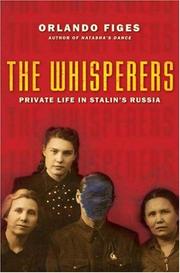
A richly documented history of how ordinary Soviet citizens lived under Stalinist terror — the fear, the informing, the survival strategies. This is essential human context for everything Solzhenitsyn describes.
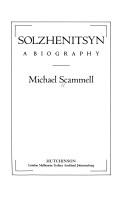
The definitive English-language biography, tracing his arrest, camp years, literary emergence, and expulsion from the USSR. Reading this before the Gulag Archipelago makes the personal stakes of that book viscerally clear.
The Gulag Archipelago
ExpertEngage fully with Solzhenitsyn's monumental witness-history of the Soviet camp system — part memoir, part oral history, part moral philosophy — armed with the context built in earlier stages.
▸ Study plan for this stage
Pace: 12–16 weeks, ~25–35 pages/day — The Gulag Archipelago spans roughly 1,800+ pages across its three volumes; treat each volume as a distinct reading block (4–5 weeks each), allowing slower, more reflective reading for the densest philosophical and testimonial sections. Budget extra time for Parts III–
- The 'Archipelago' as metaphor: the camp system as a hidden, island-chain state-within-a-state, invisible to ordinary Soviet citizens yet structurally essential to the USSR
- Arrest, interrogation, and the conveyor: Solzhenitsyn's forensic anatomy of how the Soviet legal-terror machine processed individuals — from the knock on the door to the signing of a confession
- The zek (prisoner) as a new human category: how the Gulag created a distinct social identity, moral universe, and survival ethic among its inhabitants
- Ideology as the engine of evil: Solzhenitsyn's central argument that abstract ideological thinking — not mere sadism or nationalism — enables ordinary people to commit monstrous acts ('the line between good and evil passes through every human heart')
- Witness and oral history methodology: how Solzhenitsyn synthesized 227+ personal testimonies with his own experience to construct a collective memory the Soviet state sought to erase
- Moral survival vs. physical survival: the tension between preserving one's soul (refusing to inform, maintaining dignity) and the pragmatic compromises demanded by camp life
- The critique of the Russian intelligentsia and the West: Solzhenitsyn's indictment of those who rationalized or ignored Soviet terror, including liberal Western intellectuals
- Repentance and self-knowledge as political acts: the argument that genuine national recovery requires honest reckoning with complicity, not just condemnation of perpetrators
- How does Solzhenitsyn use the 'archipelago' metaphor structurally and thematically — what does it reveal about the relationship between the camp system and mainstream Soviet society?
- What is Solzhenitsyn's explanation for how ordinary Soviet citizens became interrogators, guards, and informers? How does this compare to Hannah Arendt's 'banality of evil'?
- Trace the arc of a single prisoner's journey as Solzhenitsyn constructs it: from arrest through interrogation, transport, camp life, and (for some) release — what institutions, rituals, and psychological mechanisms appear at each stage?
- What does Solzhenitsyn mean when he says the line between good and evil runs through every human heart, and how does this claim function as both a moral and a political argument within the book?
- How does Solzhenitsyn balance his roles as memoirist, historian, and moral philosopher? Where do these roles come into tension, and does he resolve those tensions satisfactorily?
- What is Solzhenitsyn's vision for Russia's future as implied in the final volume — what does he believe genuine repentance and renewal would require of individuals and of the state?
- Volume-by-volume précis: After finishing each of the three volumes, write a 400–600 word summary of its dominant argument, emotional register, and most important new evidence or testimony introduced — then compare the three summaries to map the book's overall arc.
- Testimony mapping: Select five of the 227+ prisoner testimonies Solzhenitsyn weaves into the text. For each, note the person's background, the charge against them, their camp experience, and what their story contributes to Solzhenitsyn's larger argument. Reflect on how individual voices function as historical evidence.
- The 'line through the heart' close reading: Locate and re-read the famous passage about the line between good and evil (Part IV). Write a 500-word analysis of its rhetorical structure — how does Solzhenitsyn set it up, what literary and philosophical traditions does it draw on, and what work does it do in the context of the surrounding chapters?
- Ideological complicity debate: Write two short position papers (250–300 words each) — one defending Solzhenitsyn's claim that ideology (not just power or fear) is the primary driver of Gulag atrocities, and one challenging it using evidence from within the text itself. Then write a one-paragraph synthesis.
- Comparative annotation: Choose one chapter from Part I (arrest/interrogation) and one from Part III (camp life). Annotate both with marginal notes connecting Solzhenitsyn's observations to the historical and biographical context you built in earlier stages of this curriculum. Where does prior knowledge deepen your reading? Where does Solzhenitsyn surprise or contradict your expectations?
- Reader's reckoning journal entry: After completing the final volume, write an unedited, 1–2 page personal response to Solzhenitsyn's call for repentance and honest self-examination. Then revise it into a structured 500-word reflection on what the book demands of its reader — not just as a historical witness, but as a moral agent.
Next up: Completing The Gulag Archipelago equips the reader with Solzhenitsyn's fullest moral and historical vision, making them ready to examine how that vision was received, contested, and lived out — in his later fiction, his Harvard Address, his post-exile writings, and the ongoing global debate about his legacy.
The great central work: a three-volume, genre-defying account of arrest, interrogation, transit, and the camp universe, woven from Solzhenitsyn's own experience and the testimony of 227 fellow survivors. Read it in the abridged one-volume edition first if needed, then return to the full text — it rewards both approaches.
The Major Novels
ExpertRead Solzhenitsyn's two great realist novels, which apply the moral and historical vision of the Gulag Archipelago to fully realized fictional worlds.
▸ Study plan for this stage
Pace: 8–10 weeks total: Weeks 1–5 for The First Circle (~25–30 pages/day, accounting for its dense polyphonic structure and large cast), and Weeks 6–10 for Cancer Ward (~20–25 pages/day, allowing time for slower, more reflective reading of its philosophical dialogues and medical allegory). Set aside one f
- Polyphonic novel structure: how The First Circle manages 40+ characters across a single compressed 72-hour timeframe, giving each prisoner, guard, and official a distinct moral voice
- The sharashka as a microcosm of Soviet society: how the privileged scientific prison in The First Circle mirrors the broader stratification of power, complicity, and conscience under Stalinism
- Stalin as a character: Solzhenitsyn's audacious fictional portrait of Stalin in The First Circle as a study in absolute power, paranoia, and moral isolation
- The ethics of complicity and compromise: the central dilemma faced by Gleb Nerzhin, Innokenty Volodin, and others — whether to collaborate with the state to survive or resist at great personal cost
- The cancer ward as existential and political allegory in Cancer Ward: illness as a leveler of Soviet class distinctions, and the ward as a space where ideology is stripped away by mortality
- Oleg Kostoglotov as autobiographical surrogate: how Cancer Ward channels Solzhenitsyn's own experience of exile, illness, and recovery into a fictional meditation on freedom and the body
- Tolstoyan realism and moral didacticism: how both novels inherit Tolstoy's tradition of using fiction to deliver ethical verdicts on society, history, and the individual soul
- The question 'What do men live by?': the recurring Tolstoyan motif in Cancer Ward that organizes the novel's philosophical debates about meaning, survival, and human dignity
- In The First Circle, why does Gleb Nerzhin ultimately refuse the offer that would improve his prison conditions, and what does his choice reveal about Solzhenitsyn's moral philosophy?
- How does Solzhenitsyn use the character of Innokenty Volodin — a privileged Soviet diplomat — to dramatize the awakening of conscience, and how does his arc mirror or contrast with Nerzhin's?
- What is the significance of the novel's title, The First Circle? How does the Dantean reference shape your reading of the sharashka's 'privileged' status within the Soviet penal system?
- In Cancer Ward, how does the ward function simultaneously as a realistic medical setting and as a political allegory for Soviet society? Which characters most clearly embody specific social or ideological positions?
- How does Solzhenitsyn use Tolstoy's story 'What Men Live By' and Tolstoy's novella 'What Do Men Live By?' as an intertextual framework in Cancer Ward to organize its moral debates?
- Across both novels, how does Solzhenitsyn portray the relationship between physical confinement or illness and spiritual or intellectual freedom? Is freedom possible within total constraint?
- Character mapping for The First Circle: Create a one-page chart of the novel's major characters (Nerzhin, Rubin, Sologdin, Volodin, Stalin, Yakonov, etc.), noting each character's position in the Soviet hierarchy, their moral stance toward the regime, and how they change — or refuse to change — over the 72-hour timeframe.
- Close-reading journal: Select one chapter from each novel that strikes you as the moral or philosophical heart of the book (e.g., the Stalin chapters in The First Circle, or the 'What Do Men Live By?' discussion in Cancer Ward). Write a 500-word analysis of Solzhenitsyn's narrative technique, tone, and ethical argument in that chapter.
- Dante comparison exercise: Read the relevant cantos of Dante's Inferno describing the First Circle (Limbo). Write a one-page reflection on how Solzhenitsyn both uses and subverts the Dantean framework — in what ways is the sharashka a 'privileged' hell, and what irony does Solzhenitsyn draw from that privilege?
- Debate the dilemma: Stage a written 'debate' (or discuss with a reading partner) between two positions — Nerzhin's refusal to compromise vs. Rubin's continued belief in the Communist ideal. Use specific textual evidence from The First Circle to argue both sides before reaching your own verdict.
- Illness and ideology tracker for Cancer Ward: As you read, keep a running log of each patient's background and ideology, and note how their attitude toward their illness reflects or challenges their political worldview. At the end, write a paragraph on which character's arc you found most convincing and why.
- Comparative essay: Write a 700–1,000-word essay comparing how the two novels use a single enclosed space (the sharashka; the cancer ward) to interrogate the same core question: what does it mean to live with integrity under a system designed to crush the individual self?
Next up: Mastering these two novels — with their vast casts, enclosed-world allegories, and unflinching moral verdicts — equips the reader to engage with Solzhenitsyn's shorter, more stylistically experimental fiction and his later historical and prophetic writings, where the same ethical vision is compressed into different, often more polemical forms.
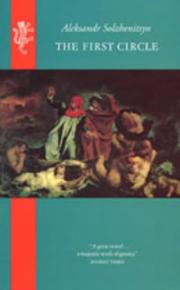
Set in a privileged 'sharashka' prison research institute, this is his most novelistically rich work — a Tolstoyan ensemble of characters debating conscience, compromise, and freedom. It bridges the short fiction and the epic scale of August 1914.
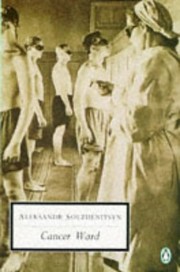
A hospital ward in 1955 becomes a microcosm of Soviet society in the thaw after Stalin's death. Deeply personal (Solzhenitsyn survived cancer himself), it is his most humane and emotionally direct novel.
The Historical Epic and the Moral Vision
ExpertEncounter Solzhenitsyn's most ambitious literary project and his explicit statement of his worldview, completing a full arc from the intimate to the civilizational.
▸ Study plan for this stage
Pace: 8–10 weeks total: Weeks 1–6 for "August 1914" (~25–30 pages/day, accounting for its dense historical and military passages), and Weeks 7–10 for "The Oak and the Calf" (~20–25 pages/day, with slower reading to absorb the memoir's polemical and reflective depth).
- The Red Wheel as a polyphonic historical epic — Solzhenitsyn's structural use of 'knots' (uzly) to compress catastrophic historical turning points rather than narrating continuous time
- The Battle of Tannenberg as a civilizational metaphor — military disaster as a symptom of Russia's deeper spiritual, institutional, and moral failures
- Solzhenitsyn's historical determinism vs. individual moral agency — how characters like Vorotyntsev embody the possibility of heroic resistance within a collapsing system
- The literary technique of the 'screen chapter' — documentary montage, newspaper clippings, and cinematic interludes as tools for embedding fiction within historical record
- Solzhenitsyn's Orthodox Christian moral vision — the idea that Russia's catastrophe is inseparable from a loss of spiritual rootedness and national self-knowledge
- The writer as witness and combatant — in 'The Oak and the Calf,' the memoir form as a weapon, and literature as an act of moral resistance against the Soviet state
- The Soviet literary establishment as an antagonist — censorship, the Writers' Union, Novy Mir, and the systemic pressures that shaped what could and could not be published
- The relationship between suffering, artistic vocation, and prophetic authority — how Solzhenitsyn constructs his own identity as a writer-prophet in 'The Oak and the Calf'
- How does Solzhenitsyn use the 'knot' structure in August 1914 to argue that history pivots on concentrated moments of failure — and what does the Tannenberg disaster specifically reveal about the rot within the Russian imperial system?
- What role does the character of Colonel Vorotyntsev play as a moral and narrative focal point, and how does his experience dramatize the tension between individual conscience and institutional collapse?
- In what ways do the 'screen chapters' of August 1914 function differently from the novel's conventional narrative chapters — what is Solzhenitsyn arguing about the relationship between documentary evidence and literary truth?
- In The Oak and the Calf, how does Solzhenitsyn characterize his literary struggle against the Soviet state — and what does the 'oak and the calf' metaphor itself reveal about his self-understanding as a writer?
- How does The Oak and the Calf reframe the reader's understanding of August 1914 — in what ways does knowing the memoir's account of the writing and suppression of the novel change how you read the novel itself?
- Taken together, how do these two books — one a vast historical fiction, one a combative literary memoir — constitute a single, unified moral vision about Russia, history, and the writer's responsibility?
- Structural mapping: After finishing August 1914, draw a diagram of the 'knot' structure — chart which characters, military units, and historical events each chapter tracks, and annotate where the 'screen chapters' interrupt the narrative. Reflect in writing on what the architecture itself communicates.
- Close reading of a screen chapter: Select one of the documentary/cinematic screen chapters from August 1914 and write a 400–600 word analysis of its form — how does the shift in typography, voice, and register affect your experience as a reader, and what argument does it make that conventional prose could not?
- Character moral audit: Write a one-page character study of Vorotyntsev, cataloguing every moment he faces a choice between personal integrity and institutional loyalty. Conclude with a thesis on what Solzhenitsyn is saying through him about moral heroism in a failing civilization.
- Comparative memoir analysis: After finishing The Oak and the Calf, identify three specific episodes where Solzhenitsyn describes decisions about what to write, what to conceal, or how to publish. For each, write a paragraph connecting his real-world strategic choice to a theme or technique visible in August 1914.
- Worldview synthesis essay: Write a 700–1000 word essay answering the question: 'What is Solzhenitsyn's diagnosis of Russia's historical tragedy, and what does he believe is the cure?' Draw evidence from both books, treating the novel and the memoir as two halves of a single argument.
- Contextual research exercise: Choose one historical figure who appears in August 1914 (e.g., Samsonov, Zhilinsky) and spend 1–2 hours reading a brief historical account of them. Return to Solzhenitsyn's portrayal and write a short reflection on where he fictionalizes, where he condemns, and what moral point he is making through the gap between history and narrative.
Next up: By completing the vast historical canvas of August 1914 and the autobiographical combativeness of The Oak and the Calf, the reader has now grasped Solzhenitsyn's full range — from intimate witness to civilizational prophet — and is equipped to engage critically with his legacy, reception, and the ongoing debates about his place in world literature and political thought.

The opening 'knot' of his vast Red Wheel cycle, tracing the catastrophic Russian defeat at Tannenberg. It shows Solzhenitsyn as a Tolstoyan historical novelist and explains his diagnosis of how Russia arrived at Bolshevism.
His memoir of the literary struggle — the battles with Soviet censors, the KGB, and the Writers' Union. A perfect capstone that ties together the man, the work, and the historical moment, and reads almost like a thriller.
Discussion
Keep reading
Paths that share books, cover the same subject, or open a related topic.