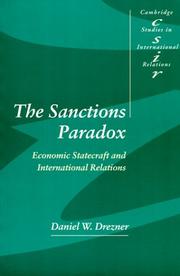
The sanctions paradox
Daniel W. Drezner · 1999 · 342 pages
As an Amazon Associate we earn from qualifying purchases. Some book links are affiliate links; you pay the same price and we may earn a small commission.
About this book
Despite their increasing importance, there is little theoretical understanding of why nation-states initiate economic sanctions, or what determines their success. This book argues that both imposers and targets of economic coercion incorporate expectations of future conflict as well as the short-run opportunity costs of coercion into their behaviour. Drezner argues that conflict expectations have a paradoxical effect. Adversaries will impose sanctions frequently, but rarely secure concessions. Allies will be reluctant to use coercion, but once sanctions are used, they can result in significant concessions. Ironically, the most favourable distribution of payoffs is likely to result when the imposer cares the least about its reputation or the distribution of gains. The book's argument is pursued using game theory and statistical analysis, and detailed case studies of Russia's relations with newly-independent states, and US efforts to halt nuclear proliferation on the Korean peninsula.--Publisher description.
Appears in these reading paths


Economic Sanctions: The Best Books on Financial Statecraft, in Order
Related reading guides
Reader reviews
Ratings and notes from readers — tagged with how deep into the subject they were.
Loading reviews…