Economic Sanctions: The Best Books on Financial Statecraft, in Order
Sanctions are now the default instrument of Western statecraft, and this path is built to explain how they got there, how they are actually administered, why the dollar makes them possible, and what the evidence says about whether they work. It runs from the interwar origins through the post-2001 Treasury machinery, into the monetary plumbing, then to the scholarly literature on effectiveness, and closes with the recent critiques of overuse. The middle two stages disagree with each other about how well sanctions work; read them together rather than picking one.
Where the weapon came from
BeginnerUnderstand that sanctions were invented as a substitute for war, and what that origin still explains.
▸ Study plan for this stage
Pace: Six to seven weeks, 800 pages. The Economic Weapon (Nicholas Mulder, 2022) is 448 pages of academic diplomatic history on the interwar origins of sanctions, and is the more analytically important of the two. Bankrupting the Enemy (Edward S. Miller, 2007) is 352 pages and is a narrow, document-driven
- Mulder's central claim: sanctions were designed after the First World War as a peacetime substitute for blockade, deliberately deploying a wartime instrument against states not at war
- The League of Nations Article 16 machinery and the interwar cases — Yugoslavia and Albania, Greece and Bulgaria, Italy and Abyssinia — and what each showed
- That the instrument was intended to deter aggression and, in Mulder's account, partly motivated states such as Japan, Italy and Germany to pursue autarky and territorial self-sufficiency
- The civilian-harm question built into the instrument's origins, since blockade's effects were known to its designers
- Miller's reconstruction of the 1941 asset freeze: how licensing decisions taken at a working level, rather than a declared embargo, cut Japan's oil supply
- The distinction between a trade embargo and a financial freeze, which Miller's case makes concrete — and which remains the operative distinction today
- What problem were interwar sanctions designed to solve, and what did their designers believe about how they would work?
- What happened in the Abyssinia case, and what did the League's failure there establish about enforcement?
- In Miller's account, who actually decided that Japan's dollar accounts would not be unfrozen, and was the outcome intended at cabinet level?
- How did the 1941 freeze differ mechanically from an oil embargo, and why does the distinction matter?
- What does Mulder argue sanctions did to the strategic calculations of the states they were aimed at?
- Build a table of the interwar sanctions episodes from Mulder — target, coalition, measures, duration, outcome — and mark which ones the designers would have counted as successes
- Reconstruct the licensing chain in Miller's account of the Japanese freeze, from application to denial, and identify the level at which discretion actually sat
- Take Mulder's argument that sanctions drove autarky and write down what evidence would falsify it, then check whether his cases supply any
- Write a one-paragraph definition of an economic sanction that covers both the League cases and the 1941 freeze; the difficulty of doing so is the stage's lesson
Next up: The interwar instrument was blunt and multilateral; the next stage is the modern machinery, described by the officials who built and ran it.

Mulder's history of how the League of Nations blockade doctrine turned economic pressure into a peacetime instrument. The best possible starting book, because it shows the tool being designed and the ambivalence built into it from the start.
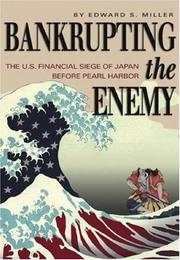
Miller's detailed reconstruction of the American financial freeze on Japan before Pearl Harbor. The case study that keeps being invoked in arguments about escalation, and it is worth knowing what actually happened.
How it is actually done
IntermediateLearn the administrative and diplomatic mechanics from the people who ran them.
▸ Study plan for this stage
Pace: Five to six weeks, 745 pages. Treasury's War (Juan Zarate, 2013) is the bulk of it at 513 pages, by the former Assistant Secretary of the Treasury for Terrorist Financing — a participant account of building the post-2001 financial-warfare apparatus, written by one of its architects and corresponding
- Section 311 of the USA PATRIOT Act and the designation of a bank as a primary money-laundering concern — Zarate's account of Banco Delta Asia as the proof of concept
- Why the effective mechanism is private-sector risk aversion rather than legal prohibition: banks over-comply because the cost of error is loss of dollar access
- The Office of Foreign Assets Control, the Specially Designated Nationals list, and secondary sanctions reaching non-US parties
- SWIFT, correspondent banking and the specific chokepoints through which a dollar transaction must pass
- Nephew's framework: identifying the target's pain points, measuring its resolve, and calibrating escalation so pressure remains legible and reversible
- The requirement that sanctions be relievable — Nephew's insistence that pressure without a credible path to relief cannot produce a negotiated outcome
- That both authors are defending programmes they designed, and neither is positioned to give the strongest case against them
- How did the Banco Delta Asia action work, and why did Zarate consider the private-sector reaction more important than the legal measure itself?
- What is a secondary sanction, and by what authority does it reach a non-American firm?
- What are Nephew's steps for designing a sanctions campaign, and what does he say most campaigns get wrong?
- How does Nephew define and measure resolve, and is the measurement operational or intuitive?
- Where do these two accounts disagree about what makes sanctions bite — legal designation or commercial fear?
- Trace a single dollar-denominated payment from a non-American bank to a sanctioned entity using Zarate's description, marking every point at which a compliance decision is made and by whom
- Apply Nephew's pain-and-resolve framework to a current sanctions programme, writing out the target's pain points and your estimate of its resolve as he sets the method out
- List the specific measures Zarate describes against Iran and North Korea and sort them into trade, financial and designation-based; the imbalance is the point
- Take Nephew's relief requirement and check it against the Iran programme he built — write down what relief was offered, when, and whether the sequencing matched his own doctrine
Next up: Both practitioners assume the dollar system as a given; the next stage explains why it exists and what it makes possible.

Zarate helped build the post-9/11 Treasury sanctions apparatus and describes how targeted financial measures against banks replaced trade embargoes. The definitive insider account.

Nephew designed much of the Iran pressure campaign and writes about calibrating pain and resolve as design variables. Read it directly after Zarate: it is the operator's manual to his history.
The dollar system that makes it possible
IntermediateSee why financial sanctions work at all, and what infrastructure they depend on.
▸ Study plan for this stage
Pace: Six to seven weeks. Exorbitant Privilege (Barry Eichengreen, 2011) is 226 pages of accessible international monetary economics on how the dollar became and remains the reserve currency. The Dollar Trap (Eswar Prasad, 2014) is 440 pages and is the more technical of the two, on why the dollar's role s
- Reserve currency status: network effects, depth of markets, and why incumbency is so hard to displace
- Eichengreen's account of how the dollar displaced sterling, and what that historical case implies about how fast such transitions can happen
- Prasad's paradox — that a crisis originating in American finance increased demand for American assets — and the self-insurance motive behind reserve accumulation
- Farrell and Newman's weaponised interdependence: that networks with hub-and-spoke topology give whoever controls the hub panopticon and chokepoint effects
- The specific hubs — SWIFT, dollar clearing, the semiconductor supply chain, undersea cables — and why they are not substitutable in the short run
- De-dollarisation efforts, alternative payment systems, and the difference between building one and getting anyone to use it
- Why the effectiveness of financial sanctions is a fact about market structure rather than about law
- Why does the dollar retain reserve status, and what did the sterling transition actually require?
- What is Prasad's explanation for capital flowing into the United States during and after 2008, and what does it imply about the durability of the arrangement?
- What do Farrell and Newman mean by panopticon and chokepoint effects, and which hubs produce each?
- What would successful de-dollarisation require in practice, and which components already exist?
- How much of American sanctions power is a policy choice, and how much is a structural feature of the financial network?
- Draw the network topology Farrell and Newman describe for dollar clearing and for SWIFT, marking the hub and the points at which surveillance and exclusion become possible
- Take Eichengreen's account of the sterling-to-dollar transition and list the conditions it required, then assess each condition against the present dollar-renminbi situation
- Using Prasad's data on reserve holdings, chart the composition of global reserves by currency across the period he covers and identify when, if ever, the trend breaks
- Pick one existing alternative payment system and write out what a transaction through it can and cannot do, using the chokepoints identified in Farrell and Newman
Next up: Having established that sanctions can be imposed at scale, the next stage asks the harder question of whether imposing them achieves anything.

Eichengreen's history of the dollar's international role, which is the precondition for everything in the previous stage. Read it before assuming sanctions power is permanent.

Prasad on why the world keeps accumulating dollar assets even when it would rather not. The clearest explanation of the trap that makes de-dollarisation talk cheaper than de-dollarisation.

Farrell and Newman on how the United States turned the networks of finance, information and supply into instruments of coercion. The theoretical frame that ties this stage to the previous one.
Do they actually work?
IntermediateEngage the scholarly literature on effectiveness rather than relying on cases you already know.
▸ Study plan for this stage
Pace: Twelve to fourteen weeks, 1,471 pages — the largest and most demanding stage in the path, and mostly academic. Economic Sanctions Reconsidered (Gary Clyde Hufbauer, Jeffrey J. Schott and Kimberly Ann Elliott, 3rd edition, 2007) is 298 pages of analysis plus a large case dataset; its headline finding
- Baldwin's compared-to-what standard: sanctions should be assessed against the cost and likely outcome of the available alternatives, not against a hypothetical of full compliance
- The Hufbauer, Schott and Elliott coding of success, what counts as partial success, and precisely where Pape's critique attacks the coding
- Drezner's selection argument: that adversaries who would concede are often coerced without sanctions ever being imposed, so the observed cases are the hard ones
- The conflict-expectations model — why sanctions are more likely to succeed against allies than adversaries, contrary to intuition
- Targeted or smart sanctions: asset freezes, travel bans and arms embargoes aimed at individuals, and what the UN dataset shows about their effects
- The distinction between coercing, constraining and signalling as sanctions objectives, and the finding that constraint and signalling succeed far more often than coercion
- Measurement problems throughout: defining the objective, attributing the outcome, and choosing the counterfactual
- What is Baldwin's compared-to-what argument, and how does it change what a success rate means?
- How do Hufbauer and colleagues code a case as successful, and which specific coding decisions does Pape dispute?
- What is Drezner's selection effect, and what would the observed success rate look like if it were corrected for?
- Why does Drezner predict that sanctions work better on allies, and does the evidence support it?
- What does the Targeted Sanctions volume find about the relative frequency of coercion, constraint and signalling outcomes?
- If you had to state one defensible claim about sanctions effectiveness after this stage, what would it be?
- Take ten cases from the Hufbauer dataset, recode each one yourself against a stricter success definition, and compute how far the headline rate moves — this is the exercise that makes the whole dispute concrete
- Apply Drezner's conflict-expectations model to three cases from the second stage's practitioner accounts and check whether the ally-versus-adversary prediction holds
- Using the Targeted Sanctions coding scheme, classify five recent sanctions programmes by objective — coerce, constrain, signal — and assess each against its own objective rather than against regime change
- Write out Baldwin's alternatives for one historical case: sanctions, military action, diplomacy, doing nothing, with an estimated cost for each; the exercise is in producing a defensible estimate, not a precise one
- Reconcile Zarate's account of the Banco Delta Asia success from the previous stage with how the Hufbauer framework would code the same episode
Next up: The effectiveness literature is largely about the target; the final stage is about what sustained use of the instrument does to the sender and to the system.
The Peterson Institute's coded database of sanctions episodes and their outcomes, and the source of nearly every statistic in this debate. Read it critically, because its success criteria are the contested part.
Drezner's argument that sanctions succeed most often against allies and fail against adversaries, because conflict expectations drive the target's willingness to absorb costs. The sharpest theoretical contribution here.
Baldwin's classic insistence that sanctions must be judged against the alternatives available, not against a standard of total success. It reframes the whole effectiveness question.

Biersteker and colleagues on the shift to targeted and smart sanctions at the UN, with systematic evidence on when narrowing the target helps. The most policy-relevant evaluation in this stage.
The costs, and the case against overuse
IntermediateRead the recent critiques from across the argument before forming a view.
▸ Study plan for this stage
Pace: Eight to nine weeks. Backfire (Agathe Demarais, 2022) has no length recorded in our catalogue; it is a trade book by an economist arguing that American sanctions are increasingly self-defeating — accelerating de-dollarisation, straining alliances and pushing targets toward alternative systems. Sanct
- Demarais's argument that each escalation raises the incentive for targets and third parties to build workarounds, so the instrument degrades with use
- Extraterritoriality and the friction it creates with allies, particularly the European response to secondary sanctions on Iran
- Humanitarian effects: medicine and food exemptions on paper against bank over-compliance in practice, which is where the Davis and Ness volume concentrates its case
- The argument in Sanctions as War that comprehensive sanctions on a population are a use of force in substance if not in law — a contested framing, and one Zarate and Nephew would reject
- Fishman's narrative of the Russia, Iran and China programmes as escalating experiments, told from inside the policy process
- The overuse question: whether a tool whose power derives from network centrality can be used often without eroding that centrality
- That every author in this stage has a position, and that the positions are irreconcilable rather than complementary
- What is Demarais's mechanism for sanctions degrading their own effectiveness, and what evidence does she offer that it is happening?
- Why do humanitarian exemptions fail in practice, and which actor's incentives produce the failure?
- What is the strongest version of the Sanctions as War argument, and what would Nephew from the second stage say in reply?
- How does Fishman describe the internal decision process, and where does his account contradict Zarate's about what the tools were meant to do?
- Across the whole path, has your view of whether sanctions work changed, and which specific book moved it?
- What would a defensible sanctions policy look like given everything in these five stages?
- Take one sanctions programme covered in both Fishman and Sanctions as War and write the two accounts of it in parallel columns, marking every factual disagreement as distinct from every interpretive one
- Trace a humanitarian exemption for medical supplies through the compliance chain you mapped in the second stage, and identify exactly where it fails
- Test Demarais's de-dollarisation claim against the reserve-composition data from the third stage and record whether the trend supports her
- Write a one-page sanctions policy recommendation for a specific current case that Nephew, Drezner and Demarais would each be able to accept part of, and note the parts none of them would
- List the five strongest empirical claims made anywhere in this path, and for each name the book that would dispute it
Next up: This completes the path: the interwar invention, the modern machinery, the monetary system beneath it, the effectiveness literature, and the critiques of overuse — with the middle stages left in disagreement on purpose.

Demarais on the second-order costs of sanctions to the country imposing them, from lost markets to accelerated workarounds. The most useful recent counterweight to the practitioner accounts.

An explicitly critical collection arguing that comprehensive sanctions function as warfare against civilian populations. Included because the humanitarian case deserves its strongest statement, not a paraphrase.

A recent narrative history of the economic-warfare campaigns from Iran to Russia, by another former State Department sanctions official. The most current account of where the instrument has arrived.