Start with The Economic Weapon. Nicholas Mulder's history of how sanctions were invented — as a substitute for war after 1914, then as an instrument that helped provoke the next one — is the only book here that explains where the tool came from, and a striking number of current arguments turn out to be rediscoveries of something in it. Follow it with Underground Empire for how the same instrument works now.
The order in between matters because this literature runs in three registers that are easy to confuse. There is history; there are insider practitioner accounts, which describe what the author did and are not neutral about whether it worked; and there is quantitative political science, which measures effectiveness using definitions the practitioners would not accept. Knowing which register you are in is most of the skill.
History
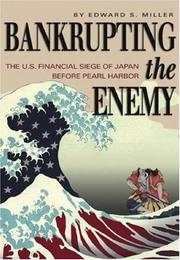
The Economic Weapon (2022) is archival international history of the League of Nations era: academic, readable, and the best single account of how blockade became policy. Bankrupting the Enemy (2007) is Edward Miller on the American financial freeze on Japan in 1941, and on how a measure intended to be calibrated became total through bureaucratic drift. It is dense and archival, and it is the best case study anywhere of sanctions producing escalation rather than concession. Chokepoints (2025) is Edward Fishman's narrative history of American economic warfare from the mid-2000s through the Russia programme — the most current account here, by a former sanctions official.
From the inside
Treasury's War (2013) is Juan Zarate on how the US Treasury built financial warfare after 2001: designations, pressure on correspondent banking, Section 311 measures. It is an insider account and openly proud of its subject. The Art of Sanctions (2017) is Richard Nephew, who worked on the Iran programme, setting out an explicit framework of pain and resolve — estimate the target's tolerance, apply pressure, watch for adaptation. It is short, practical, and unusual in treating sanctions as a craft with technique rather than as a moral gesture.
The system underneath
Exorbitant Privilege (2011) is Barry Eichengreen's history of the dollar's international role. It is not about sanctions and it is necessary, because American leverage is a function of dollar clearing. The Dollar Trap (2014) is Eswar Prasad on why that dominance strengthened after a crisis originating in the United States. Underground Empire (2023) is Henry Farrell and Abraham Newman on how networks built for efficiency — payment messaging, dollar clearing, semiconductors, undersea cable — became instruments of coercion, and what happens as everyone else notices.
The measurement fight
Economic sanctions reconsidered is the coded dataset of sanctions episodes assembled by Hufbauer, Schott and Elliott, and the source of the widely quoted claim that sanctions succeed roughly a third of the time. It is a reference volume rather than a read-through, and its coding has been attacked hard — Robert Pape's re-examination put the success rate at a small fraction of that, and the disagreement is largely about what counts as a sanction and what counts as success.
The sanctions paradox (1999) is Daniel Drezner's game-theoretic argument that sanctions work better against allies than adversaries, because the expectation of future conflict makes adversaries resist concessions that would signal weakness. It assumes some comfort with formal reasoning. Economic statecraft (1985) is David Baldwin's conceptual classic, arguing that sanctions are routinely judged against an imaginary alternative rather than the options a government actually had. It is the oldest book here and the one that has aged best. Targeted Sanctions (2016) is the Biersteker, Eckert and Tourinho edited volume on UN targeted measures, and the main empirical source on whether smart sanctions delivered what was promised.
The case against
Backfire (2022) is Agathe Demarais arguing that American overuse is driving counter-measures and alternative payment infrastructure, eroding the very leverage sanctions depend on. Sanctions As War (2022) is a critical edited collection treating comprehensive sanctions as a form of warfare and focusing on civilian mortality and access to medicine; it is advocacy scholarship and presents itself as such, which makes it easier to read alongside the datasets rather than instead of them. More international-affairs paths are on Discover.
Follow the full ordered path here: Economic Sanctions: The Best Books on Financial Statecraft, in Order.