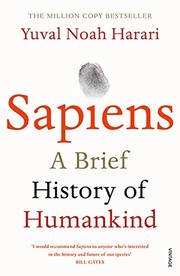
Start with Sapiens. It is the obvious choice and it is also the correct one: the later books all assume its framework, and it is the most complete statement of what Harari does. Read it quickly the first time — it is written to be read that way and 30 pages a day across 456 pages is unhurried — and then slow down and notice where the argument is doing work.
One framing note before you begin, offered neither as endorsement nor as dismissal. Sapiens is one of the most widely read history books of the century and it is also widely criticised by specialist historians, archaeologists and anthropologists for over-simplifying, for stating contested interpretations as settled fact, and for compressing evidence to fit a narrative. Both of those things are true at the same time. The book is genuinely good at what it does. The final stage of this reading order exists because a reader who has only read Harari will not be able to tell which of his claims are consensus and which have serious opposition.
The rest of the popular work
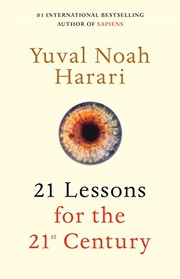
Homo Deus, then 21 Lessons for the 21st Century, then Nexus, at roughly 450, 400 and 544 pages. All three read at the same brisk pace as Sapiens, and the order given is both publication order and the order of dependency — Homo Deus extends the argument forwards into biotechnology and data, 21 Lessons for the 21st Century applies it to the present in short essays, and Nexus is the recent book on information networks.
A purchasing warning. Our catalogue record for the second book is Sapiens/Homo Deus box set, a two-volume set pairing it with Sapiens. If you already own Sapiens, buy Homo Deus on its own rather than paying for a duplicate. If you have bought neither, the set is the cheaper route to both. This is an easy mistake to make because the set is often the first search result.
Where to stop is a fair question here. Sapiens plus one of the others is enough for most readers; the three later books repeat a good deal of the first, and the returns diminish.
The academic Harari
This is the part of the bibliography almost nobody reads, and it is genuinely interesting because it is a different writer. Special Operations in the Age of Chivalry, 1100-1550 and The ultimate experience are scholarly monographs published by academic presses, at 248 and 386 pages, and they read at perhaps a third the speed of Sapiens. Fifteen pages a sitting is realistic. They are also harder to obtain and considerably more expensive.
Read Special Operations in the Age of Chivalry, 1100-1550 first, since it is the earlier and narrower of the two. The ultimate experience is on how combatants understood war between 1450 and 2000, and it is the book that shows the historian underneath the popular writer. Reading either one changes how you assess the big books, mostly by making clear how much compression the popular work involves.
Read him against the specialists
This is the most valuable stage in the path and the reason it does not end with Harari. Against the Grain by James C. Scott is short and sharp and can be done in a fortnight; it argues that early states were far worse for the people inside them than the standard account allows, which overlaps with Harari's agricultural-revolution chapter and disagrees with parts of it. The Dawn of Everything by David Graeber and David Wengrow is a direct and explicit challenge to the whole grand-narrative form that Sapiens exemplifies, arguing that early human societies were vastly more varied and more politically self-aware than any single story allows. The WEIRDest People in the World by Joseph Patrick Henrich argues a different large thesis about psychology and institutions and lets you compare methods.
All three are long and densely argued at 312, 704 and 704 pages, and 25 pages a day is honest. Read them in that order, from narrowest to widest challenge. Coming out the other side you will not necessarily think less of Sapiens — many readers think more of it — but you will know which parts are argument.
More history reading orders, including David Grann, are on Discover.
Follow the full ordered path here: Yuval Noah Harari Reading Order: Where to Start.