Almost every disappointing home stir-fry comes down to the same two causes: the pan was not hot enough, and there was too much in it. Domestic burners deliver a fraction of the output of a restaurant wok range, so when a pound of cold chicken hits a moderately warm pan, the temperature collapses and the food steams in its own liquid. You get grey meat and limp vegetables, and no recipe will fix it.
That is the argument for starting with the pan rather than a recipe collection. Learn seasoning, heat management, batch size and the sequence of adding ingredients, and every recipe you read afterwards becomes adjustable to your actual kitchen.
Start with the wok itself
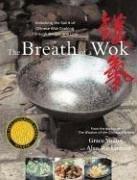
Grace Young's The Breath of a Wok is the right first book because it is genuinely about the wok — choosing a carbon-steel one, seasoning it properly, maintaining the patina, and managing heat to chase wok hei, the seared, faintly smoky quality that defines a good stir-fry. It is part technical manual and part cultural history, built on interviews and travel, and it makes the case that the pan is a piece of technique rather than equipment.
Her follow-up Stir frying to the sky's edge widens the frame to stir-frying across the Chinese diaspora — recipes and stories gathered from cooks in several countries — and it is where the technique from the first book gets applied across a wide range of dishes. Read them in order; the second assumes the first.
Learn what home cooking actually looks like
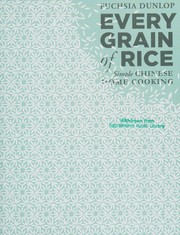
Fuchsia Dunlop's Every grain of rice is, for a lot of cooks, the single most useful Chinese cookbook in English. It is everyday home cooking, mostly vegetable-forward, with short ingredient lists and reliable, carefully tested instructions. Its opening sections on the pantry and on basic cutting and cooking methods are worth reading straight through before you cook anything from it, because they do the quiet work of explaining why dishes are built as they are.
Land of fish and rice covers the Jiangnan region east of Shanghai — a cuisine that is subtler and less familiar than Sichuan, with more braising, more freshwater fish and more seasonal restraint. It is a corrective to the idea that Chinese cooking means high-heat stir-frying, and it will make you better at the moments when the wok is not the answer.
Shark's Fin and Sichuan Pepper is not a cookbook. It is Dunlop's memoir of learning to cook in Chengdu, and it belongs on this path because it explains the culture, the market ingredients and the reasoning behind flavour combinations far better than any headnote can. Read it in the evenings while you cook from the others.
Underlying technique and breadth
Ken Hom's Chinese technique is the methods book — knife work, the fundamental cooking processes, and the preparations that recipes assume you already know. Illustrated and systematic, it is the reference for the mechanics that other books skip over. And Hom's Complete Chinese Cookbook is the broad recipe collection to work through once the technique is in place, covering a wide regional range in one volume.
Practical things worth doing before your first serious attempt: buy a flat-bottomed carbon-steel wok if you cook on a domestic hob and season it properly, cook in small batches even when it feels absurd, prepare and arrange every ingredient before you turn on the heat because a stir-fry gives you no time, and get the pan smoking before the oil goes in. Also invest in a decent light soy, a dark soy, Shaoxing wine and a Chinkiang vinegar — the pantry does more of the work than any single recipe.
If you want to keep exploring cuisines that reward technique over ingredient shopping, Lebanese cooking is a good next turn. Follow the full path to learn the pan before the recipes.
Follow the full ordered path here: How to Learn Wok Cooking from Books, in Order.