Most people trying to learn beer styles start with a style chart and get nowhere. The categories — dozens of them, with overlapping histories and competition-guideline boundaries that shift every few years — are meaningless until you can reliably notice the difference between diacetyl and esters, or between hop bitterness and roast bitterness. Vocabulary without a trained palate is just trivia.
So the useful order is inverted from how the subject is usually taught. Learn to taste, then learn the reference framework, then go to the technical books that explain why a style tastes the way it does. Pairing beer with food comes last, because it depends on everything before it.
Get comfortable, then get systematic
Start with The naked pint, which is deliberately unintimidating: it walks you through the main families of beer, what to look for, and how to talk about them without the connoisseur posturing that puts people off the subject. It is a warm-up, not a reference.
Then How to Taste by Mandy Naglich, a broader sensory-training book covering how tasting actually works — supertasters, palate fatigue, the mechanics of describing what you notice. It is not beer-specific, which is exactly its value: the skills transfer, and you stop mistaking familiarity for perception.
The two reference books
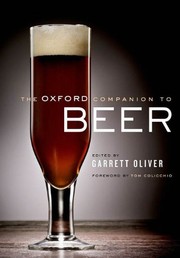
The Oxford companion to beer, edited by Garrett Oliver, is the encyclopedia — over a thousand entries covering ingredients, processes, national traditions and individual styles. Use it as a lookup, not a read-through. It has been criticised for errors in some technical entries, which is a fair reason to cross-check anything you plan to repeat.
Tasting beer by Randy Mosher is the one to read cover to cover. It connects sensory evaluation to style history and brewing chemistry better than anything else at its length, with the flavour wheels and style profiles that make a chart finally legible. If your budget covers one book on this list, this is it.
Behind the glass: brewing and business
Once styles make sense as outcomes of process, the brewing books pay off. Beer school by Steve Hindy is the Brooklyn Brewery origin story — useful for understanding how modern craft styles reached the market at all. Brewing classic styles by Jamil Zainasheff gives a recipe for every recognised style category, which doubles as a superb reverse-engineering guide even if you never brew: read the grain bill and you understand the flavour.
Yeast, by Chris White and Jamil Zainasheff, is the technical outlier. Yeast strain does more to define Belgian, German and British styles than any other single variable, and this book explains fermentation temperature, flocculation and attenuation clearly enough for a careful non-brewer.
Finish at the table
Close with the two food books. The Brewmaster's Table is Garrett Oliver's argument that beer beats wine at the table for most dishes, organised by style and full of specific pairings that actually work. Beer and Food by Mark Dredge covers similar ground more recently and more visually. They overlap substantially — read Oliver for the reasoning, Dredge if you want a modern, photo-led reference. There is no need for both.
Taste along the way rather than after; the books only take hold if you have a glass in front of you. Follow the full path for the stage-by-stage plan.
Follow the full ordered path here: How to Learn Beer Styles from Books, in Order.