A wind turbine technician spends the day on electrical fault-finding, hydraulic and gearbox maintenance, torque and tension work on bolted connections, and climbing. The two halves of the job — the systems knowledge and the working-at-height competence — are learned in completely different ways, and it is worth being blunt about which is which.
The systems half is what books are for, and this path covers it well. The height half is not something you can read your way into. Employers require certified safety training, tower climb and rescue, first aid, and usually confined-space and electrical-safety qualifications, and these are almost always delivered through an accredited provider or an employer programme after hire. Nothing on this list certifies you for anything. Treat the reading as what makes you a credible applicant and a faster learner once you are in, not as a credential.
Understand what you are climbing
Wind Energy Explained by James Manwell is the serious engineering text on wind energy: the aerodynamics of rotors, the wind resource itself, structural and mechanical design, electrical systems and siting. It is a university-level book and heavier than the technician role strictly requires — read it selectively. The chapters on how a rotor extracts energy and how the drivetrain and control system respond to changing wind are directly useful, because they explain why a machine does what it does when it faults.
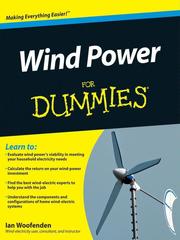
Wind Power For Dummies by Ian Woofenden is the opposite register and worth reading first for exactly that reason. It is oriented toward small and home-scale systems, so parts of it do not map onto utility-scale work, but it gives you the vocabulary and the overall picture quickly and without the mathematics.
The two systems you will actually troubleshoot
Theodore Wildi's Electrical machines, drives, and power systems is the most important book on this path. Generators, transformers, motors, power electronics, three-phase systems and drives are the daily substance of the job, and Wildi is the standard text for good reason — clear, thorough, and written for people who will work on equipment rather than only analyse it. If you read one book here properly, read this one.
Andrew Parr's Hydraulics and Pneumatics covers the other half: pumps, valves, actuators, filtration, circuit diagrams and fault diagnosis. Pitch systems, yaw brakes and braking systems are hydraulic on many machines, and being able to read a hydraulic schematic is a real, immediately visible competence.
Rope, rigging and the job itself
The Complete Rigger's Apprentice by Brion Toss is a sailing book, and it is on this path for transferable fundamentals rather than direct application — rope construction and selection, knots, splicing, load paths, tension and the practical judgement of what a line will and will not take. That knowledge carries over to lifting and hoisting work in a nacelle. Do not mistake it for fall-protection or rescue training, which is a separate, certified discipline with its own equipment standards.
Finally, What color is your parachute? by Richard Nelson Bolles is the job-search book: how to research employers, target applications and interview. It is generic rather than wind-specific, which is precisely its use here, because the technical reading does nothing for you if your application never lands.
The realistic route into this work is a technical certificate or associate programme in wind energy technology, or a transfer from electrical, mechanical or military maintenance experience, followed by employer-provided safety certification. The reading makes each of those go faster. Follow the full path to build the systems knowledge in the order the job uses it.
Follow the full ordered path here: Wind Turbine Technician: The Best Books to Read, in Order.