Welding has a property almost no office job has: you qualify by doing. A certification test puts you in a booth with a machine, metal, and a procedure — the weld either passes inspection or it does not. No one asks where you went to school. For career changers rattled by AI eating resume-based work, that kind of skill-verified trade is deeply reassuring. Robots do weld — they have for decades on repetitive production lines — but field welding, repair, pipe, and structural work in awkward, one-off conditions remains stubbornly human.
Welding rewards study more than outsiders expect. Behind the sparks is real science — metallurgy, heat control, joint design — and welders who understand the why advance past welders who only know the how. Reading in order matters because the theory only makes sense once you have the vocabulary. The full reading path stages it; here is the walkthrough.
Stage 1: Foundations you can hold
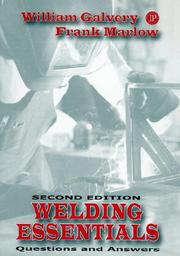
Start with Welding Essentials by William L. Galvery — a question-and-answer format that covers processes, safety, and equipment without drowning you. It pairs naturally with hands-on practice at a community college or makerspace. Then move to the field's standard textbook: Welding Principles and Applications by Larry Jeffus, the book most welding programs teach from. It is big, but it is the closest thing the trade has to a complete curriculum — processes, positions, symbols, metallurgy, and the habits that keep you safe.
Stage 2: Depth and specialization
The Procedure Handbook of Arc Welding from Lincoln Electric Company is the working engineer's reference — decades of accumulated practice on procedures, electrodes, and joint design. Read it after Jeffus and it clicks; read it first and it is a wall. Then pick a high-value direction: Pipe Welding Procedures by Hoobasar Rampaul covers the discipline that commands premium pay, because certified pipe welders are chronically scarce in energy, process, and mechanical work. Position, root pass, heat control — pipe is its own craft.
Stage 3: Beyond the hood
Two career multipliers. Welding Inspection Technology from the American Welding Society is the study base for inspection certification — the path welders take when they want to trade some booth time for clipboard authority, and a role that leans on judgment and codes. And if independence is the goal, The Welding Business Owner's Hand Book by David Zielinski covers the unglamorous parts of running a rig or shop: pricing, insurance, and finding work that pays.
Your first 90 days
Month one: enroll in an evening welding course — this is the rare trade where community colleges offer genuinely good entry points — and read Galvery alongside your first hours under the hood. Months two and three: practice consistently (bead quality is muscle memory plus theory), work through Jeffus section by section, and identify which certification your local employers actually ask for. Structural plate certs are a common first target; pipe comes later. Certification tests can often be scheduled within months, not years — welding has one of the fastest credible entry ramps in the trades.
Be honest with yourself about the trade-offs: fumes, heat, hearing protection, and positions your back will remember. But as a skill that is tested rather than credentialed, welded into physical infrastructure, and needed everywhere metal needs joining, it is a strong answer to the automation question. See the subject hub for more, or compare trades at the career change hub.
Ready to learn something deeply?
Build a reading path — free