If you have watched an AI tool do a chunk of your job in thirty seconds, you have felt it: the quiet question of what happens to your career in five years. That question deserves a better answer than doomscrolling. The honest answer is that automation does not eliminate work so much as it relocates it — toward tasks that need physical presence, human judgment, accountability, and trust. Your job is to figure out where that leaves you, and what to learn next.
Random googling will not get you there. Every article you find assumes a different definition of "AI-proof," and none of them build on each other. A reading path does what a search cannot: it sequences the ideas so each book makes the next one sharper. That is exactly what the full reading path does across three stages.
Stage 1: Understand what is actually happening
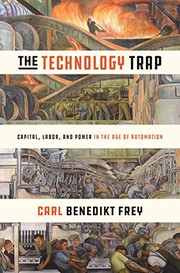
Start with The Second Machine Age by Erik Brynjolfsson — still the clearest map of how digital technology changes what employers pay for, written without hype in either direction. Then read The Technology Trap by Carl Benedikt Frey, which looks at past automation waves and shows that who wins and who loses depends on how the transition is managed, not just the technology. Round out the stage with World Without Work by Daniel Susskind, a sober look at what happens if machines keep absorbing tasks — useful precisely because it takes the worst case seriously without panic. If you want the political economy angle, Power and Progress by Daron Acemoglu argues that technology's direction is a choice societies make, which is oddly empowering: the future is not fixed.
Stage 2: Find the human edge
With the landscape mapped, turn to what machines are bad at. Humans are Underrated by Geoff Colvin makes the case that empathy, collaboration, and accountability are becoming the premium skills — the ones employers cannot delegate to software. The Future of the Professions by Richard Susskind and Daniel Susskind is the uncomfortable but necessary read for lawyers, accountants, doctors, and consultants: it shows which parts of professional work are genuinely defensible and which are already being unbundled.
Stage 3: Retool yourself
The last stage is about you. Range by David J. Epstein dismantles the myth that narrow specialization is the safest bet — generalists who can connect domains adapt better when a field shifts under them. Ultralearning by Scott Young is the how-to: a practical system for teaching yourself hard skills quickly, which is the core competency of anyone changing careers mid-life. Finish with Co-Intelligence by Ethan Mollick, the best current guide to working with AI rather than against it — because the most resistant position is often the person who directs the tools.
How to actually start
Give this path ninety days. Weeks one to four: read the Stage 1 books and write one page on which of your current tasks are automatable and which are not. Weeks five to eight: Stage 2, plus an honest audit of your own human-edge skills. Weeks nine to twelve: Stage 3, and pick one concrete direction — a trade, a care profession, a hybrid role that pairs your experience with AI fluency. If a hands-on career appeals, the trades career change hub is the natural next stop.
No book can promise your job is safe, and be suspicious of anyone who does. What this path offers is better: a clear-eyed view of the shift and a method for repositioning yourself inside it. Browse the subject hub for related paths, or start book one tonight.
Ready to learn something deeply?
Build a reading path — free