Get paid to weld: certification & career path
This curriculum takes a complete beginner from zero welding knowledge to a career-ready professional with specialty certifications and trade business savvy. Each stage builds on the last — first establishing hands-on process fluency and metallurgy fundamentals, then navigating certification systems, then mastering high-value specialties like pipeline and structural work, and finally understanding the business and career side of a trade that automation cannot replicate in the field.
Foundations: Processes, Safety & the Metal Itself
BeginnerUnderstand how the major welding processes work (SMAW, MIG, TIG, flux-core), develop safe shop habits, and build enough metallurgy vocabulary to know why metals behave the way they do under heat.
▸ Study plan for this stage
Pace: 10–12 weeks total. Week 1–7: "Welding Principles and Applications" by Larry Jeffus (~25–35 pages/day, covering one major process or safety chapter per session). Week 8–12: "Welding Essentials" by William L. Galvery (~20–25 pages/day, using it as a reinforcing reference and vocabulary deepener alongs
- The four major welding processes — SMAW (stick), MIG/GMAW, TIG/GTAW, and Flux-Core (FCAW) — their arc mechanics, consumables, and best-use scenarios as laid out in Jeffus's process-by-process chapters
- Electrical fundamentals for welding: polarity (DCEP, DCEN, AC), amperage vs. voltage, and how machine settings directly affect bead profile and penetration (Jeffus, early chapters)
- Shop safety and PPE: proper lens shade selection, fume ventilation, fire watch procedures, and electrical hazard avoidance as detailed in Jeffus's safety chapter and reinforced in Galvery's Q&A sections
- Weld joint design and positions: the five basic joint types (butt, lap, T, corner, edge) and four welding positions (1G–4G / 1F–4F) introduced in Jeffus and cross-referenced in Galvery
- Metallurgy essentials: ferrous vs. non-ferrous metals, the iron-carbon phase diagram concept, heat-affected zone (HAZ), grain growth, and why preheat/interpass temperature matter — covered in Jeffus's metallurgy chapters and expanded in Galvery
- Reading and interpreting basic weld symbols on engineering drawings, as introduced in Jeffus and summarized in Galvery's reference tables
- Common weld defects — porosity, undercut, incomplete fusion, cracking — their causes and visual inspection criteria per Jeffus's quality chapters
- Filler metal and electrode classification systems (AWS E6010, ER70S-6, etc.) and how to match consumables to base metal, drawn from Jeffus's consumables chapters and Galvery's quick-reference tables
- After reading Jeffus's SMAW chapter, can you explain what the numbers and letters in an electrode designation like E6013 each represent, and why you would choose it over an E6010?
- Describe the difference between DCEP and DCEN polarity: which process typically uses each, and how does polarity affect penetration and electrode burn-off rate?
- What is the heat-affected zone (HAZ), and why does Jeffus emphasize controlling heat input to protect it — especially in higher-carbon steels?
- Using the joint types and positions covered in Jeffus, explain why a 3G vertical butt weld is considered more challenging than a 1G flat butt weld, and what technique adjustments are required.
- From Galvery's coverage, what are three root causes of porosity in a MIG weld, and what corrective actions would you take on the machine or in your technique?
- How do the safety protocols described in Jeffus (ventilation, PPE, fire watch) change when you move from welding mild steel to welding galvanized or coated metals?
- Process comparison log: After reading each process chapter in Jeffus, fill in a one-page table comparing SMAW, MIG, TIG, and FCAW across: heat source, shielding method, consumable type, typical amperage range, and one ideal application. Use Galvery's reference tables to verify your entries.
- Safety walkthrough drill: Using Jeffus's safety chapter as a checklist, physically walk through your shop (or sketch a floor plan if shop access is limited) and identify every hazard — ventilation gaps, missing PPE, improper storage — then write a corrective action for each.
- Electrode identification flashcards: Create a flashcard deck (physical or digital) for at least 10 AWS electrode/filler designations from Jeffus's consumables chapters (e.g., E6010, E7018, ER70S-6, E71T-1). Quiz yourself until you can decode any designation cold.
- Bead-on-plate journal: Run a series of bead-on-plate passes on mild steel — one per major process you have access to — and photograph each bead. Annotate each photo with the machine settings used, then compare your bead profile against the quality benchmarks in Jeffus's inspection chapter.
- Defect diagnosis worksheet: Using the defect descriptions and causes in both Jeffus and Galvery, write a one-paragraph diagnosis for five sample defect photos (sourced from the books or online AWS resources): name the defect, state the likely cause, and prescribe the fix.
- Weld symbol sketching practice: From Jeffus's chapter on drawing interpretation, copy 10 weld symbols by hand, then — without looking — redraw them from memory and write a plain-English description of what each symbol is instructing the welder to do.
Next up: ">Mastering the process mechanics, safety habits, and metallurgy vocabulary in this stage gives you the stable technical language and hands-on awareness you'll need to pursue AWS certification paths, interpret code documents, and practice the position-specific skills that dominate the next stage of the curriculum.

The single most widely adopted welding textbook in vocational and community-college programs. It covers every major process, safety, and blueprint reading in one place — the ideal first book to establish shared vocabulary for everything that follows.
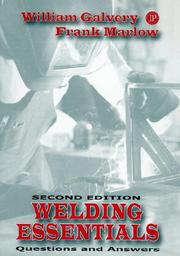
A concise question-and-answer reference that reinforces and clarifies the principles from Jeffus. Reading it second lets beginners self-quiz and fill gaps before moving into metallurgy.
Certification Roadmap: Codes, Tests & AWS Standards
BeginnerUnderstand the AWS certification system (D1.1, D1.6, QC10), know what a welder qualification test looks like, and be able to read and apply a Welding Procedure Specification (WPS).
▸ Study plan for this stage
Pace: 8–10 weeks total. Week 1–5: "Welding Inspection Technology" (AWS) — aim for ~20–25 pages/day, focusing on inspection fundamentals, codes, and qualification chapters. Week 6–10: "The Procedure Handbook of Arc Welding" (Lincoln Electric) — aim for ~25–30 pages/day, concentrating on process specificati
- AWS certification tiers and the distinction between Certified Welder (CW), Certified Welding Inspector (CWI), and Certified Welding Educator (CWE) as outlined in Welding Inspection Technology
- Structure and authority of AWS D1.1 (Structural Steel), D1.6 (Stainless Steel), and QC10 (Welder Qualification) — their scope, applicability, and how they interrelate per Welding Inspection Technology
- The anatomy of a Welding Procedure Specification (WPS): essential vs. supplementary essential vs. non-essential variables, and how changes to each trigger re-qualification, as detailed in both books
- Procedure Qualification Record (PQR) vs. WPS: how test data from the PQR supports and validates the WPS, covered in Welding Inspection Technology
- Welder Performance Qualification (WPQ): test positions (1G–6G), base metal P-numbers, filler metal F-numbers, and the range of qualification each test grants, per Welding Inspection Technology
- Destructive and non-destructive testing methods used in qualification tests (bend tests, tensile tests, visual inspection, RT/UT) and their acceptance criteria as described in Welding Inspection Technology
- Arc welding process parameters — amperage, voltage, travel speed, heat input — and how the Procedure Handbook of Arc Welding ties these variables directly to WPS essential variables
- Reading and interpreting a real WPS document: joint design, base metal, filler metal, preheat/interpass temperature, PWHT, and shielding gas columns as illustrated in the Procedure Handbook of Arc Welding
- According to Welding Inspection Technology, what is the difference between a WPS and a PQR, and why must both documents exist before production welding begins?
- Under AWS D1.1 and QC10 as described in Welding Inspection Technology, which test positions qualify a welder for the broadest range of production work, and why?
- What are essential variables in a WPS, and — drawing on both Welding Inspection Technology and the Procedure Handbook of Arc Welding — what happens to a welder's or procedure's qualification status when one is changed?
- Using the Procedure Handbook of Arc Welding, how do you calculate heat input from amperage, voltage, and travel speed, and why does heat input matter for a WPS?
- How does AWS D1.6 differ from D1.1 in its qualification requirements, as explained in Welding Inspection Technology, and when would a fabricator need to qualify under D1.6 instead of D1.1?
- After reading both books, what destructive tests are required for a groove-weld procedure qualification, and what are the acceptance criteria for a guided-bend test?
- Obtain a blank AWS WPS form (available free from AWS) and fill it out completely for a single SMAW groove weld on carbon steel, using the Procedure Handbook of Arc Welding as your parameter reference — check every cell against the variable definitions in Welding Inspection Technology.
- Create a side-by-side comparison chart of AWS D1.1, D1.6, and QC10: list scope, base metals covered, key qualification tests required, and re-qualification triggers, sourcing each entry directly from Welding Inspection Technology.
- Sketch the six standard test positions (1G through 6G) from memory, label the weld axis and progression direction for each, then verify against the position diagrams in Welding Inspection Technology.
- Using the heat-input formula from the Procedure Handbook of Arc Welding (HI = [Amps × Volts × 60] / Travel Speed), calculate heat input for five different parameter sets and determine whether each would require a new PQR if the baseline WPS heat input limit were exceeded.
- Write a one-page 'qualification narrative' as if you are a welder preparing for a 6G pipe test: list every document you need (WPS, PQR, ID card, etc.), every test coupon and destructive test required, and the acceptance criteria — pulling citations from Welding Inspection Technology for each requirement.
- Perform a 'WPS audit' on a sample WPS found online or provided by an instructor: identify every essential, supplementary essential, and non-essential variable listed, flag any missing fields, and note which AWS code section (from Welding Inspection Technology) governs each variable.
Next up: Mastering how codes, WPS documents, and qualification tests are structured gives the reader the technical vocabulary and standards literacy needed to move into hands-on welding practice and process-specific skill-building, where they will execute the very procedures and positions they have now learned to read and certify.

The AWS's own study workbook for the Certified Welding Inspector (CWI) path. Reading it as a welder — not just an inspector — teaches you exactly how your test coupons will be evaluated and what codes actually require, giving you a decisive edge in qualification tests.
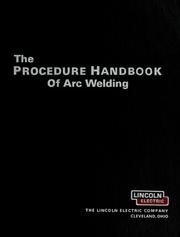
A legendary industry reference that bridges process knowledge and real-world procedure writing. It shows how WPSs are built and why parameters matter, making AWS code documents far less intimidating when you encounter them on the job.
High-Value Specialties: Pipeline & Structural
IntermediateMaster the two highest-paying field specialties — pipeline (API 1104) and structural steel (AWS D1.1) — including joint design, position welding, and the specific test requirements for each.
▸ Study plan for this stage
Pace: 6–8 weeks, ~20–25 pages/day; treat each chapter as a discrete unit — read, annotate, then practice before moving on. Allocate extra time (2–3 sessions) for the procedure/qualification chapters, which are the densest.
- API 1104 standard requirements: scope, acceptance criteria, and how they govern pipeline weld qualification
- Pipe joint design fundamentals: bevel angles, root face, root gap, and how geometry affects penetration and defect risk
- Position welding on pipe (1G, 2G, 5G, 6G, 6GR): what each position demands physically and metallurgically, and why 6G is the industry benchmark test
- Welding procedure specifications (WPS) and procedure qualification records (PQR) as required by API 1104: how to read, write, and apply them
- Root pass techniques for pipe: stringer vs. weave, uphill vs. downhill progression, and the critical role of the keyhole in open-root joints
- Filler and cap pass sequencing: controlling interpass temperature, bead placement, and tie-ins to avoid lack-of-fusion and undercut
- Destructive and non-destructive testing for pipe welds: nick-break, bend tests, radiographic interpretation, and what constitutes a rejectable indication under API 1104
- Structural steel parallels and contrasts: how AWS D1.1 joint design and qualification logic differs from API 1104, preparing the welder to move between both codes
- What are the essential elements of a WPS under API 1104, and what essential variables, if changed, require requalification?
- Describe the open-root pipe welding sequence from tack welds through cap pass — what are the critical control points at each layer?
- Why is the 6G position considered the most comprehensive pipe welding test, and what real-world field conditions does it simulate?
- What destructive tests does API 1104 require for procedure qualification, and what are the acceptance criteria for a nick-break specimen?
- How do bevel angle and root face dimensions affect the risk of burn-through versus lack-of-fusion in a pipe root pass?
- In what key ways do API 1104 (pipeline) and AWS D1.1 (structural) differ in their approach to joint qualification and weld acceptance?
- Set up and weld a 6G-position open-root V-groove joint on schedule 80 carbon steel pipe (6" diameter minimum) using SMAW E6010 root / E7018 fill-and-cap — submit to a local testing lab or instructor for bend and nick-break evaluation against API 1104 criteria.
- Write a complete mock WPS from scratch for a 6G pipe weld based on the procedure examples in Rampaul's text; include preheat, interpass temp, amperage ranges, travel speed, and filler classification — then compare it against an actual certified WPS if one is available.
- Practice root-pass restarts: deliberately stop mid-root, allow the weld to cool, then restart and grind out the crater before continuing — repeat 10 times on coupons to build muscle memory for field interruptions.
- Perform a self-directed radiographic interpretation exercise: obtain sample X-ray films (available through AWS or vocational programs) and use Rampaul's defect descriptions to identify and classify at least five types of indications (porosity, slag, lack of fusion, cracks, burn-through).
- Weld the same V-groove joint in all four pipe positions (1G, 2G, 5G, 6G) on successive weekends, photograph each completed weld, and write a one-page reflection comparing the physical challenges and technique adjustments required for each.
- Create a side-by-side comparison chart of API 1104 vs. AWS D1.1 covering: joint types qualified, essential variables, required tests, and acceptance criteria — use Rampaul's code references as your primary source and supplement with the actual standard text where accessible.
Next up: Mastering API 1104 procedure logic and 6G position welding builds the technical discipline and code-reading fluency needed to tackle advanced inspection, quality control, and specialty processes (such as TIG root/SMAW fill combinations and automated welding) covered in subsequent stages.
Goes deeper into procedure variables, joint fit-up, and troubleshooting for pipe work. Reading it after the Handbook reinforces technique with the procedural reasoning needed to pass employer qualification tests.
Career, Business & the Future-Proof Trade
IntermediateUnderstand how to turn welding skill into sustained earning power — estimating jobs, running a small welding business or side work, negotiating wages, and positioning yourself in a trade that remains automation-resistant in field environments.
▸ Study plan for this stage
Pace: 3–4 weeks, ~20–25 pages/day — Zielinski's handbook is dense with practical forms, pricing tables, and business checklists, so read actively with a notebook: one pass to absorb, a second pass to fill in the exercises and templates with your own numbers.
- Job estimating & bid pricing — calculating material, consumable, labor, overhead, and profit margin into a winning but profitable quote
- Business structures for welders — sole proprietor vs. LLC vs. S-Corp, liability exposure, and when each makes sense for a mobile or shop-based operation
- Overhead cost identification — separating fixed costs (insurance, equipment payments, shop rent) from variable costs (gas, wire, electrodes) to set a true break-even hourly rate
- Marketing a welding business — word-of-mouth referral systems, building a portfolio, targeting industrial vs. residential vs. agricultural clientele
- Contracts, work orders, and documentation — using written agreements to protect payment, define scope, and limit liability on every job
- Wage negotiation & rate-setting — understanding prevailing wages, certified payroll (Davis-Bacon), and how certifications (AWS, ASME) translate directly into higher billable rates
- Equipment acquisition strategy — buy vs. lease vs. rent decisions, depreciation, and building a mobile rig on a realistic budget
- Automation-resistance positioning — why field welding, repair work, and custom fabrication remain human-skill-dependent and how to specialize accordingly
- Using Zielinski's estimating framework, how would you calculate a complete bid price for a structural repair job, and what line items must never be omitted?
- What is your personal break-even hourly rate, and how does adding overhead, profit margin, and certification premiums change the number you quote a client?
- What are the key legal and financial differences between operating as a sole proprietor and forming an LLC for a mobile welding business, and what does Zielinski recommend for new owner-operators?
- How do written contracts and work orders protect a welding business owner, and what clauses does Zielinski identify as non-negotiable?
- Which welding specializations and field environments does the book identify as most resistant to automation, and how should a welder position their skill set to stay in that lane?
- What marketing and client-acquisition strategies does Zielinski outline for a one- or two-person welding operation with a limited advertising budget?
- Break-even rate worksheet: List every monthly fixed and variable cost you currently have (or project for a startup rig), divide by realistic billable hours, and arrive at your true floor rate — then add a 20% profit margin on top.
- Mock bid exercise: Pick a real or hypothetical job (e.g., fabricating a livestock gate or repairing a trailer frame), and write a complete written estimate using Zielinski's line-item format — materials, consumables, labor hours, travel, overhead allocation, and profit.
- Draft a one-page service contract or work order using the elements Zielinski describes; have a knowledgeable peer or mentor review it for missing protective clauses.
- Certification-to-rate research: Look up current job postings in your region for welders with AWS CWI, ASME Section IX, or 6G pipe certifications and document the wage premium each commands over a non-certified welder — connect this data back to your break-even rate.
- Automation-resistance audit: Write a one-page personal positioning statement identifying which of your current or target welding skills (field pipe, structural, mobile repair, custom fab) are least replicable by robotic systems in unstructured environments, and outline one specialization to pursue next.
- Business structure comparison: Research sole proprietor vs. single-member LLC requirements in your state (filing fees, insurance minimums, tax treatment) and write a one-paragraph decision memo explaining which you would choose and why.
Next up: Mastering the business and career layer of welding gives the reader the economic context to make smart decisions about which advanced certifications, specializations, or continuing-education paths are worth the investment — setting up a natural progression into higher-level technical or certification-focused study.

A practical, trade-specific guide to pricing work, buying equipment, finding clients, and running a legitimate welding business. Reading it after mastering the technical content ensures the business advice lands on a foundation of real skill.
Discussion
Keep reading
Paths that share books, cover the same subject, or open a related topic.