Understanding Christianity means holding three things at once: a set of beliefs, a collection of Scriptures, and a two-thousand-year history spanning many traditions. Try to grasp all three at random and they blur. An ordered path keeps them distinct — you learn what Christians believe, how to read their texts, and how the church actually developed, each in turn.
Begin with sweeping overviews and clear statements of belief, then learn to read the Bible, then walk the history and its major branches.
Overview and belief
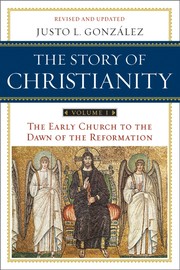
Start with Justo González's The story of Christianity for the historical sweep and N. T. Wright's Simply Christian for a lucid statement of the faith's logic. To read the Scriptures well, Gordon Fee's How to read the Bible for all its worth teaches the genres and pitfalls. C. S. Lewis's Mere Christianity remains the most widely read defense of the core claims.
The early church
Go to the sources. The Apostolic Fathers in English collects the earliest post-New-Testament writings. Athanasius's On the Incarnation is a short, central classic of doctrine, and Augustine's Confessions is both spiritual autobiography and the fountainhead of Western theology.
History and traditions
Bruce Shelley's Church History in Plain Language gives the readable overview, and Diarmaid MacCulloch's The Reformation covers the great rupture in depth. Then sample the living branches: Kallistos Ware's The Orthodox way, Richard McBrien's Catholicism, and Dietrich Bonhoeffer's The cost of discipleship on what following Christ demanded of one modern martyr.
Follow the full reading path for study plans on each stage and verified editions, in order.
Follow the full reading path →
Ready to learn something deeply?
Build a reading path — free