Everyone has an opinion about Marx; far fewer have read him. That gap matters because Marx is a system — economics, history, and philosophy braided together — and quoting a line of the manifesto tells you almost nothing about the argument beneath it. His masterwork, Capital, is genuinely demanding and rewards preparation.
An ordered path solves this. Start with brief, honest introductions, meet the man through biography, then read his own words from the punchy early works toward the dense economics, with a good companion for the hardest volume.
Get oriented
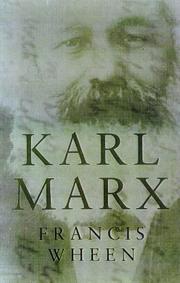
Begin with Peter Singer's Marx A Very Short Introduction, a clear map of the core ideas, and Francis Wheen's Karl Marx, a witty, humane biography that grounds the theory in a life. Erich Fromm's Marx's Concept of Man recovers the humanist Marx often lost in caricature.
The core writings
Now Marx himself. The anthology Capital, the Communist manifesto and other writings collects the essential shorter texts in one place. The German ideology, parts I & II lays out historical materialism — his theory of how societies change. Then attempt Capital Volume I, keeping David Harvey's A Companion to Marx's Capital beside you; Harvey's decades of teaching make the value theory tractable.
Marx applied, and after
See Marx analyze real politics in The eighteenth Brumaire of Louis Bonaparte. Then trace his afterlife: Lenin's The state and revolution, Gramsci's Selections from the prison notebooks, and Schumpeter's skeptical Capitalism, Socialism and Democracy. Close with Terry Eagleton's Why Marx Was Right, a spirited defense that also clarifies the stakes.
Follow the full reading path for stage-by-stage study plans and verified editions in order.
Follow the full reading path →
Ready to learn something deeply?
Build a reading path — free