China is the most consequential country most Westerners know least about, and the information environment does not help: most commentary arrives pre-sorted into panic or apologia. If you want an actual understanding — how the country changed, how the Party governs, what the economy is and is not — you need books, and you need them in an order that builds judgment before opinion.
A note on method: this path deliberately includes authors who disagree with each other about China's trajectory and what it means for the world. That is by design. On a subject this contested and this fast-moving, the goal is a framework for weighing new evidence — and conclusions held loosely enough to update.
Stage one: see the country at ground level
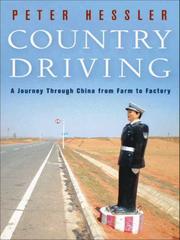
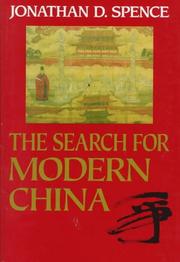
Start with Country driving by Peter Hessler, who spent years driving China's back roads and factory towns as it urbanized. No book does more to replace the abstraction called China with actual people making actual decisions. Then add the historical spine: The search for modern China by Jonathan D. Spence, the standard account running from the late imperial era through revolution and reform. It is long; read it as a reference backbone and the rest of the path gets easier.
Stage two: how the system actually works
The Party by Richard McGregor remains the essential explainer of the Chinese Communist Party's machinery — how it controls the state, the military, and business in ways that formal titles conceal. Follow with China's New Red Guards by Jude Blanchette, which traces the neo-Maoist currents that help explain the country's turn under Xi Jinping, and Surveillance State by Josh Chin, a reported account of how digital surveillance became a governing strategy — most visibly in Xinjiang.
Stage three: the economy, both stories
The economic rise deserves two lenses. How China Escaped the Poverty Trap by Yuen Yuen Ang is a scholarly, genuinely original account of how improvised local experimentation — not a master plan — drove development. Then Red Flags by George Magnus makes the sober case for why the model faces real limits: debt, demographics, and the middle-income squeeze. Reading them together is the point; each keeps the other honest.
Stage four: the rivalry
Only now take on the geopolitics. Chip War by Chris Miller explains why semiconductors sit at the center of US-China competition — the clearest single-industry window into the whole contest. Finish with Destined for War by Graham Allison, which asks whether rising and ruling powers are structurally prone to conflict. Its Thucydides-trap thesis is influential and heavily criticized; read it as a provocation to argue with, not a forecast to accept.
How to actually study this
Keep a running list of each author's core claim and what evidence would change their mind — you will notice the strongest books state this openly. When two books conflict, write down the disagreement precisely; vague impressions are where bad China takes come from. And date-stamp your conclusions: this subject moves quickly, and an honest reader expects to revise.
The staged sequence with study plans is at the full reading path. Related paths live at the subject hub, or browse all paths.
Ready to learn something deeply?
Build a reading path — free