Everyone has a theory about why Americans hate each other, and most theories conveniently blame the other side. The scholarship is more interesting: polarization has structural causes, identity-driven psychology, and institutional accelerants, and you cannot see the whole machine from inside either camp.
Order matters because this subject is a minefield of motivated reasoning. Start with the system's design, then the empirical account of how the parties sorted, then the lived experience of people unlike you, and only then the alarmed diagnoses and reform proposals. Read in that order and you earn your conclusions instead of importing them.
Stage 1: the design
Start, unfashionably, with The Federalist Papers by Alexander Hamilton, Madison, and Jay, especially the essays on faction. The founders designed the system explicitly to frustrate parties and demagogues, then watched parties emerge within a decade. Every modern argument about American democracy is an argument with this document; read enough of it to know what the machine was built to do.
Stage 2: what actually happened
The Great Alignment by Alan Abramowitz is the data-driven account of the great sorting: how race, religion, and geography lined up behind the two parties until every election became existential. Then read Why We're Polarized by Ezra Klein, the most accessible synthesis of the political-psychology literature, arguing that stacked identities and a media ecosystem that rewards conflict form a self-reinforcing system in which everyone behaves rationally and the whole degrades. For a historical wrong turn, The emerging Democratic majority by John B. Judis is worth reading precisely because its famous demographic prediction curdled; it is a lesson in how forecasts shape party strategy and then betray it.
Stage 3: the view from the other side
Strangers in their own land by Arlie Russell Hochschild is a Berkeley sociologist's five years among Louisiana Tea Party conservatives, built around their deep story of feeling cut in line ahead of. Whatever your politics, this book supplies the empathy the data books cannot, and it will complicate your priors.
Stage 4: the diagnosis and the argument over the cure
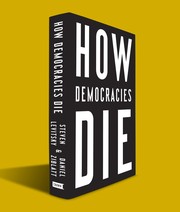
How Democracies Die by Steven Levitsky and Daniel Ziblatt uses comparative cases to identify how elected leaders erode democracies from within, and their follow-up Tyranny of the Minority argues America's counter-majoritarian institutions have become part of the problem. The People vs. Democracy by Yascha Mounk separates liberalism from democracy and shows how they are splitting apart, while Twilight of Democracy by Anne Applebaum examines why intellectual elites talk themselves into authoritarianism. Finally Breaking the Two-Party Doom Loop by Lee Drutman offers a structural fix: proportional representation and multiparty democracy. Treat all of these as arguments to be weighed, not verdicts; serious scholars disagree about both diagnosis and cure.
How to actually study this
After each book, write down its causal claim in one sentence and what evidence would falsify it. Notice which books make you feel vindicated; those deserve your hardest skepticism. This is a subject where feeling right is cheap and thinking clearly is the whole game.
The staged path with study plans is at the full reading path. Related topics are on the subject hub, or browse all paths.
Ready to learn something deeply?
Build a reading path — free