Evolution has the strange property of being simple enough to state in a sentence and deep enough to reward a lifetime of reading. "Descent with modification, filtered by selection" — that's it, and yet the consequences are so counterintuitive that even careful thinkers get them wrong. The way in is layered: the grand story first, then the mechanisms, then the modern theory that sharpened it all.
Understand evolution: a reading path from Darwin to the extended phenotype
July 6, 2026 · 1 min read
The path, stage by stage
Our evolution path builds that understanding in order.
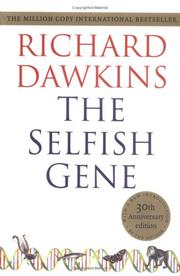
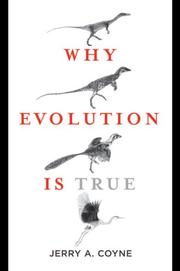
Foundations — the big story. Dawkins' The Selfish Gene (the gene's-eye view that reorganized the field), Coyne's Why Evolution Is True (the evidence, laid out cleanly), and Darwin's own Voyage of the Beagle.
Mechanisms — how evolution works. Dawkins' The Blind Watchmaker on how cumulative selection builds complexity without a designer, Carroll's Endless Forms Most Beautiful on evo-devo, and The Beak of the Finch — evolution measured in real time.
Synthesis — genetics and the tree. Carroll's The Making of the Fittest, Shubin's Your Inner Fish, and Dawkins' vast The Ancestor's Tale.
Advanced — modern evolutionary theory. Williams' Adaptation and Natural Selection and Dawkins' The Extended Phenotype — the rigorous arguments that disciplined how biologists reason about selection.
The habit: find the level of selection
The single idea that untangles most evolution confusion is asking what is being selected — gene, individual, group? Practice it on everything: altruism, peacocks' tails, aging. Getting the level right is where amateur and expert intuitions diverge.
Around 100 hours. Follow the path or browse the evolution hub. It's the backbone of teaching yourself biology and echoes the deep-time thinking of how to read history.
FAQ
- Is The Selfish Gene still accurate?
- Its core — the gene’s-eye view — remains foundational and widely taught. Later books in the path add nuance (evo-devo, levels of selection), but Dawkins’ framing is still the best place to start.
- Do I need biology first?
- No — the story and mechanism stages are self-contained. A little genetics helps for the synthesis stage, which is exactly why biology and evolution pair so well.
Get the books
- 1The Selfish GeneAmazon ↗Richard Dawkins
- 2Why evolution is trueAmazon ↗Jerry A. Coyne
- 3Charles Darwin's The Voyage of the Beagle:Amazon ↗Charles Darwin
- 4The Blind WatchmakerAmazon ↗Richard Dawkins
- 5Endless Forms Most BeautifulAmazon ↗Sean B. Carroll
- 6The beak of the finchAmazon ↗Jonathan Weiner
As an Amazon Associate we earn from qualifying purchases. Some book links are affiliate links; you pay the same price and we may earn a small commission.
Follow the full reading path

How to learn Evolution
Beginner11books102 hrs4 stages
Ready to learn something deeply?
Build a reading path — free