Biology has a tension no other science has quite so sharply. The popular books are some of the best science writing ever produced — and they'll leave you unable to actually explain how a cell works. The textbooks will teach you exactly how a cell works — and bore most people into quitting by chapter four. The fix isn't to choose. It's to read both tracks at once.
From The Selfish Gene to the cell: teaching yourself biology
July 6, 2026 · 2 min read
Narrative and textbook, together
That's the design of our biology path: each stage pairs a page-turner with the rigor.
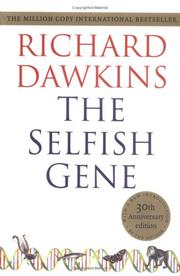
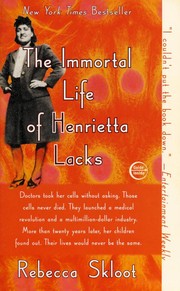
Foundations — the big picture. Dawkins' The Selfish Gene reframes all of biology around the gene's-eye view — still the most influential popular biology book ever written. Alongside it, Rebecca Skloot's The Immortal Life of Henrietta Lacks grounds the science in a real human story about cells, ethics, and who biology is done to. Together they answer "why should I care" before the textbook asks you to memorize anything.
Core knowledge — the standard curriculum. Campbell Biology is the textbook nearly every university uses, and for good reason: it's comprehensive and unusually well-illustrated. This is the spine of the whole path. Pair it with The Cell: A Molecular Approach for the level below.
Going deeper — molecular biology and genetics. Watson's Molecular Biology of the Gene and Alberts' Molecular Biology of the Cell — the reference the field itself runs on. Slow, dense, and worth it.
The evolutionary framework. Neil Shubin's Your Inner Fish (your body as a 375-million-year-old hand-me-down) and Sean B. Carroll's The Making of the Fittest put the molecular detail back into the grand story of descent.
Synthesis and frontier. Uri Alon's An Introduction to Systems Biology and Merlin Sheldrake's Entangled Life on fungi — biology as networks and systems, which is where the field is heading.
The habit: draw it, don't highlight it
Biology is a visual science pretending to be a verbal one. The students who retain it don't highlight — they redraw. Sketch the cell, the pathway, the phylogenetic tree from memory, then check against Campbell. That single habit is the difference between recognizing the Krebs cycle and understanding it.
This is a long path — roughly 180 hours of reading — but the narrative track keeps the textbook track honest, and you can read the popular books on the couch and save the textbook for the desk. Follow the path or browse the biology hub. The evolution thread connects naturally to how to read history — both are the study of deep time.
FAQ
- Can I learn biology without a lab?
- The conceptual core, yes — genetics, evolution, cell biology, systems thinking all come from reading and drawing. What reading can’t give you is wet-lab technique, so pair it with a virtual lab or a local course if you need the hands-on skills.
- Do I need chemistry first?
- A little helps for the molecular stages. Campbell reviews what it needs, but if the biochemistry chapters fight you, a few weeks with an intro chemistry text pays off.
Get the books
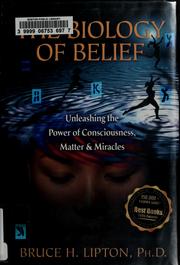
- 1The biology of beliefAmazon ↗Bruce H. Lipton
- 2The Selfish GeneAmazon ↗Richard Dawkins
- 3The Immortal Life of Henrietta LacksAmazon ↗Rebecca Skloot
- 4Campbell biologyAmazon ↗Lisa A. Urry
- 5The cell : a molecular approach - 6. ed.Amazon ↗Geoffrey M. Cooper
- 6Molecular biology of the geneAmazon ↗James D. Watson
As an Amazon Associate we earn from qualifying purchases. Some book links are affiliate links; you pay the same price and we may earn a small commission.
Follow the full reading path
How to learn Biology
Beginner12books179 hrs5 stages
Ready to learn something deeply?
Build a reading path — free