Psychology has a unique problem for self-learners: its bestseller shelf is full of findings that later failed to replicate. Power poses, ego depletion, much of priming — famous, viral, and shaky. You can't avoid this by avoiding popular books (some are excellent). You avoid it by building the skill of telling the difference — which is exactly what a well-ordered path does.
A psychology reading path that skips the pop-science traps
July 6, 2026 · 2 min read
The path, stage by stage
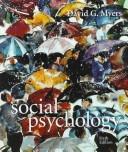
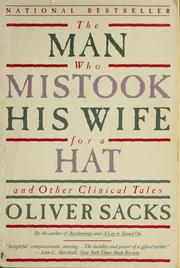
Foundations: how the mind works. Our psychology path starts with Myers' Social Psychology (a real textbook — sturdier ground than any bestseller), Kahneman's Thinking, Fast and Slow, and Oliver Sacks' The Man Who Mistook His Wife for a Hat — case studies that show what minds are like when they break, told with more humanity than any writer in the field. Kahneman, to his enormous credit, publicly flagged which of his own chapters rest on weakened evidence; read him knowing that, and he models the honesty the field needs.
Core subfields. Cialdini's Influence — persuasion research that has largely held up — and Siegel's The Developing Mind on how relationships shape development.
The stage that changes everything: research methods. Morling's Research Methods in Psychology and Nisbett's Mindware teach you to read studies: sample sizes, effect sizes, what replication means. This is the stage pop-science readers never do, and it's the one that converts you from consumer to evaluator. Every psychology headline you see afterward gets quietly audited.
Advanced theory. Personality science, Comer's Abnormal Psychology, and van der Kolk's The Body Keeps the Score on trauma — read now with your methods-trained eye, which matters, because it's a book with both real insight and real controversy.
Frontiers. Ramachandran's The Tell-Tale Brain and Barrett's How Emotions Are Made — the constructed-emotion argument that may be rewriting the textbooks.
The meta-skill
Notice the shape: the path doesn't protect you from contested science — psychology is contested science. It arms you for it. About 130 hours of reading, and the lens lasts a lifetime.
Follow the path or browse the psychology hub. It pairs well with negotiation, which is applied psychology with a scorecard.
FAQ
- Is Thinking, Fast and Slow still worth reading after the replication crisis?
- Yes — the dual-systems framework and the judgment research at its core have held up well. Read it alongside a methods book and you get both the insights and the calibration.
- Why read a textbook instead of popular books?
- One good textbook (like Myers) gives you the field’s consensus map, which popular books then argue with. Without the map, you can’t tell a bold finding from a fragile one.
Get the books
- 1Social psychologyAmazon ↗David G. Myers
- 2Thinking, fast and slowAmazon ↗Daniel Kahneman
- 3The Man Who Mistook His Wife for a HatAmazon ↗Oliver Sacks
- 4InfluenceAmazon ↗Robert B. Cialdini
- 5The developing mindAmazon ↗Daniel J. Siegel
- 6Research methods in psychologyAmazon ↗Beth Morling
As an Amazon Associate we earn from qualifying purchases. Some book links are affiliate links; you pay the same price and we may earn a small commission.
Follow the full reading path

How to learn Psychology
Beginner12books129 hrs5 stages
Ready to learn something deeply?
Build a reading path — free