Most people form their opinion of Bitcoin from a tweet, a podcast, or a relative who got rich (or wrecked) in the last cycle. That is a terrible way to evaluate an asset class, and an even worse way to evaluate a technology. Crypto is unusual in that almost everyone writing about it has a position — which means your job as a reader is not to find the one true book, but to learn to weigh evidence from authors who openly disagree.
That is exactly how this path is built. Order matters here more than in most subjects, because the bull case and the skeptic case only make sense once you know what actually happened and how the thing actually works. None of this is investment advice; the goal is to make you harder to fool.
Start with the story
Begin with Digital gold by Nathaniel Popper, a journalist's history of Bitcoin's first decade — the cypherpunks, the exchanges, the collapses. It gives you the characters and the timeline every later book assumes. Then read The Internet of money by Andreas M. Antonopoulos, a short collection of talks that explains, without hype math, why anyone thinks an open monetary network matters at all.
Add the monetary context
Bitcoin is a claim about money, so you need a little monetary history. Layered Money by Nik Bhatia traces how money has always worked in layers — gold, banknotes, bank deposits — and where digital assets might slot in. With that scaffolding, read The Bitcoin Standard by Saifedean Ammous. Be clear about what this book is: the strongest, most influential statement of the bull case, built on Austrian economics that many economists reject. Read it as one side of a live debate, not settled fact.
Its sequel, The Fiat Standard, applies the same lens in reverse, arguing that government money is the anomaly. If you found the first book persuasive, the second mostly repeats its economics at greater length; read it only if you want the argument extended rather than tested.
Then read the skeptics — seriously
This is the stage most crypto readers skip, and it shows. Attack of the 50 Foot Blockchain by David Gerard is a sharp, funny catalog of blockchain overreach and failed promises. Number Go Up by Zeke Faux is a reporter's tour through the fraud, stablecoin risk, and human damage of the 2021 to 2022 bubble. If the bull case survives these two books in your mind, you will hold it for better reasons.
Then the asset-class question
Cryptoassets by Chris Burniske and Jack Tatar is the one book on this path that treats crypto as a portfolio problem rather than a movement — valuation frameworks, network-value metrics, position sizing, custody. Its market examples have aged, and its way of thinking has not. Read it after the skeptics so you apply the frameworks with your guard up.
Finish with the technology
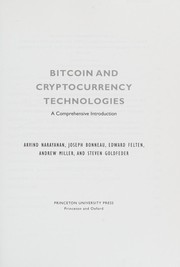
Bitcoin and cryptocurrency technologies by Arvind Narayanan and his co-authors is a genuine university textbook — how the protocol, mining, and consensus actually work. Most disputes about crypto dissolve, one way or the other, once you understand the mechanism.
If you want to go one level deeper, Mastering Bitcoin: Unlocking Digital Cryptocurrencies by Andreas M. Antonopoulos is the developer's reference: keys, transactions, scripts, the mechanics of the network as an engineer meets them. The two overlap, so pick by purpose — Narayanan if you want to understand the ideas, Antonopoulos if you intend to build or audit something.
How to actually study this
Read one book at a time and keep a running two-column note: claims that made Bitcoin seem more important, and claims that made it seem less. Force each new book to respond to the previous one — Ammous versus Gerard is a real argument, and you learn by refereeing it.
The full sequence, with stages and a study plan for each, is in the full reading path. For adjacent reading on money and markets, see the subject hub, or browse all paths.