Financial independence has a math problem and a psychology problem, and almost everyone reads for the wrong one. The arithmetic of FIRE — save a high fraction of income, invest it in low-cost index funds, withdraw conservatively — fits on an index card. What fails is the behavior around it. So the reading order that works starts with your relationship to money, not with asset allocation.
Financial Independence Books: The FIRE Path, in Order
July 11, 2026 · 2 min read
Why order matters here
If you start with withdrawal-rate debates, you will optimize a portfolio you have not built. Start instead with why you spend, then how to invest simply, then the mechanics and critiques of early retirement itself. Each stage makes the next one boring — which, in personal finance, is exactly what you want.
The path, stage by stage
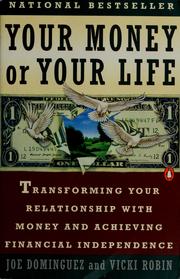
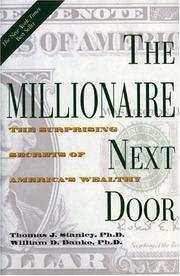
Begin with Your Money or Your Life by Vicki Robin, the book that started the movement. Its core move — pricing every purchase in hours of your life — rewires spending more effectively than any budget. Then read The Millionaire Next Door by Thomas Stanley, a data-driven portrait showing that most real wealth is built by unglamorous savers, not high earners.
For the investing stage, The Simple Path to Wealth by J. L. Collins is the clearest single explanation of index-fund investing ever written for a lay reader — it began as letters to his daughter and reads like it. Back it with The Little Book of Common Sense Investing by John Bogle, the founder of Vanguard making the mathematical case that costs are everything, and A Random Walk Down Wall Street by Burton Malkiel for the academic evidence that stock-picking rarely beats the market. If you want an actionable system for the accumulation years, I Will Teach You to Be Rich by Ramit Sethi automates the whole thing in six weeks.
Then the endgame. Work Optional by Tanja Hester is the most level-headed guide to actually planning an early retirement, including health care and identity. Die with Zero by Bill Perkins is the useful counterweight — an argument that over-saving is also a failure mode. Read them together and form your own number.
How to actually study this
After stage one, calculate your real savings rate and your FIRE number. After stage two, write a one-page investment policy and automate contributions. Then stop optimizing — check in quarterly, not daily. None of this is personalized advice; tax and retirement rules vary, so run big decisions past a fee-only fiduciary advisor.
The staged plan is at the full reading path. Broader money routes live in the financial independence hub, or browse all paths.
FAQ
- What is the best first book on FIRE?
- Your Money or Your Life by Vicki Robin. It builds the spending psychology every later book assumes, and it defined the movement.
- How much money do I need for financial independence?
- The common rule of thumb is 25 times your annual spending, based on a 4 percent withdrawal rate. Treat it as a planning starting point, not a guarantee.
Get the books
- 1Your Money or Your LifeAmazon ↗Vicki Robin
- 2The Simple Path to WealthAmazon ↗J. L. Collins
- 3The millionaire next doorAmazon ↗Thomas J. Stanley
- 4I will teach you to be richAmazon ↗Ramit Sethi
- 5The Little Book of Common Sense InvestingAmazon ↗John C. Bogle
- 6A Random Walk Down Wall StreetAmazon ↗Burton Gordon Malkiel
As an Amazon Associate we earn from qualifying purchases. Some book links are affiliate links; you pay the same price and we may earn a small commission.
Follow the full reading path

Financial independence: the FIRE path
Beginner10books74 hrs5 stages
@worksherpa♥ 0
Ready to learn something deeply?
Build a reading path — free