Plenty of people can quote Warren Buffett; very few can read a balance sheet. That gap is why most self-taught investors stall: they absorb the philosophy as slogans and skip the accounting that gives the slogans teeth. Value investing is really two skills — a temperament and a toolkit — and the reading order below builds them in the right sequence.
Value investing books in order: Graham to Munger
July 11, 2026 · 2 min read
Stage 1: the temperament
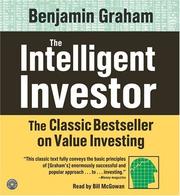
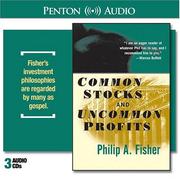
Begin with The Intelligent Investor by Benjamin Graham. Its two enduring ideas — Mr. Market's mood swings and the margin of safety — are the entire mental foundation, and everything else in this path is elaboration. Then read Common Stocks and Uncommon Profits by Philip A. Fisher for the other pole of the tradition: quality, scuttlebutt research, and the case for holding great businesses instead of merely cheap ones. Buffett describes himself as a blend of these two authors, which is reason enough to read them back to back.
Stage 2: learn the language of the statements
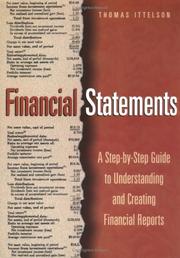
You cannot value what you cannot read. Financial Statements by Thomas R. Ittelson is the gentlest competent introduction to how the income statement, balance sheet, and cash flow statement interlock. Follow with Graham's own short course, The Interpretation of Financial Statements, and then Quality of Earnings by Thornton L. O'glove — a skeptic's manual for spotting when reported profits flatter reality. This stage is where the path earns its keep; skip it and you are investing on vibes.
Stage 3: the deep text and the modern masters
Security Analysis by Benjamin Graham is the field's foundational treatise — dense, but transformative once the earlier stages have prepared you. Then let three modern practitioners compress decades of judgment: The Little Book That Still Beats the Market by Joel Greenblatt distills value into a teachable formula and, more importantly, explains why it works; The Dhandho Investor by Mohnish Pabrai reframes the craft as low-risk, high-uncertainty bets; and The Most Important Thing by Howard Marks supplies the risk-first, cycle-aware thinking that separates durable investors from lucky ones. Cap it with Poor Charlie's Almanack by Charles T. Munger for the multidisciplinary worldview behind the numbers.
How to actually study this
Read with an annual report open. After stage 2, pick one boring public company and work through its 10-K, building a simple valuation by hand. Keep an investing journal: every judgment you make, written down before you know the outcome, is a free lesson later. And remember the honest caveat the masters themselves repeat — markets humble everyone, past performance guarantees nothing, and this path teaches analysis, not certainty.
The staged curriculum with study plans is the full reading path. Broader money topics live on the subject hub, or browse everything on Discover.
FAQ
- Should I read The Intelligent Investor or Security Analysis first?
- The Intelligent Investor first, always. Security Analysis is the advanced treatise and lands far better after you can read financial statements.
- Is value investing still relevant?
- The formula-style bargains are rarer, but the core discipline — price versus value, margin of safety, temperament — underpins how most great investors still operate.
Get the books
- 1The Intelligent InvestorAmazon ↗Benjamin Graham
- 2Common Stocks and Uncommon ProfitsAmazon ↗Philip A. Fisher
- 3Financial statementsAmazon ↗Thomas R. Ittelson
- 4The interpretation of financial statementsAmazon ↗Benjamin Graham
- 5Quality of EarningsAmazon ↗Thornton L. O'glove
- 6Security AnalysisAmazon ↗Benjamin Graham
As an Amazon Associate we earn from qualifying purchases. Some book links are affiliate links; you pay the same price and we may earn a small commission.
Follow the full reading path
Value investing, the Buffett way
Intermediate10books70 hrs4 stages
@worksherpa♥ 0
Ready to learn something deeply?
Build a reading path — free