Standard economics assumes people are rational calculators. You have met people; you know better. Behavioral economics is the field that turned that observation into science, documenting the systematic, predictable ways humans misjudge risk, time, and money. It is also a field in mid-renovation: some famous findings have shrunk or failed under replication, and one of its stars faced serious data-integrity allegations. The right reading order gives you both stories, the insights and the audit, because a behavioral economics education that skips the replication crisis is itself a bias.
Behavioral economics books, in order: why we really decide
July 11, 2026 · 2 min read
Stage 1: the hook
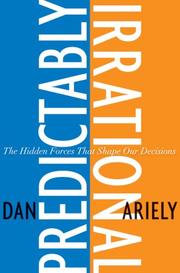
Start with Predictably Irrational by Dan Ariely. It is the most fun entry point in the field: decoy pricing, the power of free, why we overvalue what we own, told through clever experiments. Read it knowing two caveats: several effects of this era replicate weaker than advertised, and Ariely himself later became embroiled in a data-fraud controversy over one coauthored study. That does not erase the book's value as an on-ramp; it makes it your first exercise in holding findings provisionally.
Stage 2: the foundation
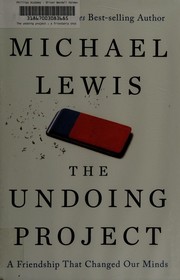
Then the cornerstone: Thinking, Fast and Slow by Daniel Kahneman, the Nobel laureate's summa on the two-systems mind, heuristics, loss aversion, and prospect theory. It is long and worth every page, and Kahneman was notably candid that some chapters, particularly on priming, relied on studies that later failed replication. The core architecture has held up far better than the flashiest lab effects. For the human story behind the science, read The Undoing Project by Michael Lewis, the biography of Kahneman's partnership with Amos Tversky. It is the most moving book ever written about a footnoted friendship, and it fixes the ideas in memory by attaching them to people.
Stage 3: the field grows up
Misbehaving by Richard Thaler is the insider's history: how a young economist's list of anomalies grew into a Nobel-winning field, against the open hostility of the profession. It is funny, score-settling, and the best single account of what behavioral economics actually changed. Then read Nudge, Thaler's collaboration with Cass Sunstein, where the science becomes policy: default enrollment, choice architecture, and the contested idea of libertarian paternalism. Follow with Noise, Kahneman's late work on random variability in judgment, why two judges give different sentences for the same crime, which argues that noise often does more damage than bias and gets far less attention.
Stage 4: use it
Finish with The Choice Factory by Richard Shotton, a short, practical translation of behavioral findings into marketing and everyday decisions, useful for seeing the concepts operate in the wild.
How to actually study this
Keep a bias journal for the duration of the path: one real decision per day, and which concept it illustrates, anchoring on the first price, loss aversion in a cancellation you keep postponing. Second habit, and this is the important one: for every effect that amazes you, spend five minutes checking how it has replicated. You will find some rock-solid, some shrunken, some dead. That checking habit is the actual education; it is how you learn to weigh evidence rather than collect trivia.
The full reading path stages all nine books with study plans. Related paths live at the behavioral economics hub, or browse Discover.
FAQ
- Is Thinking, Fast and Slow still worth reading?
- Yes. Some priming studies it cited failed replication, and Kahneman acknowledged this, but the core two-systems framework, heuristics, and prospect theory remain foundational.
- What is the best first book on behavioral economics?
- Predictably Irrational by Dan Ariely for pure accessibility, read with a modern grain of salt, or Misbehaving by Richard Thaler if you want the field's story told by its founder.
- Did the replication crisis kill behavioral economics?
- No, but it pruned it. Flashy lab effects like priming suffered most; large-scale findings such as default effects and loss aversion have held up much better.
Get the books
- 1Predictably IrrationalAmazon ↗Dan Ariely
- 2The undoing projectAmazon ↗Michael Lewis
- 3Thinking, fast and slowAmazon ↗Daniel Kahneman
- 4MisbehavingAmazon ↗Richard H. Thaler
- 5NudgeAmazon ↗Richard H. Thaler
- 6The choice factoryAmazon ↗Richard Shotton
As an Amazon Associate we earn from qualifying purchases. Some book links are affiliate links; you pay the same price and we may earn a small commission.
Follow the full reading path

Behavioral economics: why we really decide
Beginner9books86 hrs5 stages
Ready to learn something deeply?
Build a reading path — free