Ultimate is a young sport with a thin bookshelf. It grew out of American high schools and colleges in the late 1960s, spread through club and college play rather than professional leagues, and produced far more video and coaching material than published writing. That scarcity makes the path short and the ordering straightforward.
It also makes one thing worth stating early: ultimate is self-officiated at most levels, with players calling their own fouls under the principle known as Spirit of the Game. That is not decoration. It changes how you argue, how contested calls resolve, and what counts as competent play, and no amount of technical skill compensates for not understanding it.
The technical foundation
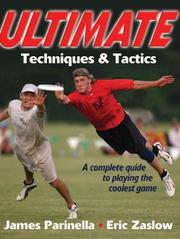
Start with Ultimate techniques & tactics by James Parinella and Eric Zaslow. It is the closest thing the sport has to a standard manual, written by two players from one of the most successful club teams of its era. It covers throwing mechanics for backhand, forehand, and the specialty throws, catching, cutting, marking, defensive positioning, and then the team structures: vertical and horizontal stacks, zone defence, transition play.
The throwing chapters are the part to work through slowly. Ultimate punishes weak throws more than almost any other skill deficit, because a turnover is immediate possession for the other team with no reset. Most improvement for new players comes from a reliable forehand under pressure, not from tactical sophistication.
The strategy sections are best read after you have played enough to picture the field. Read them once early for the vocabulary, then return after a season, when the descriptions of stack spacing and force sidelines will map onto things you have actually seen go wrong.
Where the sport came from
Then Ultimate by Pasquale Anthony Leonardo and Adam Zagoria, the history of the sport's first decades. It traces the origins in Maplewood, New Jersey, the growth of college and club competition, the formation of governing bodies, and the long-running arguments about officiating, professionalisation, and how to keep the self-refereed ethic as stakes rose.
This is not filler. Ultimate's rules and culture are the product of specific decisions by identifiable people, and knowing that history explains why the sport does things that look eccentric from outside, including the observer system and the persistence of self-officiating at high levels.
The part that decides close games
Finish with The Inner Game of Tennis by W. Timothy Gallwey. It is not about ultimate at all, and it is on this path because the sport's failure mode is mental rather than physical: the drop under pressure, the forced throw into coverage, the mark that gets beaten because you are still thinking about the last point. Gallwey's account of the interfering internal voice and of learning through non-judgmental attention transfers directly to a disc sport where every possession is a discrete decision.
Read it last, once you know what your own errors look like. Applied to a specific recurring mistake, it is far more useful than read as general self-improvement.
Three books, in that order: skills, context, composure. That is a realistic total of a few weeks of reading, which is appropriate for a sport learned mostly on the field.
Work through the full path and supplement it with film of high-level games, which is abundant and free, and with a lot of throwing practice, which no book replaces. The fastest single improvement available to most club players is not tactical: it is fifteen minutes of throwing against a wind, four times a week, until the forehand stops wobbling.
Follow the full ordered path here: How to Learn Ultimate Frisbee from Books, in Order.