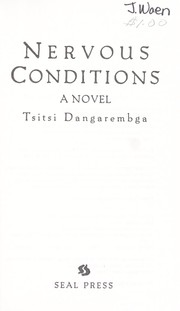
Start with Nervous Conditions. This is one of the few author reading orders where there is no argument at all: it is the first novel, it is the beginning of a trilogy that must be read in sequence, and it is the book everything else responds to.
The second thing to know is that this path is short. Five books is not an editorial judgement about which of her works are worth your time — it is close to the complete published shelf. Much of her working life has gone into film rather than prose, and the gaps between the novels are measured in decades. If you are used to author guides that offer twenty titles and tell you which twelve to skip, adjust expectations: here you can read everything.
The trilogy, in order
Nervous Conditions (1988) is narrated by Tambudzai, a girl in 1960s Rhodesia who gets her education only because her brother dies. Its opening sentence is famous for good reason. Alongside her runs her cousin Nyasha, educated in England and coming apart on return — the novel's real argument about what colonial schooling does to a mind sits in that pairing rather than in any speech.
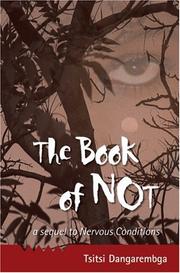
The Book of Not picks up during the liberation war, with Tambu at a mostly white convent school. Be warned: it is the hardest of the three to enjoy. Tambu becomes smaller, more compromised and less likeable, and the narrative voice contracts with her. That is the design, not a failure, but readers regularly report it as the point where the trilogy stops being a pleasure and starts being an argument.
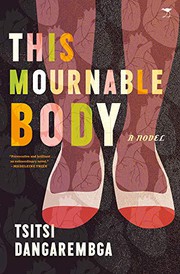
This mournable body completes it, decades later, with Tambu middle-aged in Harare, unemployed and drifting toward a job in ethno-tourism. It is written in the second person throughout — you did this, you thought that — which some readers find claustrophobic and others find the most exact formal choice in the whole trilogy. Give it fifty pages before deciding.
Read these three in order and only in order. The second and third open on a character whose earlier decisions you need to have watched.
The play and the essays
She no longer weeps is the early play, written before the first novel. It is short, blunter than the fiction, and interesting mostly as a first version of the same subject: a young woman whose education and pregnancy are both treated as other people's property. Read it after the trilogy, as an origin document rather than an entry point.
Black and Female is the recent essay collection and the natural closing book. It moves between memoir, the history of Zimbabwe and an argument about what it costs to write from where she writes. Several passages read as direct commentary on the trilogy, which is why it belongs at the end rather than the start.
Where to stop
If you read one book, Nervous Conditions stands entirely alone and always has — it was taught for decades before a sequel existed. If you read two, add This mournable body and accept that you will miss some connective tissue from the middle volume. But the trilogy read in full is a rare thing: one character followed across three books and thirty years of writing, with the author's own view of her changing between volumes.
For other reading orders built the same way, browse our author paths.
Follow the full ordered path here: Tsitsi Dangarembga Reading Order: Where to Start.