Tsitsi Dangarembga Reading Order: Where to Start
Tsitsi Dangarembga's body of work is small and unusually easy to sequence: three novels following one woman, Tambudzai, from a Rhodesian village in the 1960s to a collapsing Harare in the 1990s, written across thirty years and meant to be read in order. Start with the first novel, follow the trilogy straight through, then read outward into the early play and the recent essays, which supply the political life that produced the fiction.
The Trilogy, in Order
BeginnerFollow Tambudzai across three novels and thirty years of Zimbabwean history, and see one of the great sustained portraits of an education that costs its subject everything.
▸ Study plan for this stage
Pace: 5–6 weeks for 205, 250 and 340 pages. Nervous Conditions goes quickly — about ten days at 20 pages a day. The Book of Not is deliberately more airless and takes longer per page than its length suggests; give it two weeks. This Mournable Body is the hardest of the three, both formally and emotionally
- One protagonist across three novels and thirty years — Tambudzai from a Rhodesian village in the 1960s to a collapsing Harare in the 1990s. This is the rare author path where reading order is not a preference but a requirement
- The opening sentence of Nervous Conditions and what it commits the book to: a narrator who announces her own hardness on the first line and then makes you understand it
- Education as the only exit and as the injury — Tambudzai takes her dead brother's place at a mission school, and everything she gains is priced
- Tambudzai and Nyasha as paired figures: two responses to the same colonial education, one accommodating and one destroying itself, and the novel refusing to say which is right
- The title's source in Fanon by way of Sartre's preface — the phrase names a colonial condition rather than a personal temperament, which is the whole book's argument
- Women's labour and the household economy as the ground of the first novel: aunts, mothers and sisters carrying the costs of one child's schooling
- The narration's degradation across the trilogy as the deliberate formal event — retrospective and controlled first person in the first novel, a more clotted and bitter first person in the second, and second person in the third
- What the second person does in This Mournable Body: it puts the reader inside a self that can no longer say 'I', which is why the book only works if you remember the ambitious girl of the first
- Why is the narrator not sorry when her brother dies, and how long does the novel take to make that reasonable?
- What does Nyasha's crisis show that Tambudzai's story cannot, and why does Dangarembga need both?
- How does the liberation war enter The Book of Not, and what does it do to a novel set almost entirely inside a school?
- Why is The Book of Not so much more bitter than Nervous Conditions — is the change in Tambudzai, in the country, or in the narration?
- What is the effect of the second person in This Mournable Body, and at what point did you notice it had stopped feeling like a device?
- Read as one arc, what does the trilogy claim about what an education under colonialism actually costs the person who gets it?
- Copy out the first sentence of Nervous Conditions and the first sentence of This Mournable Body and set them side by side. Thirty years and two grammatical persons apart, and the pair is the whole trilogy in miniature.
- Keep a note per novel of who is paying for Tambudzai's position — school fees, housing, food. The economics are tracked precisely and are the trilogy's spine.
- Mark the point in The Book of Not where the narration first turns evasive about something the reader can see plainly. That evasion is what becomes the second person later.
- After This Mournable Body, reread the first twenty pages of Nervous Conditions. The reread is not optional — the third novel is constructed to be answered by it.
- Write 300 words on whether Tambudzai is a sympathetic character, and note where you changed your mind. The trilogy is engineered to make that answer move.
Next up: You have the whole fictional arc and its argument about education, gender and the Zimbabwean state — which is exactly what the early play and the recent essays illuminate from either side, showing where it came from and where it went.

A village girl in 1960s Rhodesia takes her dead brother's place at a mission school. The obvious starting point and the one indispensable book: it opens with the most famous first sentence in Zimbabwean literature and needs no prior context at all.
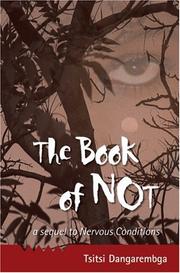
Tambudzai at a white convent school as the liberation war closes in. Published eighteen years after the first novel and unreadable without it; the tone is deliberately more airless and more bitter.
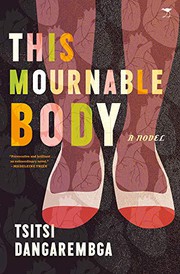
Tambudzai middle-aged, unemployed and narrated in the second person in post-independence Harare. Booker-shortlisted and the hardest of the three; its whole effect comes from remembering the ambitious girl of the first book.
Beyond the Trilogy
IntermediateRead the early drama and the recent non-fiction, which show where the trilogy's argument about women, race and the Zimbabwean state came from.
▸ Study plan for this stage
Pace: 1 week. She No Longer Weeps is 59 pages and reads in a single sitting, as plays do. Black and Female is 128 pages of essays — three or four sittings, one essay at a time. Together they are shorter than any single novel in the previous stage, which is honest to the shape of this path: Dangarembga has
- The play as the seed: written before Nervous Conditions, about a young woman abandoned after a pregnancy, and containing in raw form the situation the novels spend thirty years complicating
- Reading a script rather than seeing it staged — the compression is severe, the anger is undisguised, and the absence of a retrospective narrator makes it far blunter than the fiction
- How much the novels added: set the play beside Nervous Conditions and you can see exactly what interiority and hindsight were for
- Black and Female as direct statement — essays on empire, gender and race, arguing plainly what the trilogy dramatises through one life
- Dangarembga's arrest for protesting in Harare, written about in her own voice, which places the author inside the same state the novels describe
- The autobiographical continuity: the essays name experiences of education, of Europe and of return that the reader will recognise from Tambudzai without them being the same events
- Filmmaking and activism as the other half of the career — worth knowing that the long gaps between novels were not silence
- What is present in She No Longer Weeps that survives into Nervous Conditions, and what did Dangarembga discard?
- How does the play's directness compare with the novels' irony, and which is more effective on the same subject?
- In Black and Female, what is the argument about empire and gender stated outright that the trilogy only implies?
- How does knowing about her arrest change the reading of This Mournable Body's Harare?
- Having finished all five books, is this a small body of work or a complete one — and what would you say the whole project amounts to?
- Read She No Longer Weeps aloud in one sitting. It is under sixty pages and written for performance, and the anger only fully registers spoken.
- List three situations in the play and find their transformed versions in the trilogy. The correspondence is close and it is the best single exercise in this stage.
- After Black and Female, write one paragraph stating the trilogy's political argument in the essays' plain terms — then note what the novels gained by refusing to state it that way.
- Read the first page of Nervous Conditions one final time. Five books later it is a different sentence.
Next up: This is the end of the path — Dangarembga's published work in these forms is nearly complete here, so the next move is outward, to the Zimbabwean and southern African writers her essays argue alongside.

Her first published work, a play about a young woman abandoned after a pregnancy. Written before Nervous Conditions and worth reading afterwards as the seed of everything in it.

Essays on empire, gender and her own arrest for protesting in Harare. The direct statement of the politics the novels dramatise, and the right place to finish.
Discussion
Keep reading
Paths that share books, cover the same subject, or open a related topic.