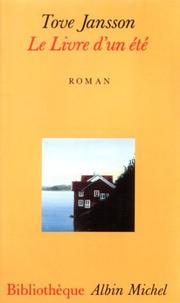
There are two right answers, so take the one that fits. If you are here as an adult reader looking for her fiction, start with The summer book. If you are here for the Moomins, start with Comet in Moominland.
The summer book beats the obvious alternative — Finn Family Moomintroll, the famous one — for an adult starting cold. It is around 140 pages, it puts a six-year-old and her grandmother on a small island in the Gulf of Finland across one summer, and almost nothing happens in it except everything. It is the clearest example of what Jansson does that nobody else does: enormous feeling handled with total dryness.
Two different writers in one path
This needs saying plainly, because the path spans both and they are not the same reading experience. The Moomin books are children's books: illustrated, episodic, 130 to 180 pages, warm and funny and full of incident. The adult books are short, cold, unillustrated, and frequently about work, solitude, property and mild dislike. They share a temperament and a landscape. They do not share a register.
Do not hand The true deceiver to a nine-year-old, and do not open Moominsummer Madness expecting the austerity of the adult novels. Read across the two if you like — the pleasure of doing so is real — but read them as separate bodies of work.
The adult fiction, in order
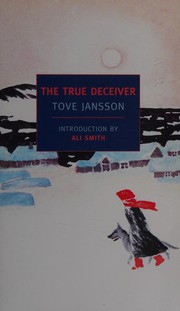
The summer book first. Then The true deceiver, which is the coldest thing she wrote: a winter village, a woman who moves into an elderly illustrator's house, and a slow campaign of manipulation in which it is never obvious who is deceiving whom. Many readers think it is her best novel.
Then Fair play, the warmest — two women who live and work at either end of the same building, arguing about art, watching films, going to sea. Then the stories: Travelling light and A winter book, both of which show how much of her work happens at short length. Sculptor's Daughter is a set of autobiographical childhood pieces, and it pairs naturally with The summer book.
The Moomin novels, in order
Comet in Moominland, then Finn Family Moomintroll, then Moominsummer Madness, Moominland midwinter, Moominpappa at Sea and Moominvalley in November. Publication order is the right order and there is no controversy about it.
Not in this list, and worth knowing about: the first Moomin book of all, The Moomins and the Great Flood, along with Moominpappa's Memoirs and the story collection Tales from Moominvalley. There are also picture books and a long-running comic strip. Their absence here is a gap in our catalogue rather than a judgement — you will not be lost without them, since Comet in Moominland works perfectly as a first book.
The honest warning about this sequence is that it darkens. The early books are comic adventures. Moominland midwinter leaves a child awake alone in a valley that is supposed to sleep. Moominpappa at Sea is a family quietly coming apart on a lighthouse island, and it is genuinely bleak. Moominvalley in November does not contain the Moomin family at all — a set of odd, lonely characters wait at an empty house for people who never arrive. These last two are the best books in the series and the least suitable for a small child alone.
Jansson also revised some of the Moomin books over her lifetime, so wording can differ between editions. Nothing in the story changes; it is not worth hunting a particular printing.
Buying for a child
Finn Family Moomintroll is the most cheerful and the most episodic, so it is the best read-aloud. Stop the sequence before Moominpappa at Sea for a young reader, or read those last two together and talk about them.
Where to stop
Adults who want a complete Jansson need three books: The summer book, The true deceiver and Fair play. Moomin readers should go all the way to Moominvalley in November, because the series only makes sense once it has stopped being cheerful. For the other great Nordic writer of flat, quiet devastation, see Tove Ditlevsen.
Follow the full ordered path here: Tove Jansson Reading Order: Where to Start.