Tove Jansson Reading Order: Where to Start
Tove Jansson had two careers that most readers only know one of: the Moomin books, and a body of spare, unsentimental adult fiction written from the 1970s onward. This order starts with the adult novels, because they are the fastest way to see that she is a major writer rather than a children's illustrator, then reads the Moomin novels in sequence so you can watch them darken, and finishes with the later stories and memoir. If you already know the Moomins, the same order still works — the adult books recast everything you thought those were.
Start with the Adult Novels
BeginnerMeet the Jansson sentence at its most exposed — short, plain, withholding — in the two books that made her adult reputation in English.
▸ Study plan for this stage
Pace: One to two weeks. The Summer Book is 166 pages in short, self-contained chapters and can be read a chapter or two a night over a week, or in one long afternoon — both work, and the book is unusually tolerant of either. The True Deceiver is 186 pages and should be read faster and in fewer sittings, b
- The Jansson adult sentence is short, plain and withholding. Nothing is explained, feelings are reported as actions, and the important fact is usually the one not stated — this is a completely different instrument from the Moomin books and reading it as children's prose grown up will mislead you
- The Summer Book is a small girl and her grandmother on an island in the Gulf of Finland across one summer, in chapters about a cat, a bathing suit, a fake Venice, a fight. The child's mother has died, the book never once discusses it, and it is the entire subject
- The island is real and so are the people: the grandmother is drawn from Jansson's mother, the girl from her niece, the island from the one Jansson lived on each summer for decades. This is autobiography with every explanation removed
- Watch how the book handles anger. The grandmother and the child are frequently rude, unreasonable and unkind to each other, and Jansson refuses to soften any of it — which is why the tenderness is credible
- The True Deceiver is the dark twin: a young woman with a reputation for brutal honesty installs herself and her brother in the house of an elderly, wealthy, wilfully naive illustrator of rabbits, over one snowbound winter in a small village
- The novel's question is whether honesty is a virtue or a weapon, and it declines to settle it. Both women are deceivers and both are, in their way, right about the other
- That the victim in The True Deceiver is a beloved illustrator of pretty children's pictures is not incidental. Jansson was writing about her own position — the money, the fan mail, the demand that she keep producing charm — and it is the least sentimental thing she ever did
- Both books were written in her late fifties and sixties, after decades of Moomins, and they are the reason she is now read as a major writer rather than as an illustrator with a long-running franchise
- Where in The Summer Book is the mother's death nearest to the surface? Find the two or three moments and describe what Jansson does instead of mentioning it.
- The chapters can be read in almost any order. What holds the book together, given that it has no plot?
- How does Jansson write a six-year-old without any of the usual devices — no cuteness, no baby vocabulary, no adult irony at her expense?
- In The True Deceiver, who is the deceiver of the title? Argue it both ways from the text.
- What does Katri actually want, and at what point does the novel let you see that she does not know either?
- Anna illustrates flowery rabbits for a living. What is Jansson saying about her own career, and how harsh is it?
- Read The Summer Book's shortest chapter twice. The whole method is visible at that scale and it takes four minutes.
- Mark every sentence in The Summer Book that states a feeling directly. There will be very few, and finding them tells you where Jansson decided the withholding had to stop.
- Read the opening pages of The True Deceiver immediately after finishing The Summer Book. Same island world, same weather, opposite temperature — the contrast is the strongest argument for reading them as a pair.
- Write half a page about two people who dislike each other doing a chore together, without naming a single emotion. This is the Jansson exercise and it is much harder than it sounds.
- Note who does the practical work in each book — boats, wood, snow, food. Competence is how Jansson characterises people, and tracking it is a shortcut into both novels.
Next up: You have now met her at her most exposed and unsentimental, which is the right lens for the Moomin books — they are not a gentler prelude to this work but the same intelligence operating under a very different set of constraints.
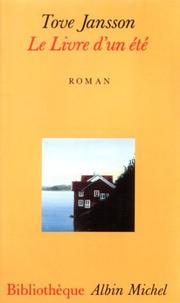
The best entry point to all of Jansson: a small girl and her grandmother on a Gulf of Finland island, in short chapters about almost nothing. The mother's death is never mentioned and is the whole subject, which tells you everything about her method.
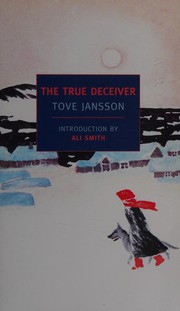
A young woman quietly takes over the house of an elderly children's illustrator over one snowbound winter. The coldest and most controlled thing she wrote — read it second, as the dark twin of The Summer Book.
The Moomin Novels, in Order
BeginnerRead the core Moomin sequence in publication order and see the same preoccupations — solitude, weather, the arrival of a difficult guest — worked out in a children's form.
▸ Study plan for this stage
Pace: Two to three weeks, and adjust your expectations rather than your pace. These are children's novels, 160 to 190 pages each with illustrations, and they read in an evening or two — do not slow down to look for depth, because the depth arrives on its own. Read them in this order over two or three week
- These are books for children and they behave like it — episodic, funny, driven by weather and arrivals, resolved by everyone going home for supper. That is not a limitation to read past; the emotional strangeness works because the surface stays comfortable
- Comet in Moominland is an apocalypse told at picnic pace: a comet is coming, the sea drains away, and the response is to pack a rucksack and set off to the observatory. It also introduces most of the cast, including Snufkin, which is why it is the right Moomin book to start with
- For completeness: the Moomin sequence has a slighter first book that precedes Comet, plus a book about Moominpappa's youth and a book of short stories, none of which this path includes. Skipping them costs you nothing structurally — the four novels here run in order and the missing titles sit alongs
- Finn Family Moomintroll is the loosest and most beloved: a magic hat that transforms whatever is put in it, a summer of episodes, and no real plot. It is the book most people mean when they say Moomins, and it is the least representative of what the sequence becomes
- Moominsummer Madness is a flood and a floating theatre, and it is where Jansson's adult preoccupations — performance, disguise, the difference between a role and a person — first push visibly through the children's frame
- Moominland Midwinter is the turn, and the best book in the sequence: Moomintroll wakes alone in the middle of hibernation into a season nobody has prepared him for, with different creatures, different rules and no family awake. It is a book about loneliness and about learning that the world does not
- Too-ticky, who appears in Midwinter and explains almost nothing, is drawn from Tuulikki Pietilä, Jansson's partner for forty-five years. The calm, practical, unconsoling adult of the winter book enters the sequence at exactly the point the sequence grows up
- Jansson revised several of these books after first publication, and the English editions descend from different versions and from several different translators across the decades. Editions therefore vary more than you would expect — worth knowing if a scene you remember is not where you left it, and
- In Comet in Moominland, how does the book keep the end of the world from being frightening — and does it entirely succeed?
- Finn Family Moomintroll has no plot. What is it organised by instead, and why has it remained the most popular?
- What is Moominsummer Madness doing with theatre, disguise and playing a part? Point at the scenes where the interest is clearly the author's rather than the children's.
- What does Moomintroll learn in Midwinter that he could not have learned in summer?
- Too-ticky refuses to explain things to Moomintroll. What kind of adult is that, and how does the book judge it?
- Across the four, chart the family's warmth. Where does it start to thin, and can you locate the first page where it does?
- Read Midwinter last in this stage and read it in one sitting. It is the hinge of the entire sequence and the pacing does the work.
- Look at the illustrations properly rather than past them. Jansson was a professional artist first, and the drawings frequently carry information the text withholds.
- Keep a one-line note per book: what arrives, what leaves, and what the weather is. Moomin plots are almost entirely arrivals and seasons, and seeing that makes the later books' bleakness legible as a continuation rather than a break.
- Read one chapter aloud. These sentences were written for reading aloud and the rhythm is noticeably better in the mouth.
- After Midwinter, go back to a page of The Summer Book. The same landscape, the same refusal to explain, and one of them has Moomins in it — which is the best available demonstration that the two careers are one writer.
Next up: The sequence has already turned toward solitude and winter, and the last two books complete that turn by taking the family apart — which is where the children's series and the adult fiction finally meet.

The right Moomin book to start with: a comet is coming and the valley must be crossed to find out. The first fully realised one, and an apocalypse story told at picnic pace.
The most beloved and the loosest — a magic hat, a summer of episodes, the whole cast assembled. Read after Comet, whose journey introduces the characters this one relaxes with.
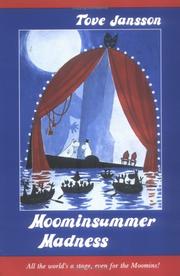
A flood strands the family in a floating theatre. The book where Jansson's adult interest in performance and disguise starts pushing through the children's frame.
Moomintroll wakes alone in the middle of hibernation and has to learn a season nobody prepared him for. The turning point of the sequence, and the first Moomin book that is genuinely about loneliness.
The Late, Dark Moomins
IntermediateFinish the sequence with the two books where the family comes apart, and see the bridge to the adult fiction.
▸ Study plan for this stage
Pace: One to two weeks. Moominpappa at Sea is 222 pages and Moominvalley in November is comparable, and although both are still shelved as children's books they read more slowly than the four before them — less happens and more is withheld. Give each two or three sittings. Read them in this order, immedia
- Moominpappa at Sea is a midlife crisis in a children's book: Moominpappa decides the family will move to a barren lighthouse island, ostensibly for adventure and actually because he needs to be necessary to someone. Everyone goes along with it and nobody says so
- Each family member fails separately on that island, and the failures are adult ones — a man performing competence he does not have, a woman who copes by escaping into her own painting, a child managing something dangerous alone. The book never names any of it
- The Groke, who has been a monster in the earlier books, becomes something else here. What happens between her and Moomintroll on the sand is the most emotionally direct scene in the entire sequence and it is achieved almost without dialogue
- Moominvalley in November is the last one, and its premise is an absence: a group of unrelated, lonely, difficult characters converge on the Moomin house, and the Moomins are not there and never come home
- It was written after Jansson's mother's death, and it is a book about grief written for children that does not explain that it is a book about grief. Toft, waiting for a family that does not arrive, is where the sequence ends
- November is the direct predecessor of The Summer Book, which she wrote next. The same withheld death, the same island world, the same refusal of consolation — with the fantasy furniture removed
- These two books answer the question of whether the Moomin novels are children's literature: they plainly are, and they are also doing something no children's series is required to do. Both propositions can be held at once and Jansson clearly did
- Read after the adult novels of the first stage, as this path arranges, the ending is not a surprise — it is a recognition, which is the whole reason for the order
- What does Moominpappa think the island is for, and what does the book show it is actually for?
- Moominmamma paints a garden on a wall. What is she doing, and how does the novel treat it — as consolation, as retreat, or as both?
- What changes about the Groke, and how much of that change happens in the text rather than in the reader?
- In Moominvalley in November, why is each of the visitors there? Take them one at a time; the answers are not the same.
- The Moomins never return. What would the book lose if they did?
- Are these children's books? Answer it seriously, with reference to what a specific child of eight would take from Moominvalley in November.
- Read the Groke scenes in Moominpappa at Sea consecutively, skipping between them. They form a short story inside the novel and it is the best thing in the Moomin books.
- List what each character in November is avoiding. The novel is built as a set of parallel evasions and the list is the structure.
- Read the last page of Moominvalley in November and then the first page of The Summer Book. Two books, two years apart, one with Moomins and one without, doing precisely the same thing.
- Compare the illustrations in Finn Family Moomintroll with those in the two late books. The drawings darken with the prose and the change is unmistakable when set side by side.
- Write 300 words on what Jansson did to a beloved children's series and why her publishers presumably let her. It is one of the strangest career decisions in twentieth-century children's literature.
Next up: The two careers have now joined, and the remaining adult books can be read as what they are — the work of a writer who spent twenty-five years learning to say less and finally had no reason to say anything else.
The father drags everyone to a barren lighthouse island in an attempt to be necessary. A study of a midlife crisis in a children's book, and it depends on knowing the earlier warmth to register.

The last one: a group of strangers gathers at the Moomin house and the Moomins never come home. Written after her mother's death, and the direct predecessor of The Summer Book — read it as the hinge between the two careers.
The Rest of the Adult Work
IntermediateComplete the adult shelf — the autobiographical stories, the late fiction, and the book about her partnership with Tuulikki Pietilä.
▸ Study plan for this stage
Pace: Three to four weeks. Fair Play is 148 pages of very short chapters and reads in two evenings. Sculptor's Daughter is 192 pages of fragments and is best taken slowly, a few pieces a night. A Winter Book is 208 pages and Travelling Light 202, both story collections that should be paced rather than con
- Fair Play is two women, two studios at either end of the same building, and a working life conducted between them — the most autobiographical of the novels and the most generous thing Jansson wrote about love
- Its subject is unusual and worth naming: it is a book about two artists managing to work, which treats mutual respect, separate rooms and the right to be left alone as the substance of a partnership rather than its logistics
- Fair Play never announces the relationship and never dramatises it. The chapters are about hanging pictures, watching films, and a trip — and that refusal of declaration is the point, given when and where it was written
- Sculptor's Daughter is childhood in an artists' household in Helsinki, told from inside a child's understanding without any adult standing behind her explaining. It supplies the real material behind the Moomin family — the father's parties, the studio, the storms, the sense of a household run on tem
- Read after the Moomins, Sculptor's Daughter is startling: Moominpappa's restlessness and Moominmamma's competence turn out to be portraits, and the fantasy stops looking like invention
- A Winter Book gathers stories across her whole career, from childhood pieces to very late work, and is the best single survey of her short fiction — the place to discover which decade of Jansson you actually like
- Travelling Light is the last and most acerbic collection: people trying to escape other people and failing, holidays that curdle, kindness that is really control. It is the least consoling book in this path and the right one to end on
- The adult books have been served in English by a small number of translators over decades and read very consistently as a body of work. If you like the voice of The Summer Book you will find it intact across all four of these
- In Fair Play, what is the arrangement between Mari and Jonna, and which chapter states its terms most clearly?
- What does Fair Play gain by never declaring what the relationship is? What, if anything, does it lose?
- Which episodes in Sculptor's Daughter recognisably became Moomin material? Name three and say what was changed in the transposition.
- Compare a childhood piece and a late piece in A Winter Book. What has changed in the prose across forty years, and what has not moved at all?
- In Travelling Light, what are these characters actually travelling away from? The answer is the same in most of the stories.
- Having read the whole path: is Jansson a children's writer who also wrote for adults, or an adult writer who worked in a children's form? Argue it from a specific book rather than from the shelf it sits on.
- Check the contents of A Winter Book against Sculptor's Daughter before starting, and decide which order you want. Ten minutes here prevents a fortnight of déjà vu.
- Read the shortest chapter of Fair Play aloud to someone. It is the fastest possible demonstration that a book can be about love without ever using the word.
- Pick one story from Travelling Light and one chapter from The Summer Book and identify the shared move — the withheld fact, the flat sentence, the unresolved ending. Fifteen years apart, it is the same instrument.
- Write down the five books from this whole path you would keep. The list people arrive at is almost never all Moomins and almost never no Moomins, and knowing your own is the useful outcome.
- Reread the first chapter of The Summer Book last of all. With the Moomins, the childhood and the studio behind you, an island, a grandmother and a child stop being a premise and become an entire life.
Next up: That is both careers in one shelf — the children's sequence that darkened until it stopped, and the adult fiction that grew straight out of it — and you can now say exactly what kind of writer Tove Jansson was, which very few people who love the Moomins ever get to.

Two women, two studios at either end of a building, a lifetime of work and quiet negotiation. The most autobiographical of the novels and the most generous — the best thing to read straight after the Moomins end.
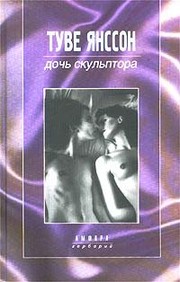
Her childhood in an artists' household, told in short fragments from inside a child's understanding. It supplies the real material behind the Moomin family and reads like the first draft of The Summer Book.

Selected stories spanning her whole career, from childhood pieces to very late work. The best single survey of her short fiction and a good way to find which decade of her you like most.
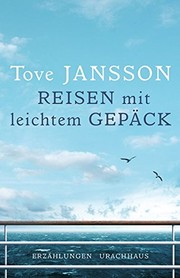
Late stories about people trying and failing to escape other people. The most acerbic collection, and the right place to end — Jansson at her most adult and least consoling.
Discussion
Keep reading
Paths that share books, cover the same subject, or open a related topic.