Kuhn wrote one book everyone has heard of and spent thirty years trying to correct its reception. Paradigm now means any notable change in outlook; Kuhn meant a shared set of exemplary problem-solutions, instruments, standards and commitments that define what a scientific community counts as legitimate work. The looser the word got, the more he narrowed his own usage, eventually preferring disciplinary matrix — a phrase that, tellingly, never caught on.
The other thing worth knowing in advance is that Kuhn was a historian of physics before he was a philosopher, and his argument is built from cases: Ptolemaic astronomy, phlogiston chemistry, the transition to Lavoisier's oxygen. If you find the philosophical claims slippery, follow the history instead — the case studies carry more of the argument than the abstractions do.
Kuhn's own work
The Structure of Scientific Revolutions is the starting point and is short. Read it aware that its most contested claims — incommensurability, the theory-ladenness of observation, the suggestion that paradigm change is not simply progress toward truth — are the ones that made philosophers of science treat it as a threat rather than a description.
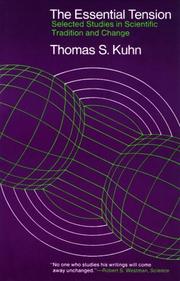
The essential tension collects the essays where he refines the position, including the argument that gives the book its title: that scientific communities need both conformity and the capacity to break with it, and that the tension between them is productive rather than a defect.
The argument it started
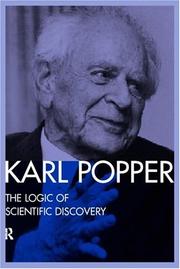
Kuhn's book landed inside an ongoing debate, and the opposing position came first chronologically. Karl Popper's The Logic of Scientific Discovery is the falsificationist account Kuhn was implicitly displacing, and Conjectures and refutations is its more readable statement. Both also appear on the Popper reading path here on ReadingSherpa, so if you have already read them, skip straight to the confrontation.
That confrontation is Criticism and the growth of knowledge, edited by Imre Lakatos and Alan Musgrave, the proceedings of the 1965 London colloquium where Popper, Kuhn, Lakatos, Feyerabend, Toulmin and Watkins argued it out directly. It is the single most efficient book here: the positions are stated by their authors, in response to each other, in one volume.
Paul Feyerabend's Against Method pushes past both, arguing that no methodological rule has gone unbroken by successful science and that the history rewards opportunism over principle. It is provocative by design and remains genuinely hard to refute on the historical cases it selects.
After the dust settled
Ian Hacking's Scientific revolutions is an edited collection surveying where the debate landed, with contributions across the range of positions. Hacking is an unusually fair guide and the volume works as a map of the field after 1970.
The Road since Structure gathers Kuhn's late papers and interviews, where he restates incommensurability in linguistic terms and distances himself from the relativism attributed to him. It is the best evidence that the popular Kuhn and the actual Kuhn diverged sharply.
Steve Fuller's Thomas Kuhn is the closing provocation — a sustained critical account arguing that Structure's influence has been, on balance, bad for how science is understood and governed. You need not agree, but reading a serious opponent after the primary work is the right way to finish. Follow the full path to keep the sequence.
Follow the full ordered path here: Thomas Kuhn: A Reading Order for Structure and After.