Aquinas is not difficult in the way Hegel or Adorno are difficult. His prose is orderly to the point of severity — a question, the objections, the counter-argument, the reply, then answers to each objection in turn. The obstacle is entirely vocabulary. Act and potency, essence and existence, substance and accident, the four causes, analogical predication: these are technical Aristotelian terms with precise meanings, and Aquinas assumes you learned them before you opened the book, because his students had.
Skip that groundwork and the Five Ways read like weak arguments, since almost every popular objection to them attacks a version that does not use the terms as Aquinas defined them. Build the vocabulary first and the same passages become much more interesting, whether or not you end up persuaded.
Get oriented
Frederick Copleston's Aquinas is the classic short introduction, from the historian of philosophy whose multi-volume history remains a standard reference. It is measured, historically situated, and does not oversell.
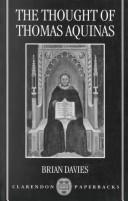
Brian Davies's The thought of Thomas Aquinas is the best full-length modern survey — thorough on God, creation, human nature and ethics, and unusually careful about what Aquinas actually says versus what later Thomism made of him. Anton Pegis's Introduction to Saint Thomas Aquinas is the classic anthology-with-commentary, which lets you read the primary text in curated portions with a guide beside you. That combination is the ideal preparation for the main event.
The Summa itself
Summa Theologica is not a book you read straight through, and it was not written to be. It is enormous, and the standard approach is to select: the treatise on God in the first part, including the Five Ways at question two; the treatise on human acts and the virtues in the first part of the second part; and the questions on law, where the natural-law argument that still shapes moral and legal philosophy is set out.
Read the article structure deliberately. The objections at the head of each article are stated fairly and are often the strongest form of the opposing case; Aquinas's habit of putting the best counter-argument first is one of the genuinely admirable things about the method.
Modern interpretation, and one caution
John Finnis's Aquinas reconstructs the moral, political and legal theory in contemporary analytic terms, and is the key text of the new natural law school. It is a strong reading and also a contested one — other Thomists argue Finnis's version departs substantially from Aquinas on practical reason.
On being and essence is Aquinas's own early treatise and is short, dense and central: the essence-existence distinction that underwrites the entire metaphysics is worked out here in a few dozen pages. Étienne Gilson's God and philosophy traces how the philosophical conception of God developed from the Greeks through the medievals, which is the wider context that makes the Summa's opening questions legible.
Edward Feser's Aquinas A Beginners Guide is a clear analytic presentation of the metaphysics and is genuinely useful; some readers would place it first, and that is a reasonable swap. His The last superstition covers overlapping ground but is a polemic against the New Atheists and is written in a combative register. If you want the philosophy rather than the argument about the argument, read the beginner's guide and skip it.
Readers interested in how philosophical frameworks change under pressure may find the Kuhn path an instructive contrast. Follow the full path to keep the order.
Follow the full ordered path here: Best Books on Thomas Aquinas, in Reading Order.
Ready to learn something deeply?
Build a reading path — free