The Silk Road was never a single road, and silk was only part of what moved along it. It was a vast web of routes over which goods, religions, technologies, diseases, and ideas flowed between East and West for two thousand years. Read its history in order and you see world history from a new center, not Europe, but the great crossroads of Asia.
Order matters because the subject can be approached as grand synthesis, as travelers' tales, or as the story of specific empires and faiths. This path starts wide, then narrows to the human accounts, then to the forces, religion, conquest, that moved along the routes, before returning to the present.
The grand sweep
Start with The Silk Roads by Peter Frankopan, the bestselling history that reorients the entire story of civilization around Asia and the trade routes. Then get the scholarly foundation with The Silk Road: A New History with Documents by Valerie Hansen, which grounds the romance in what the archaeology and texts actually show.
The travelers
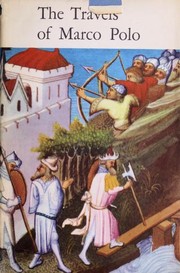
Nothing brings the routes alive like those who walked them. The Travels of Marco Polo by Marco Polo is the famous account of a European's journey to the court of Kublai Khan, and Travels in Asia and Africa by Ibn Battuta records the astonishing decades-long wanderings of the medieval world's greatest traveler across the Islamic world and beyond.
The forces along the road
Great forces surged along these routes. The Fate of Rome by Kyle Harper shows how disease and climate, carried along the connections, helped bring down an empire. Empires of the monsoon by Richard Seymour Hall extends the story to the sea routes of the Indian Ocean. And ideas traveled as much as goods: Buddhism and Islam on the Silk Road by Johan Elverskog traces how two great religions met and mingled along the way.
Conquest and the modern echo
The road's history climaxes with conquest and revival. Genghis Khan and the Making of the Modern World by Jack Weatherford argues that the Mongols who united the routes shaped the modern world, and Lost Enlightenment Central Asias Golden Age From The Arab Conquest To Tamerlane by S. Frederick Starr recovers the forgotten intellectual brilliance of Central Asia. Close with The New Silk Roads, again by Frankopan, which shows the ancient routes rising once more as the center of global power shifts back east.
Read this path in order and the Silk Road becomes a new lens on all of world history, past and present. Follow the full sequence to travel it from Rome to today.
Follow the full reading path →
Ready to learn something deeply?
Build a reading path — free