The Iranian Revolution can look, from a distance, like a sudden eruption of religious politics. It was nothing of the kind. Its roots reach back through decades of foreign interference, monarchy, and cultural strain, and its meaning is contested to this day. Read only the dramatic climax and you will misunderstand it. Read in order — roots, then revolution, then aftermath — and it becomes intelligible.
This path builds from the deep background through the events of 1979 and into the theocratic state and geopolitics that followed.
The roots
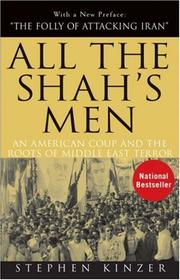
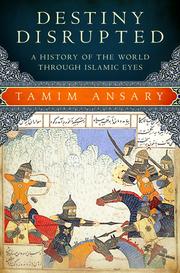
Start with All the Shah's Men, Stephen Kinzer's gripping account of the 1953 coup that overthrew Iran's elected prime minister — the wound that shaped everything after. Widen the frame with Destiny disrupted, a sweeping history of the world through Islamic eyes that supplies the civilizational context outsiders usually lack. For a focused primer on the event itself, The Iranian Revolution: A Short Introduction lays out the causes and course with concision.
Living the revolution
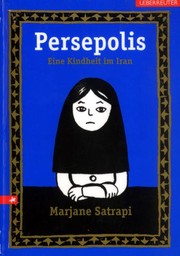
Now the human experience. Persepolis 1-4, Marjane Satrapi's celebrated graphic memoir, shows the revolution and its aftermath through the eyes of a child growing up inside it, and Reading Lolita in Tehran captures what the new order meant for women and intellectual life. These voices give the political history a pulse.
Leaders, ideology, and aftermath
The final arc turns to power and consequence. The Spirit of Allah is a detailed account of Khomeini's rise, and The reign of the ayatollahs analyzes how the revolution consolidated into a state. Khomeini offers a serious biography of the man at the center, while Islam and revolution collects his own writings so you can read the ideology in its original voice. To connect it outward, Knowing the Enemy examines the ideas driving militant Islamism, and Treacherous alliance traces the tangled relations among Iran, Israel, and the United States that the revolution set in motion.
Read in this order, 1979 stops being an inexplicable eruption and becomes a comprehensible, consequential turning point. Follow the full path to work through it stage by stage.
Follow the full reading path →
Ready to learn something deeply?
Build a reading path — free