The Russian Revolution is one of history's great hinges, the moment a vast empire collapsed and a new kind of state was born, one that would define the century that followed. Read it in order and the chaos resolves into a comprehensible sequence: a rotting old regime, a brief democratic opening, a ruthless seizure of power, and a savage civil war.
Order matters because the revolution is a story people tell to fit their politics, hero or tragedy depending on the teller. This path reads a range of perspectives, from sweeping modern history to eyewitness accounts to the revolutionaries' own words, so you can judge for yourself.
The sweep and the eyewitness
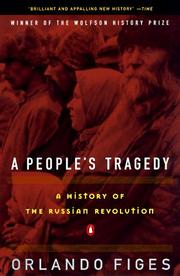
Start with A people's tragedy by Orlando Figes, the magnificent, humane single-volume history that is the finest introduction to the whole revolution. Then read the greatest eyewitness account ever written, Ten Days That Shook the World by John Reed, the American journalist who watched the Bolsheviks take power from the inside.
The people who made it
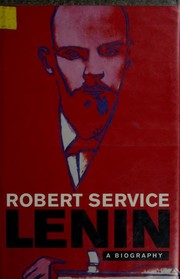
The revolution turned on individuals. Lenin by Robert Service is the standard biography of the man who bent history to his will, and Nicholas and Alexandra by Robert K. Massie is the moving account of the doomed royal family whose failures helped open the door.
Competing interpretations
To see how historians argue over it, read The Russian Revolution (Opus Books) by Sheila Fitzpatrick, a crisp, influential short interpretation, and Russia in Revolution by S.A. Smith, an outstanding modern synthesis that sets the whole decade in social context. For the revolutionary theory itself, The state and revolution by Vladimir Il'ich Lenin lets you read the vision in the author's own uncompromising words.
The bloody aftermath
The revolution did not end in 1917. The Russian Civil War by Evan Mawdsley narrates the brutal conflict that actually decided Russia's fate, and My Life: An Attempt at an Autobiography by Leon Trotsky gives the account of the revolution's second great figure, in his own defiant voice.
Round out the debate with The Russian Revolution 1917 by Alexander Rabinowitch, a detailed study of how the Bolsheviks actually won in Petrograd, and Rethinking the Russian Revolution by Edward Acton, which surveys the historians' long argument itself.
Read this path in order and the Russian Revolution becomes a clear, tragic sequence rather than a blur of dates. Follow the full path to trace it from the tsar's fall to the birth of the Soviet state.
Follow the full reading path →
Ready to learn something deeply?
Build a reading path — free