India's history is vast, layered, and old, a story of many civilizations, empires, and faiths braided together over millennia. Read it in order and the sprawl becomes a coherent arc, from the ancient foundations through the great Islamic empires, the trauma of colonial rule, and the birth of the world's largest democracy.
Order matters because each era rewrites the meaning of the last, and colonial and nationalist historians have fought bitterly over that meaning. This path reads a balanced range of voices so the full sweep, and the arguments about it, come into view.
The ancient and classical foundations
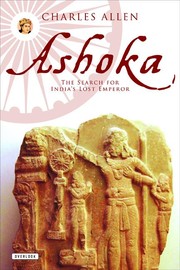
Start with The wonder that was India by Basham, A. L., the beloved classic survey of ancient Indian civilization, culture, and thought. Then read A history of India by Romila Thapar, from the leading modern historian of the early subcontinent, for a rigorous account of its formative millennia. Bring one great figure to life with Ashoka by Allen, Charles, on the emperor who renounced war for Buddhism.
For the deeper character of Indian civilization, The Argumentative Indian by Amartya Sen makes the case for a long tradition of debate, pluralism, and reason.
The Mughal age and the coming of the British
The Mughal Empire by John F. Richards is the authoritative history of the Islamic dynasty that ruled much of India at its height. Then confront the colonial encounter with Inglorious Empire by Shashi Tharoor, a fierce accounting of what British rule actually did to India, and The last Mughal by William Dalrymple, which tells the fall of the old order through the 1857 uprising and the last emperor.
Freedom and its price
The final act is independence. Gandhi: The Years That Changed the World 1914-1948 by Ramachandra Guha is the definitive biography of the leader who forged the freedom struggle. The Great Partition by Yasmin Khan tells the searing story of the division that accompanied independence and killed hundreds of thousands. Close with India after Gandhi, also by Guha, the magisterial history of the republic since 1947, which shows what the long story was building toward.
Read this path in order and India stops being a single foreign country and becomes what it is, one of humanity's oldest and most complex civilizations. Follow the full sequence to trace its whole journey.
Follow the full reading path →
Ready to learn something deeply?
Build a reading path — free