Espionage is the secret history behind the official one, the wars won by deception, the codes broken in silence, the traitors who changed the balance of power. Read its history in order and you discover that the truth of spying is often stranger and more consequential than any thriller, and that its methods form a coherent, evolving craft.
Order matters because intelligence has a shape: it moves from wartime deception and codebreaking, through the great betrayals of the Cold War, to the institutions and doctrines that run the modern secret world. This path follows that arc so the craft, not just the anecdotes, comes into focus.
The craft and its classic cases
Start with The spy who couldn't spell by Yudhijit Bhattacharjee, a gripping modern case that shows how real counterintelligence actually works. Then set espionage in the long view with Secret History of the World by Jonathan Black and Spymaster by Angus Mackenzie, which explore the hidden hands behind events.
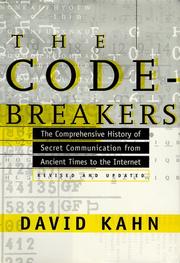
The single greatest tool of intelligence is codebreaking. The codebreakers by David Kahn is the monumental history of cryptology, the foundation text for understanding how secrets are made and unmade.
The art of deception
Some of history's most decisive intelligence work was pure deception. Double cross by Ben Macintyre tells how Britain turned every German spy into a double agent to win D-Day, and Agent Zigzag, also by Macintyre, follows one of the most improbable double agents of the war. Together they are a masterclass in the craft.
The Cold War underworld
The Cold War was the golden age of espionage. The main enemy by Milt Bearden gives the CIA insider's account of the spy war against Moscow, and Mole by William Hood dissects a classic penetration operation. The spy and the traitor, another Macintyre, tells the extraordinary true story of the KGB officer who spied for the West and was smuggled out under the Kremlin's nose.
The institutions and doctrine
Finally, understand the agencies themselves. Legacy of Ashes by Tim Weiner is the critical, damning history of the CIA, and The company we keep by Robert Baer offers a former officer's more personal view. For the theory, Intelligence in War by John Keegan asks how much intelligence has actually decided battles, and The art of intelligence by Henry A. Crumpton gives a modern practitioner's account of the craft in the age of terror.
Read this path in order and espionage reveals itself as a real and evolving discipline, not a fantasy. Follow the full sequence to trace the secret war from the codebreakers to the drone era.
Follow the full reading path →
Ready to learn something deeply?
Build a reading path — free