The Spanish Civil War was more than a national conflict; it was the dress rehearsal for World War II and a moral crucible that drew idealists from around the world. Read it in order and you understand both the intimate tragedy of a country tearing itself apart and the global stakes that made Spain the great cause of the 1930s.
Order matters because the war is fiercely contested, tangled in the politics of communism, fascism, and anarchism. This path starts with the immediacy of eyewitness and fiction, moves to the authoritative histories, then examines the internal conflicts and the dictatorship that followed.
Live it first
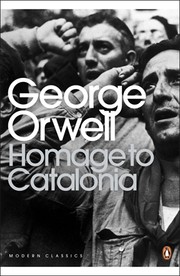
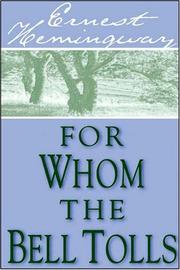
Start with Homage to Catalonia by George Orwell, his clear-eyed memoir of fighting for the Republic and watching the revolution devour itself, one of the great political books of the century. Then read For Whom the Bell Tolls by Ernest Hemingway, the novel that captured the war's romance and heartbreak for a generation of readers.
The authoritative histories
For the full account, The Spanish Civil War by Antony Beevor is the outstanding modern narrative history, and The Battle for Spain, his revised and expanded version, is the definitive single volume, drawing on newly opened archives. For the deep origins, The Spanish Labyrinth by Gerald Brenan remains the classic study of the tangled social and political roots that made the war almost inevitable.
The revolution within the war
The Republican side was itself at war with itself. The Revolution and the Civil War in Spain by Pierre Broue examines the social revolution and its suppression, and The Clash of Civilizations and the Remaking of World Order by Hugh Thomas offers a further perspective from a major historian of the conflict.
Foreign fighters and the long aftermath
Spain drew the world in. British Volunteers for Liberty by Bill Alexander tells the story of the International Brigades who came to fight fascism. Then follow the grim result: The Franco regime, 1936-1975 by Stanley G. Payne is the authoritative history of the dictatorship the war produced, and The Silence of Others by Almudena Carracedo brings the story to the present, as Spain still struggles to reckon with those decades.
Read this path in order and the Spanish Civil War reveals itself as both a personal tragedy and a turning point of the twentieth century. Follow the full sequence to understand why it still haunts Spain and the world.
Follow the full reading path →
Ready to learn something deeply?
Build a reading path — free