Historical Jesus research is unusual among historical subjects: the evidence is small, largely fixed, and has been worked over continuously for two centuries, so what distinguishes one book from another is almost never new material. It is method and interpretation. That makes reading order more important here than in most fields, because a reconstruction read cold looks like a report of findings rather than what it is — an argument about criteria.
The other thing to establish early is that the scholars on this list write from different commitments. Some are secular historians, some are practising Christians, some are Jewish scholars reading the material as Jewish history. This is not a defect and it is not hidden; all of them argue in public and answer each other. But a reader who does not know which is which will misread confident disagreement as confusion.
Survey the field before the arguments
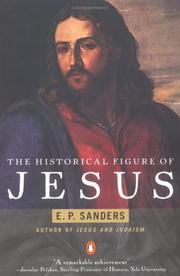
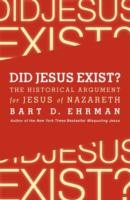
The historical figure of Jesus by E. P. Sanders is the standard first book — a careful, deliberately unsensational reconstruction that separates what can be established with reasonable confidence from what cannot. Did Jesus Exist? by Bart Ehrman addresses the mythicist claim that no such person lived; the scholarly consensus against that claim is close to unanimous, and the book is useful mainly for showing how the evidence is actually assessed. Jesus, apocalyptic prophet of the new millennium, also Ehrman, gives the reconstruction he does endorse: Jesus as a first-century apocalyptic preacher expecting an imminent divine intervention.
The major competing reconstructions
Here the field opens out. Jesus, a revolutionary biography by John Dominic Crossan presents Jesus as a Mediterranean peasant social radical — our catalogue stores this record under a longer Westar Institute title, which is a cataloguing artefact rather than a different book. Crossan was a leading figure in the Jesus Seminar, whose colour-coded voting on the authenticity of individual sayings was widely criticised by other scholars for the method as much as the results, and knowing that is part of reading him well.
Jesus the Jew by Géza Vermes was the book that forced the field to take first-century Judaism seriously as the context rather than the backdrop, and its influence is now so complete that its thesis reads as obvious. Jesus of Nazareth, King of the Jews by Paula Fredriksen builds a reconstruction outward from the crucifixion — the one fact almost nobody disputes — and asks what must have been true for Rome to execute him that way. The Misunderstood Jew by Amy-Jill Levine argues that Christian scholarship has persistently mischaracterised Judaism in order to make Jesus look distinctive, and it is pointed about specific scholars.
The foundations and the technical end
The quest of the historical Jesus is Albert Schweitzer's 1906 survey, and it belongs here as history of the discipline: his demolition of nineteenth-century lives of Jesus still stands, while his own apocalyptic reconstruction has been heavily revised since. Jesus and Judaism is Sanders's academic argument in full, of which his introductory book is the distillation.
A marginal Jew by John P. Meier is the most exhaustive treatment in the field, running to five volumes; our shelf holds one, and that gap is ours. Jesus and the Victory of God by N. T. Wright is the major reconstruction written from an explicitly Christian confessional standpoint, arguing for substantial historical continuity between Jesus and the church's claims about him — Ehrman and Fredriksen disagree with him directly, in print, and the disagreement is real rather than rhetorical. Constructing Jesus by Dale Allison closes the path with the most methodologically sceptical entry: an argument that the standard criteria of authenticity do not do what scholars claim, and that memory research should change how the whole enterprise is conducted.
Follow the full path in order for the sequence as designed.
Follow the full ordered path here: Best Books on the Historical Jesus, in Reading Order.
Ready to learn something deeply?
Build a reading path — free