Best Books on the Historical Jesus, in Reading Order
Historical Jesus scholarship is a genuine academic discipline with agreed methods, a small set of things nearly everyone accepts, and vigorous disagreement about almost everything else. This path starts with the fairest short introduction and the question of whether Jesus existed at all, sets the two dominant portraits against each other, then places him inside first-century Judaism, then explains why the quest keeps restarting, and ends with the major scholarly works that set the current terms of debate.
Start here
BeginnerLearn what the sources actually are, what historians can and cannot establish from them, and why the mythicist position is not taken seriously in the field.
▸ Study plan for this stage
Pace: Four weeks for about 700 pages. The Historical Figure of Jesus (337pp) is short-chaptered and unusually clear; 25 pages a session with a notebook is right, because Sanders repeatedly distinguishes 'almost certain', 'probable' and 'possible' and those labels are the thing to carry forward. Did Jesus
- What the sources actually are: the four canonical gospels, Paul's undisputed letters, some non-canonical gospels, and brief external notices in Josephus and Tacitus — with their dates, dependencies and purposes
- The synoptic problem in outline, and why the relationship between Mark, Matthew and Luke determines how many independent witnesses you are counting
- Sanders's list of what is nearly universally accepted — baptism by John, a Galilean preaching ministry, a following, a disturbance at the temple, crucifixion under Pilate — and what makes those items more secure than the rest
- The distinction between a theologically motivated source and an unusable one: historians use tendentious sources routinely, and Sanders explains the technique rather than dismissing the texts
- The criterion of embarrassment and the criterion of dissimilarity, introduced here and challenged in the final stage
- Ehrman's summary of the mythicist case and his response, including why the argument from silence about Jesus in certain sources carries less weight than it appears to
- Ehrman's own stated position — a scholar who is not a believer arguing for a historical Jesus — which is exactly why the book is useful for establishing the prior question without a confessional stake
- List the sources a historian of Jesus works with, with their approximate dates, and say which ones are independent of which.
- Which claims does Sanders regard as nearly certain, and what specifically makes each of them harder to doubt than the rest of the tradition?
- How does a historian use a source written to persuade, and what does Sanders say that changes about the conclusions available?
- What is Ehrman's principal argument against the mythicist position, and what is the strongest mythicist point he concedes has some force?
- What is the difference between the question 'did this person exist' and the question 'what did this person do', and why does Sanders answer them with different degrees of confidence?
- Build a source table: each source, its approximate date, its likely dependence on others, and its evident purpose. Every later book in this path assumes you have one, and you will keep amending it.
- Write out Sanders's list of near-certain facts on a single card, in his own ordering. It becomes the fixed point against which you can test each competing portrait later.
- Take one gospel episode that appears in Mark, Matthew and Luke, set the three versions in parallel columns, and mark every difference. This is the discipline in miniature.
- Summarise the mythicist position in 200 words in a form its proponents would accept, then write Ehrman's reply in 200 words. Being able to state a position fairly before assessing it is the habit this whole path trains.
- Note every time Sanders says he does not know. The frequency is unusual in popular writing on this subject and is a standard to hold the later authors to.
Next up: With the sources catalogued and the secure facts fixed, you can watch two major scholars build very different figures out of the same material — which is only interesting once you know what the material is.
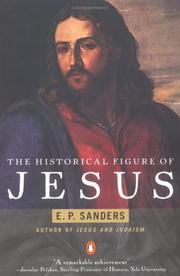
The best short introduction by any measure: sober, method-forward, and clear about which conclusions are secure and which are guesses. Sanders is the scholar whose framework most of the field now works within.
An agnostic New Testament scholar laying out the evidence for a historical Jesus against mythicist claims. Read it second to settle the prior question before spending time on what kind of figure he was.
The two portraits
BeginnerUnderstand the central disagreement of modern scholarship — apocalyptic prophet or subversive sage — and see how the same evidence supports both.
▸ Study plan for this stage
Pace: Three weeks for about 510 pages, and the most enjoyable stage in the path because the two books are in direct conversation. Read Ehrman's Jesus, Apocalyptic Prophet of the New Millennium (274pp) first and slowly — he explains each criterion of authenticity as he uses it, so it doubles as a methods c
- Jewish apocalyptic thought as Ehrman describes it: a worldview expecting God to intervene decisively and imminently to overturn the present order, of which several first-century movements are evidence
- Ehrman's argument from the ends inward — that John the Baptist before Jesus and the earliest church after him were both apocalyptic, so an apocalyptic Jesus explains the sequence with fewest additional assumptions
- The criteria of authenticity in operation: independent attestation, dissimilarity, embarrassment, and contextual credibility, each applied to specific sayings so you can see what work they do
- Crossan's alternative: a Mediterranean Jewish peasant whose open commensality and free healing enacted an egalitarian kingdom already present, rather than announcing a future one
- Crossan's method and its controversies — a stratified inventory of sources by date and independence, with early dates for some non-canonical material, which is where much of the criticism lands
- The Jesus Seminar's voting procedure and its reception in the wider field, which is worth understanding as a piece of disciplinary history whatever you make of the results
- The eschatology question stated precisely: is the kingdom announced as imminent and future, or as present and social? Almost every disagreement in the field maps onto this
- How the same saying can be read either way, which is the actual lesson of the stage: the evidence underdetermines the portrait, and the argument is about which reading requires fewer strained explanations
- What is apocalyptic expectation as a first-century Jewish phenomenon, and what evidence beyond the gospels does Ehrman use to establish it?
- State Ehrman's bracketing argument — John before, church after — and say what a defender of Crossan's view would have to explain instead.
- What does Crossan mean by open commensality, and why does he treat shared meals as the substance of the message rather than an illustration of it?
- Which sources does Crossan date early that Ehrman would date later, and how much of the disagreement between them follows from that alone?
- Take one saying both authors discuss. Show how each reads it, and say which reading you find requires less special pleading — and why that is a judgement rather than a proof.
- Make a two-column table of the same evidence read two ways: the saying or episode, Ehrman's reading, Crossan's reading. Ten rows is enough to see the shape of the disagreement.
- Apply the criterion of embarrassment yourself to the baptism by John, writing 200 words on why the episode is hard to explain as an invention.
- Take Sanders's card of near-certain facts from stage one and check both portraits against it. Note any fact that either author has to strain to accommodate.
- Write a paragraph defending Crossan's source stratification and a paragraph attacking it. The dating of non-canonical material is the load-bearing methodological choice in his book.
- Write 200 words on what would count as evidence against the apocalyptic reading. If you cannot name any, the thesis is being held unfalsifiably, and that is worth noticing about your own reading rather than about Ehrman.
Next up: Both portraits are built by comparing Jesus to his surroundings, so the next stage examines those surroundings directly — first-century Judaism as its own thing rather than as a backdrop.

The clearest statement of the majority view: Jesus expected an imminent, God-brought end to the present order. Ehrman explains the criteria of authenticity as he goes, so it doubles as a methods primer.
The influential minority alternative from the Jesus Seminar: a Mediterranean Jewish peasant preaching an egalitarian kingdom now, not later. Read it directly against Ehrman — they use much the same evidence to opposite ends.
A Jew among Jews
IntermediatePlace Jesus inside Second Temple Judaism and learn to recognise the anti-Jewish assumptions that distorted a century of scholarship.
▸ Study plan for this stage
Pace: Four to five weeks for about 890 pages. Jesus the Jew (286pp) is a landmark of 1973 and reads as scholarship of its era — dense with rabbinic and Qumran citation, worth 20 pages a session. Jesus of Nazareth, King of the Jews (352pp) is the most tightly argued book in the path and rewards close atten
- Vermes's placement of Jesus among Galilean charismatic holy men — Honi the Circle-Drawer, Hanina ben Dosa — as a recognisable Jewish type rather than a unique category
- The category of the Jewish miracle-working teacher, and what it does to the assumption that healing or exorcism marks a break with Judaism
- Second Temple Judaism as plural: Pharisees, Sadducees, Essenes, the Qumran community, and popular movements — so that 'the Judaism of the time' is not one thing to be compared against
- Fredriksen's method of reasoning backwards from the crucifixion, treating the manner and timing of the execution as the most secure datum and asking what it requires
- Her central puzzle and its force: Pilate executed Jesus but did not round up his followers, which fits some reconstructions of the temple incident and strains others
- Passover in Jerusalem as a specific political setting — a crowded festival city under a nervous prefect — and how much of the passion narrative that context explains
- Levine's argument that a long tradition of scholarship elevated Jesus by depicting the Judaism around him as legalistic, oppressive to women, or spiritually exhausted, and that the contrast was largely constructed
- How to read for that pattern: whenever a book explains why Jesus's teaching was radical, ask what account of Judaism the claim requires and whether that account is sourced
- What is the Galilean charismatic type Vermes identifies, and which specific features of the gospel material does it account for?
- Name the main groups within Second Temple Judaism and what distinguished them. Why does that plurality matter for any claim that Jesus opposed 'Judaism'?
- Reconstruct Fredriksen's argument from the crucifixion backwards, step by step. Where is it strongest and where does it rest on an inference you could resist?
- Why is it significant that Jesus's followers were not arrested, and what does each of the portraits in the previous stage have to say to account for it?
- Give two examples from your earlier reading of the pattern Levine describes — a claim about Jesus's originality that depends on an unflattering account of Judaism — and say what a fairer comparison would look like.
- Build a one-page map of Second Temple Jewish groups with their distinguishing commitments. Keep it beside you for the remaining stages; a surprising number of arguments turn on which group is meant.
- Write out Fredriksen's chain of inference as numbered steps, then mark the step you would attack if you wanted to dispute her conclusion. Finding the weakest link in a good argument is harder than finding the flaw in a bad one.
- Go back through your notes on Ehrman and Crossan with Levine's question in hand, and flag every sentence that makes Jesus distinctive by contrast with his contemporaries. Then check whether the contrast is sourced or assumed.
- Take one gospel controversy story involving Pharisees, and write 200 words on what it looks like if the Pharisaic position is stated in its own strongest terms rather than as the foil.
- Read Vermes's treatment of one miracle account beside a modern textbook's, and note what changes when the episode is placed inside a Jewish category rather than presented as unprecedented.
Next up: Having seen how badly the field's assumptions could distort its results, the next stage reads the book that first made that charge — a century ago, against a different set of assumptions.
The 1973 book that forced the field to read Jesus as a Galilean charismatic within Jewish tradition rather than against it. It opened what is usually called the third quest.
Fredriksen reconstructs the political and temple context and argues from the crucifixion backwards. Her account of why Pilate executed Jesus but not his followers is the sharpest piece of reasoning on this list.

A Jewish New Testament scholar showing how Christian scholarship keeps making Jesus look good by making Judaism look bad. It will change how you read every book above and below it.
Why the quest keeps restarting
IntermediateUnderstand the history of the discipline itself and the standing charge that each generation reconstructs a Jesus in its own image.
▸ Study plan for this stage
Pace: Three to four weeks for 413 pages, and slower than the length suggests. The Quest of the Historical Jesus is a 1906 survey of German scholarship, translated, with a long procession of nineteenth-century authors most readers have never heard of. The productive way to read it is: the opening chapters
- Schweitzer's governing charge: that each nineteenth-century life of Jesus produced a figure conveniently congenial to its author's own theology and era
- The specific mechanism of that failure — selecting which sayings are authentic on the basis of the portrait being built, so the criterion and the conclusion determine each other
- The rationalist, mythical and liberal lives he surveys, and what each generation needed Jesus to be
- Schweitzer's own thoroughgoing eschatology: a Jesus wholly governed by imminent apocalyptic expectation, which he presents as the alien conclusion the evidence forces rather than a congenial one
- The rhetorical structure of the book — its power comes from establishing a pattern across dozens of cases before naming it, which is why the survey chapters cannot be entirely skipped
- The reflexive problem this creates for every later book in the path, Schweitzer's own included: if the charge is general, it applies to him and to Ehrman and to Crossan and to you
- Why the field speaks of successive 'quests' at all, and what the standard periodisation does and does not usefully capture
- What exactly is Schweitzer's charge against the nineteenth-century lives, and what is his evidence that the pattern is general rather than anecdotal?
- What is the methodological circle he identifies, and how would a modern scholar claim to have escaped it?
- What is Schweitzer's own reconstruction, and why does he present its strangeness as a point in its favour?
- Apply his charge to Crossan and to Ehrman. What would a hostile reader say each of them needed Jesus to be?
- Now apply it to yourself: which of the portraits you have read did you find most congenial, and what does that tell you about how to weigh your own judgement here?
- Pick three of the nineteenth-century authors Schweitzer surveys and write one line each on the Jesus they produced and the intellectual world they lived in. Three is enough to see the pattern he is demonstrating.
- Write 200 words applying Schweitzer's own charge to Schweitzer. The exercise is not a gotcha — it is the only way to hold his argument consistently.
- Return to your two-column Ehrman-Crossan table from stage two and add a row at the bottom: what each portrait offers a modern reader who wants it to be true. Then ask whether that affects the evidence at all.
- Write out what a genuinely uncongenial conclusion about the historical Jesus would look like for you personally. The willingness to name it is what Schweitzer is asking for.
Next up: Schweitzer showed how the quest goes wrong; the last stage takes up the full-scale modern attempts to do it properly, ending with a scholar who argues the standard method still cannot bear the weight.
The 1906 survey that demolished a century of liberal lives of Jesus by showing each author had found his own face at the bottom of the well. Its apocalyptic conclusion still frames the debate.
The major scholarly works
IntermediateEngage the full-scale academic treatments, including the methodological challenge to whether the criteria of authenticity work at all.
▸ Study plan for this stage
Pace: Three to four months, and this stage is deliberately not designed to be read straight through. Jesus and Judaism (444pp) is the technical foundation of the book you started with and should be read properly, at 15 to 20 pages a session with the notes. A Marginal Jew (594pp for this volume) is the ope
- Sanders's argument from secure facts outward, with the temple incident as the anchor — a method that starts from actions rather than from sayings, precisely because sayings are the contested material
- Restoration eschatology in Sanders: Jesus as expecting a restored Israel, with the twelve as a symbolic claim about the twelve tribes
- Meier's method of exhaustive case-by-case adjudication, and his stated criteria applied consistently even where the result is inconvenient
- Wright's thesis that Jesus operated within a controlling story of Israel's continuing exile and understood himself as bringing it to an end, and his critique of the criteria-based approach as atomising the tradition
- The 'end of exile' framework itself as a contested proposal — widely engaged, by no means generally accepted — which is the honest way to hold a well-argued minority thesis
- Allison's central challenge: that the criteria of authenticity are individually weak and do not aggregate into reliability, so saying-by-saying reconstruction is not achievable
- Allison's alternative — that recurrent general impressions across the tradition are more trustworthy than any particular unit — and what kind of Jesus is recoverable on those reduced terms
- The path's closing position: a discipline that agrees on a short list of facts, disagrees about the frame, and is openly arguing about whether its own tools work
- Why does Sanders build outward from the temple incident rather than from the sayings, and what does that choice protect him from?
- What is restoration eschatology, and how does the appointment of the twelve function as evidence for it?
- Take one disputed episode and compare Meier's adjudication with Sanders's treatment. Where do their criteria pull differently?
- State Wright's end-of-exile thesis in terms he would accept, then state the main scholarly objections to it. Doing both is the test of whether you have understood it.
- What is Allison's argument that the criteria fail, and does it undermine Sanders's fact-based method as much as it undermines saying-by-saying reconstruction?
- After the whole path: what do you think can be known about the historical Jesus, at what confidence, and by what method? Answer in a form that a reader who does not share your convictions could accept as historical reasoning.
- Take the near-certain facts card from stage one and write, beside each item, how Sanders argues for it in the technical version. Watching a popular claim get its scholarly apparatus is the point of reading both his books.
- Use A Marginal Jew as it is meant to be used: pick two specific questions you have accumulated across the path, look up Meier's treatment of each, and write a paragraph on his verdict and reasoning.
- Write 200 words setting out Wright's thesis without any evaluative language at all, then a separate 200 words on what you make of it. Keeping description and assessment apart is the discipline this stage exists to build.
- Test one criterion of authenticity against Allison's critique: apply it to three specific sayings and see whether it yields consistent results. Allison's case is much more persuasive after you have tried.
- Write a final two-page statement of what you now hold and how confidently, marking each claim as secure, probable or speculative in Sanders's own terms. Where the path's authors conflict, say so rather than resolving it by preference — and note separately, if you wish, where your own religious or non-religious convictions go beyond what the historical method can establish either way.
Next up: This is the end of the path — sources, competing portraits, Jewish context, the discipline's own history and its major works — and the natural next step is to reread Sanders's short introduction, which now reads as the distilled verdict of a field you have watched argue.
The scholarly foundation behind the short introduction you began with, arguing from secure facts such as the temple incident outward. This is the technical version of stage one.

The most exhaustive project in the field, working through every tradition with painstaking method. Treat it as a reference to consult on particular questions rather than a book to read straight through.

The strongest case from a confessional scholar that Jesus saw himself as bringing Israel's exile to an end. Included because it is argued at a high level and because knowing the best conservative case is part of knowing the field.
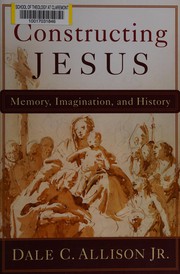
Allison argues the criteria of authenticity cannot bear the weight placed on them and that only general impressions of the tradition are recoverable. The right last book: it questions the method every previous author relied on.
Discussion
Keep reading
Paths that share books, cover the same subject, or open a related topic.