Almost every modern argument about rights, reason, tolerance, and who should hold power traces back to a few decades of European writing we call the Enlightenment. It is worth learning because it is the operating system beneath the arguments you still hear today. It is hard to self-teach because the primary texts assume a shared context — of religious authority, monarchy, and older philosophy — that no longer exists, so opening them cold usually ends in confusion.
This is a history-and-ideas subject, so read it in the spirit the Enlightenment recommended: hold your conclusions loosely. The thinkers here disagreed sharply with each other, and the path deliberately includes their critics. The goal is to think alongside them, not to be recruited.
Why order matters here
Read Locke or Rousseau on day one and you will miss half of what they are answering. Read a modern historian first and suddenly the primary sources click into place. Sequence is everything.
The path, stage by stage
Start with orientation. The Enlightenment by John Robertson is a short, sober overview that maps the whole territory — who the players were and what was actually at stake. Pair it with The dream of enlightenment by Anthony Gottlieb, a lively narrative history of the philosophers that makes their personalities and quarrels memorable.
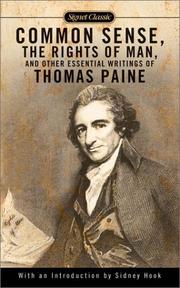
Then meet the ideas in their own words, easiest first. Common Sense, The Rights of Man and Other Essential Writings of Thomas Paine by Thomas Paine is the most accessible entry point — plain-spoken, urgent political argument. From there, step up to the heavyweights of political thought: Two Treatises of Government by John Locke lays the groundwork for natural rights and consent, and The Social Contract and Discourses by Jean-Jacques Rousseau offers the rival vision of the general will.
Now widen the lens. Candide by Voltaire is a savage, funny novella that punctures easy optimism and shows the Enlightenment laughing at itself. Spirit of the Laws by Charles-Louis de Secondat baron de La Brède et de Montesquieu introduces the separation of powers that shaped modern constitutions. For the skeptical, hard-nosed edge of the era, Dialogues concerning natural religion by David Hume pushes reason to its uncomfortable limits.
Finish with the argument about what it all meant. Enlightenment now by Steven Pinker makes the optimistic case that the project succeeded; Dialectic of enlightenment by Theodor W. Adorno makes the darker case that reason curdled into new forms of domination. Reading them back to back is the best way to form your own view rather than inherit one.
How to actually study this
Keep a running glossary — natural rights, social contract, general will, separation of powers — and write a one-line definition in your own words the first time each appears. After each primary text, jot the single claim the author would defend to the death, and the strongest objection you can raise. When two authors contradict each other, that tension is the real lesson, not a problem to resolve.
Move at one primary text every week or two; these reward slow reading of key chapters over front-to-back speed. See the full reading path for the stage-by-stage study plan, and the subject hub for how it connects to the Renaissance and the Revolutions that followed. To browse adjacent topics, start at /subjects.
Ready to learn something deeply?
Build a reading path — free