Behind every heated argument about liberty, taxes, or rights sits a question philosophers have chewed on for two thousand years: what makes political power legitimate, and what do we owe each other? You can hold strong opinions without ever reading these thinkers — but you will keep reinventing their arguments badly. Political philosophy gives you the actual moves.
The field rewards reading in order because it is a long conversation. Rawls is answering Locke; Nozick is answering Rawls. Drop in at the end and you are hearing punchlines without the setups.
Begin with the foundations of authority
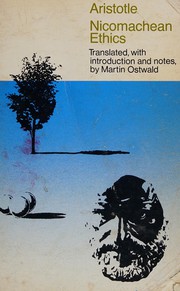
Start with a modern guide before the primary texts, so the classics land with context. Justice by Michael Sandel is that guide — a genuinely gripping tour of the central debates, built from his famous Harvard course. Then go to the source of it all: Nicomachean Ethics by Aristotle asks what a good life and a good community are, the question everything downstream inherits.
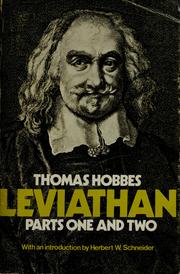
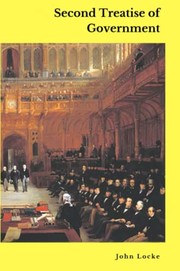
Move to the social-contract tradition. Leviathan by Thomas Hobbes argues that without a strong sovereign life is "nasty, brutish, and short" — the case for order. Second Treatise of Government by John Locke answers with natural rights, consent, and limited government, the intellectual DNA of modern liberal democracy.
Follow the argument about liberty
With the contract laid down, turn to freedom. On Liberty by John Stuart Mill is the classic defense of individual liberty and free speech, still the sharpest statement of the harm principle. Then Two Concepts of Liberty by Isaiah Berlin draws the crucial distinction between "freedom from" and "freedom to" that structures every modern debate about the state.
Reach the modern showdown
Now the twentieth-century clash that still defines the field. A Theory of Justice by John Rawls asks what principles you would choose for society if you did not know your place in it — the most influential work of political philosophy in a century. Its great rival, Anarchy, State, and Utopia by Robert Nozick, answers with a libertarian defense of the minimal state and individual rights. Read them back to back; the disagreement is the whole modern argument in miniature.
How to actually learn this
This is contested ground by design, so read it as an argument with no referee — the path deliberately puts Hobbes next to Locke and Rawls next to Nozick precisely so you hold your conclusions loosely and test them against the strongest opposing case. Read the primary texts slowly and paraphrase each thinker's core claim in a sentence before you critique it; steelmanning is the whole discipline. And keep asking the practical question underneath each theory: what would this commit me to in a real dispute?
Read it in sequence: follow the full reading path, explore the subject hub, or browse related philosophy paths.
Ready to learn something deeply?
Build a reading path — free