There is one thing to know before you read anything on the end of the Soviet Union: check the publication date first, every time. This is not a general caution about old books. It is specific to this subject, because the authors are arguing about what the collapse meant, and what it meant depends on what came next — which the earlier authors could not know.
A book written in 1994 is written into a world where the successor states looked like they were becoming market democracies, and the live question was why an armed superpower dissolved without a civil war. A book written after 2010 is written into a world of Putin, the 2008 Georgian war, Crimea in 2014 and everything after, and its live question is whether the collapse was a mistake, an accident of one man's choices, or a national question that was always going to end this way. Same events, different argument.
Start with the frame, and with the reporting
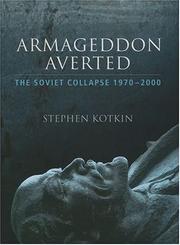
Armageddon averted is the best entry: short, argumentative, and focused on why the system unravelled without mass violence, with the answer located in the elite and the institutions rather than in dissidents or in Western pressure. Published in 2001, it sits between the two waves and is the cleanest statement of the case.
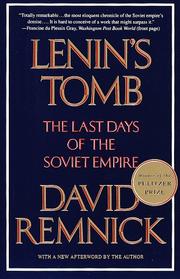
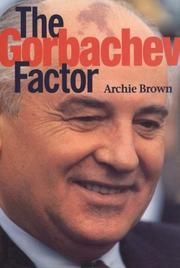
Then read Lenin's tomb, David Remnick's reporting from Moscow as it happened, published in 1993. It is not a history and does not try to be — it is what the last years felt like at street level, from a journalist who was there, and no later account replaces it. The Gorbachev factor, from 1996, is the strongest scholarly case that Gorbachev's own agency was decisive, written while the man's reputation in Russia was already collapsing. Set beside it Perestroika, Gorbachev's own 1987 book, published while the reforms were still being sold rather than assessed. It is a primary source about intentions, and reading it after the reporting shows you exactly how much of it was self-persuasion.
The recent accounts, written with the archives and the aftermath
Gorbachev, William Taubman's 2017 biography, has the interviews and the documents the 1990s writers lacked, and is more ambivalent about its subject than The Gorbachev factor is. The last empire covers only the final months of 1991 and argues that the Ukrainian referendum, not Moscow politics, was what actually ended the union — a thesis that reads very differently after 2014, and its author says so. Collapse is a 2021 account that puts the economic disintegration and Gorbachev's failures of implementation at the centre, and it is the most critical of him.
For the view from the room, Autopsy on an empire is the memoir of the last American ambassador to the USSR, published in 1995, and Moscow, December 25, 1991 narrates the final day in detail. The Soviet tragedy, from 1994, is the strongest version of the argument that the system was doomed by its founding ideology and that no reform could have saved it — a position the later books largely reject, but which you should meet in its best form. The same author as Collapse also wrote A Failed Empire, a 2007 account of the Cold War from the Soviet side, which is the useful bridge between the two.
Why it felt permanent, and what followed
Everything was forever, until it was no more is an anthropologist's answer to a genuine puzzle: how a system almost nobody believed in still felt eternal to the people living in it, right up until it did not. Then Sale of the Century on the privatisations and the oligarchs of the 1990s, and Secondhand Time, an oral history of what people lost and how they narrate it — which is where the emotional content of the current Russian politics becomes comprehensible.
The historians here genuinely disagree, and this path does not pick a winner; read them in order and you will be able to say precisely where the disagreement lies. For the war that drained the system in its last decade, see the Soviet-Afghan war path.
Follow the full ordered path here: The Collapse of the Soviet Union: The Best Books to Read, in Order.