Still life is where painters learn everything else. The objects hold still, the light is yours to control, and there is nowhere to hide weak drawing or muddy color. That is exactly why it rewards a careful reading order: master seeing and arrangement first, then light and structure, then the oil technique that pulls it together.
The sequence below moves from perception to design to execution. Skip the early rungs and you will paint what you think an apple looks like instead of what is actually in front of you — the fundamental still-life error.
Learn to see and draw
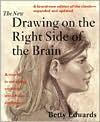
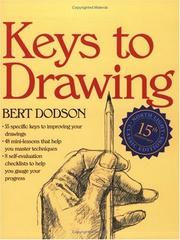
Start with The New Drawing on the Right Side of the Brain by Betty Edwards, which retrains your eye to draw what you observe rather than what you assume. Then Keys to Drawing by Bert Dodson builds practical drawing habits and confidence. With observation sharpened, The Art of Still Life by Rolf G. Renne introduces the specific concerns of the genre — setup, arrangement, and rendering objects convincingly.
Compose and control the light
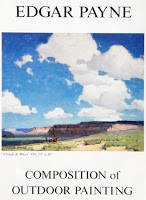
A still life is designed, not just copied. Composition of Outdoor Painting by Edgar Alwin Payne teaches enduring compositional patterns that apply directly to arranging objects. Light for Visual Artists by Richard Yot explains how light and shadow actually behave, the knowledge that makes objects feel solid. Carlson's Guide to Landscape Painting deepens your grasp of value and light, and The Painter's Secret Geometry by Charles Bouleau reveals the underlying structures behind great compositions.
Paint with confident technique
Now bring it to the canvas. The Oil Painting Course You've Always Wanted by Kathleen Lochen Staiger is the clear, structured beginner's manual for materials and method. Alla Prima by Richard Schmid is the master class on direct, alla-prima painting and seeing color truthfully. Finally, Painting the Still Life by Gregg Kreutz focuses specifically on making objects glow with light and life, tying every earlier lesson to the genre.
Read and paint in this order and still life becomes the training ground it is meant to be. Follow the full path, always working from real objects, to build skills that carry into every kind of painting.
Follow the full reading path →
Ready to learn something deeply?
Build a reading path — free