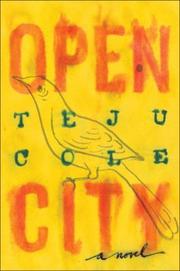
Start with Open city. A Nigerian-German psychiatry fellow walks around New York, and almost nothing happens except thinking — until something is disclosed late in the book that retroactively changes how you read every page of the walking. It is the book that made his reputation and it is the best introduction to a sensibility that runs through everything else.
The obvious alternative is Every day is for the thief, which is shorter and which was in fact published in Nigeria first, several years before Open city reached international readers. Publication history therefore points one way and reading experience the other. Take Open city first anyway: the earlier book is a slighter, more journalistic performance of the same method — a returning narrator walking through Lagos — and it reads better as a companion than as an introduction.
The essays
This is where a great deal of his best writing lives, and where new readers most often fail to look.
Known and strange things collects the criticism and reportage from his most prolific period: pieces on photography, on literature, on drone warfare, on Instagram, on his own eye condition. It is long and you should graze it rather than read it front to back.
Black Paper is the later collection and the darker one, written around a period of political crisis, and it is more unified in tone: night, refusal, the uses of black in painting and in politics. If you liked the photography essays in the first book, this one goes further into them.
The photobooks are a different kind of book
Four titles here are not prose books, and buying one expecting an essay collection is the single most common mistake readers make with Cole. Blind spot, Fernweh, Golden apple of the sun and Fazal Sheik : Human Archipelago are photobooks: pages of images, paired with short texts that are often a paragraph long.
They take a different kind of attention. You do not read them in a sitting, you cannot read them usefully on a phone, and the relationship between a picture and the text facing it is frequently oblique on purpose. Blind spot is the place to start — photographs from many countries, each with a short caption-essay, and it is the fullest statement of how he thinks about looking. Fernweh is the tightest and most restrained. Golden apple of the sun is a small book of still lifes made at home. Fazal Sheik : Human Archipelago is a collaboration in which Cole supplies the texts to another photographer's portraits of displaced people, and our catalogue credits it accordingly.
If photobooks are not for you, that is a legitimate preference. Read the prose and skip them without feeling you have missed the argument.
The later novel
Tremor is the return to fiction, and it is a stranger book than Open city — a West African art historian in New England, told in sections that switch narrator and form, including a long stretch of unattributed Lagos voices. Readers who wanted a second Open city were disappointed; readers who had followed the essays and the photobooks recognised it immediately as the same project by other means. That is a good reason to come to it last.
Where to stop
Three books cover him: Open city, Known and strange things and Blind spot — the novelist, the essayist and the photographer, which in his case are one person doing one thing. The walking-narrator novel has a long lineage, and readers who enjoy Open city often go looking for James Joyce next.
Follow the full ordered path here: Teju Cole Reading Order: Where to Start.